Who is this for?

Mixer at a shared desk

You regularly check small mix changes while colleagues work nearby, and want to limit distractions and sound leakage. Sound On Sound discusses headphones as an option for checking mixes when needed; beyerdynamic describes the DT 770 PRO as a closed-back design.

Listener in a noisy office

You want to avoid turning the volume up whenever things get busier. The WHO recommends well-fitting headphones in noisy situations and mentions noise cancelling as a way to reduce the need to listen at higher volumes.

Producer with an office and a quiet workspace

You do quick checks in the office, but can move somewhere quieter to assess the soundstage. Sound On Sound discusses open-back models when circumstances allow; beyerdynamic describes the DT 990 PRO as open-back studio headphones.

What should you look for?

Closed-back wired studio headphones

Choose this option: if you regularly want to check mix details at a shared desk and have a suitable wired output.

Trade-off: isolation depends on the fit, and you’ll need to judge the sound of the exact model for yourself.

Open-back studio headphones

Choose this option: if you can move somewhere quiet to assess the soundstage.

Trade-off: the open-back design lets in more background noise and allows more sound to escape; Sound On Sound favours open-back models when circumstances allow.

Active noise-cancelling headphones

Choose this option: if distracting office noise is your main concern, or you’re otherwise inclined to turn the volume up.

Trade-off: noise cancelling doesn’t automatically make headphones a neutral mix reference; try the fit and the modes you’ll actually use.

What to consider What should you check? Who should pay particular attention?
Distractions and sound leakage Compare the closed-back ear cups and how the pads fit; also listen for sound leakage at your usual listening volume. If you share a desk, you’ll want to limit distractions and noise for colleagues. This is a priority for around 31% of consumers.
Hearing mix changes Compare the same familiar track at an even, moderate volume; where possible, check important decisions against a second reference, too. If you want to assess small edits and changes in balance consistently, you need a familiar listening reference. Around 25% of consumers prioritise mix details.
Comfort Try the exact model with your glasses, if you wear them, and pay attention to pressure, warmth and isolation during a typical listening session. For repeated checks, you’ll want a fit that stays comfortable without compromising the isolation you need. Around 19% of consumers prioritise comfort.
Connection and audio source Check the output, plug, any adapter and cable length; for the DT 770 PRO, also check the exact impedance variant. If you listen through a computer or audio interface, the version you choose needs to work with your equipment. Around 13% of consumers prioritise compatibility with their audio source.
Maintenance and lifespan Check which ear pads, cables or other parts can be replaced for the exact model. If you use your headphones often, you’ll want to know which parts can be replaced as they wear out. Around 12% of consumers prioritise maintenance.

Common buying mistakes

  • Assuming a quoted attenuation figure guarantees protection from office conversations

    Sennheiser specifies attenuation of up to 32 dB for the HD 280 PRO. The perceived isolation also depends on the fit; this figure isn’t a direct comparison of how well different models block office conversations.

    Try the fit at your usual listening volume, and don’t base your decision on a single quoted figure.

  • Treating the DT 770 PRO impedance variants as interchangeable

    beyerdynamic distinguishes between the 32, 80 and 250 ohm versions based on the audio source and intended use. The wrong version may not work with the audio source you already have.

    Before buying, check the full variant name and the headphone output on your device.

  • Assuming active noise cancelling means a neutral mix reference

    Noise cancelling can help you avoid listening at higher volumes in noisy surroundings, but it doesn’t tell you on its own how neutrally the headphones reproduce mix changes.

    Compare familiar tracks in the modes you use, and check important mix decisions against a second reference you know and trust, too.

  • Making every mix decision on a single pair of headphones

    Headphones can help you hear small edits, but the sound of the model can also influence decisions about tonal balance. Sound On Sound discusses headphones as a useful option for mixing when needed, while favouring open-back models where practical.

    Use your office headphones for focused checks and, if possible, compare crucial decisions with a second playback reference you know and trust.

Relevant brands for this use

beyerdynamic

The closed-back DT 770 PRO is worth considering for the office; the open-back DT 990 PRO is better suited to a quiet listening space.

  • beyerdynamic lists replaceable parts for the DT 770 PRO 80 ohm and distinguishes between the 32, 80 and 250 ohm variants according to audio source.
  • Check the impedance variant and whether it suits your audio source; the versions aren’t interchangeable without checking.

Audio-Technica

The closed-back, foldable ATH-M50x is an option if you also care about cable choice and portability.

  • According to Audio-Technica, the ATH-M50x has passive isolation, swivelling ear cups and comes with three detachable cables.
  • The manufacturer describes the model as suitable for studio use; this doesn’t independently confirm its neutrality or how well it fits you.

Sennheiser

The closed-back HD 280 PRO is an option if isolation and replaceable ear pads are important to you.

  • Sennheiser lists attenuation of up to 32 dB, replaceable ear pads and a single-sided coiled cable for the HD 280 PRO.
  • The quoted attenuation doesn’t guarantee the same reduction in office conversations for every fit, and it isn’t a comparative test against other models.

AKG

The closed-back, foldable K371 is an option for monitoring in the office, with several detachable cables.

  • AKG Netherlands lists an adjustable fit, replaceable ear pads and three cables.
  • Check the fit for yourself; the manufacturer’s claims about neutrality and isolation aren’t independently verified.

Sony

The wired MDR-7506 and the WH-1000XM5 with active noise cancelling are designed for different uses.

  • Sony specifies a closed-back design, 63 ohms and a 3.5mm/6.3mm adapter for the MDR-7506.
  • Sony describes the WH-1000XM5 as noise-cancelling headphones; that doesn’t automatically make them a proven substitute for a neutral studio reference.

Noise-cancelling headphones at Joybuy

These Joybuy product picks feature active noise cancelling and may suit anyone looking to reduce office noise. Noise cancelling alone doesn’t confirm that a model provides a neutral mix reference; check important mix decisions against a second reference you know and trust, too.

Sennheiser MOMENTUM 4 Wireless, Black

Sennheiser MOMENTUM 4 Wireless – Black

An option for reducing office noise; ANC alone doesn’t prove that it reproduces mixes neutrally.

The product name lists 60-hour battery life, four microphones and fast charging. The product description mentions Bluetooth, Adaptive Noise Cancellation, Transparency Mode and an included 3.5mm cable.

View at Joybuy
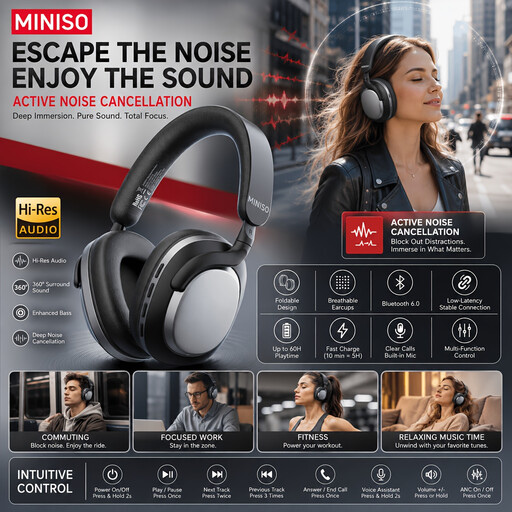
MINISO MG210 Wireless Noise-Cancelling Over-Ear Headphones, Black

MINISO MG210 Wireless Noise-Cancelling Over-Ear Headphones – Black

An over-ear option for anyone looking to reduce office noise; the stated noise cancelling doesn’t confirm neutral mix reproduction.

The product name lists wireless use and 24-hour battery life. The product description mentions ANC; office and music use are included in the product name.

View at Joybuy
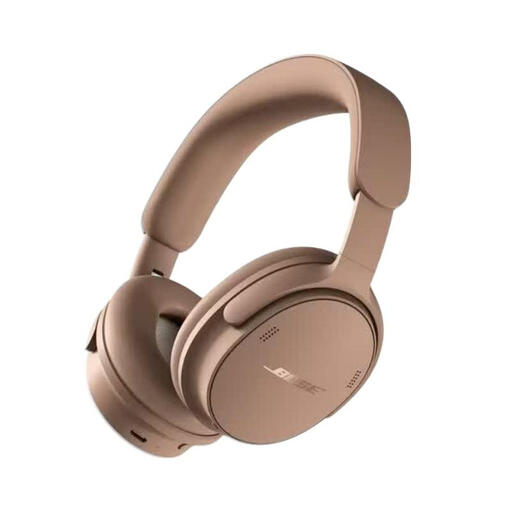
Bose QuietComfort Headphones (2nd Gen), Hazelnut Taupe

Bose QuietComfort Headphones (2nd Gen) – Hazelnut Taupe

An option if you’re looking for active noise cancelling; the listed features don’t show that these provide a neutral mix reference.

The product description mentions Bluetooth, USB audio, active noise cancelling and several listening modes.

View at Joybuy

Bose QuietComfort Ultra Bluetooth Headphones, Black

Bose QuietComfort Ultra Bluetooth Headphones – Black

An option for anyone looking to reduce office noise; ANC alone doesn’t confirm neutral mix reproduction.

The product description mentions Bluetooth 5.3, ANC and a 2.5mm/3.5mm connection. It also says you can listen via the audio cable without using the battery.

View at Joybuy

Sonos ACE Over-Ear Bluetooth Headset, Black

Sonos ACE Over-Ear Bluetooth Headset – Black

An option for reducing office noise; the stated noise cancelling and listening modes don’t prove neutral mix reproduction.

The product description mentions Bluetooth, USB-C and 3.5mm cables, connection to two devices, ANC and an Aware mode.

View at Joybuy

Frequently asked questions

Should I choose open-back or closed-back headphones for checking mixes in a busy office?

Start with a closed-back model if colleagues and background noise are nearby. An open-back model may work for comparisons in a quiet place, but it lets more sound in and out; a closed-back model isn’t automatically the better final mix reference.

Can I connect the DT 770 PRO to my computer or audio interface?

That depends on the output and the impedance variant. beyerdynamic describes the 32 ohm version as suitable for sources such as computers and portable equipment, the 250 ohm version as suited to stationary amplification, and the 80 ohm version as optimised for high listening levels in a recording studio. The product page for the 80 ohm version lists a 3.5mm plug and a 6.35mm adapter.

How can I avoid turning the volume up to drown out office noise?

The WHO recommends keeping the volume low, taking listening breaks and using well-fitting headphones in noisy situations, with noise cancelling if needed, to reduce the urge to listen at higher volumes. This isn’t a legal volume limit, nor does it guarantee that one model will provide enough isolation.

Should I use ordinary studio headphones as hearing protection in a Dutch office?

Not simply because the office is busy. Arboportaal sets out obligations based on daily exposure to harmful noise: above 80 dB(A), the employer must make hearing protectors available, and above 85 dB(A), employees must wear them. Without a measured exposure level, you shouldn’t treat ordinary studio headphones as a substitute for required hearing protection.

What are my rights if headphones bought online aren’t suitable or break too soon?

For an online consumer purchase, you generally have 14 days from delivery to change your mind, subject to legal exceptions. If a product used normally doesn’t meet what you could reasonably expect, the retailer is responsible for providing an appropriate solution; this is separate from any manufacturer’s warranty. ACM ConsuWijzer explains these consumer rights.
