If you work in a shared room or somewhere with background noise, start with a well-fitting, closed-back wired pair of headphones. They can block out more sound than an open-back design and generally let less sound escape, according to Sennheiser. In a quiet room where sound leakage isn’t a concern, an open-back model is worth comparing for critical listening. Whichever type you choose, check the fit and connection, and listen to your mix on a second playback system.
Who is this for?
Beatmaker with housemates
You work on beats in a shared or noisy room and want to reduce background noise and avoid disturbing your housemates. Sennheiser describes open-back headphones as offering little isolation, while closed-back models are better suited to working around microphones.
Critical listener
You work in a quiet room and want to assess stereo positioning and detail in instrumental layers. Sennheiser says open-back headphones are suitable for critical listening in quiet spaces, with sound leakage as the trade-off.
Producer with long sessions
For repeated editing sessions, you pay attention to fit, ear pads and replaceable parts. Audio-Technica, beyerdynamic and Sennheiser list replaceable or interchangeable parts for specific models.
What should you look for?
Closed-back, wired
Choose this if: you work alongside housemates, want to reduce background noise or also record near a microphone.
Bear in mind: isolation also depends on fit. Check that the impedance version is suitable for your output, too.
Open-back, wired
Choose this if: you mainly assess stereo positioning and mix details in a quiet space, and sound leakage isn’t a concern.
Bear in mind: open-back ear cups offer little isolation and let sound escape.
Semi-open, wired
Choose this if: you mainly work in a quiet room and want to compare a semi-open alternative.
Bear in mind: semi-open doesn’t guarantee sound isolation in a shared room; check whether the sound leakage is suitable for your situation.
First, choose based on how quiet your room is and how much other people can hear. Then compare listening characteristics and connectivity.
| What to consider |
What should you check? |
Who should prioritise this? |
| Isolation and sound leakage |
Compare closed-back, semi-open and open-back designs, and check how well the ear cups fit. |
If I work in a shared room, I want to let as little sound as possible reach my housemates. Around 36% of consumers make isolation their top priority. |
| Beat detail and stereo positioning |
Listen with familiar reference tracks and check your balance decisions on a second playback system, too. |
When I assess transitions, bass balance and instrument positioning, I want to compare differences clearly. Around 29% of consumers prioritise critical listening. |
| Comfort |
If possible, wear the headphones for longer; compare the ear pads, headband and replaceable parts of the exact model. |
For long or repeated editing sessions, I want a comfortable fit that lasts and ear pads I can replace if needed. Around 21% of consumers put comfort during sessions first. |
| Connectivity and maintenance |
Check the plug, any adapter, cable length, impedance version and availability of replacement parts. |
If I use my laptop or audio interface, I want to know whether the connection and cable are suitable for my equipment. Around 14% of consumers make compatibility and maintenance their top priority. |
Common buying mistakes
-
Choosing an open-back model when housemates are working at the same time
Open-back headphones let sound escape and offer little isolation, as Sennheiser explains. This can be disruptive in a shared room.
First consider how quiet the room is and whether you share it with others. Only then compare an open-back model for its listening characteristics.
-
Choosing based on the name DT 770 PRO alone
The DT 770 PRO is available in 32-, 80- and 250-ohm versions, which beyerdynamic says are designed for different uses. Impedance alone doesn’t predict how loud your equipment will play.
Check the full model name and version, then compare it with the output of your laptop or audio interface. Focusrite points out that sensitivity, source material and listening environment also play a part.
-
Treating a stated frequency range as proof of accurate bass
A frequency range on its own doesn’t tell you how a pair of headphones reproduces the bass balance of your beats; claims about accuracy may be marketing claims.
Compare them with familiar material and check your edits on a second playback system, rather than relying only on a wide stated frequency range.
Brands to compare
Audio-Technica
The closed-back ATH-M40x is a wired option to compare if you’re looking for isolation.
- Audio-Technica lists detachable straight and coiled cables, and a nominal impedance of 35 ohms.
- The brand’s claim of a flat response isn’t an independent performance measurement; assess the fit and your reference material for yourself.
beyerdynamic
The closed-back DT 770 PRO 80 ohm is an option to consider if you want isolation; the open-back DT 900 PRO X is a separate model.
- beyerdynamic lists replaceable ear pads and a 3.5 mm plug with a 6.35 mm adapter for the DT 770 PRO 80 ohm.
- The 32-, 80- and 250-ohm versions are designed for different uses; don’t treat them as the same version.
Sennheiser
The open-back HD 490 PRO is intended for comparison when critical listening in a quiet room, not for blocking sound when working alongside housemates.
- Sennheiser lists two interchangeable sets of ear pads and a detachable cable.
- The open-back design lets sound escape; the brand’s claims about spacious and accurate reproduction aren’t based on an independent comparative test.
AKG
The semi-open K240 Studio is an option to compare if you mainly work in a quiet room.
- AKG lists a detachable cable, replaceable ear pads and a nominal impedance of 55 ohms.
- Semi-open doesn’t mean the headphones provide enough isolation in a shared room; assess the sound leakage in your situation.
Sony
Sony describes the MDR-7506 as headphones for recording and studio use.
- Sony lists a 3 m cable and a weight of 230 g.
- These details don’t tell you whether the fixed working distance, fit or sound suits your beat-making; check each one separately.
Joybuy products
The selection below includes headphones with stated wired listening options or a closed-back design. For each model, check whether the connection and sound reproduction suit your interface and the way you assess beats. The listed product features alone don’t prove that a model is suitable as a studio monitor.
 No image available
Bose QuietComfort Ultra Bluetooth Headphones - Black
The product description mentions an audio cable for wired listening and a closed-back design with active noise cancellation. This doesn’t establish how suitable the model is for making accurate mix decisions.
View at Joybuy
 No image available
Sennheiser MOMENTUM 4 Wireless - Black
The product description mentions an included 3.5 mm cable for passive listening without a battery; check that the wired connection is suitable for your equipment.
The description also mentions active noise cancellation, a padded headband and deep, padded ear cups. These features aren’t an independent assessment of how well the headphones reproduce sound for beat-making.
View at Joybuy
 No image available
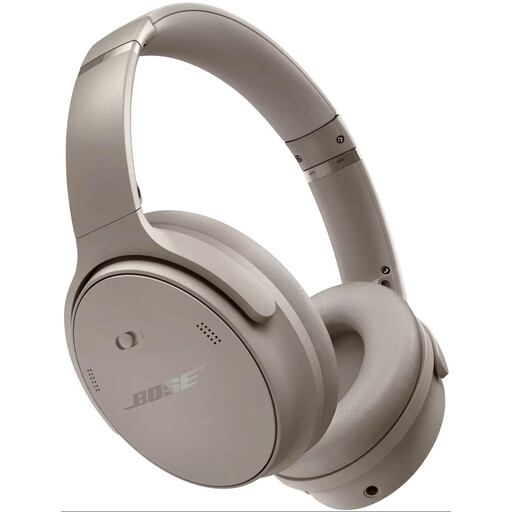
Bose QuietComfort Headphones - Sandstone
The product description mentions Bluetooth and active noise cancellation. Before choosing, check whether this version supports the wired connection you want.
The description mentions a lightweight design for extended wear; fit is personal and isn’t the same as an assessment of studio sound reproduction.
View at Joybuy
 No image available
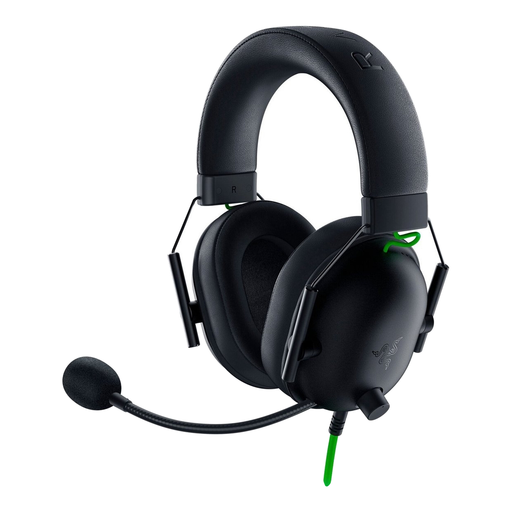
Razer BlackShark V2 X 7.1 Wired Gaming Headset - Black
This is a wired gaming headset; the product description mentions a 3.5 mm connection and a microphone. Check that the headset format and connection are suitable for your audio interface.
The description mentions passive noise isolation and memory foam ear cushions, but doesn’t establish how well the model reproduces instrumental beats.
View at Joybuy
 No image available
Bose QuietComfort Ultra Headphones (2nd Gen) - Black
The product description mentions a closed-back design and active noise cancellation. A detachable cable with a 3.5 mm connection is also listed; check whether that connection is suitable for your equipment.
The stated design and connection alone don’t tell you how accurately the model reproduces your mix.
View at Joybuy
Frequently asked questions
Do you need to buy an amplifier for studio headphones?
Not necessarily. Check the exact headphone version and the output on your laptop or audio interface. Focusrite points out that the volume you can achieve also depends on factors such as sensitivity, source material and listening environment. Advice for Scarlett outputs doesn’t automatically apply to other devices.
How do you connect studio headphones and keep them in good working order?
Compare your device’s connection with the plug, included adapter and cable length for the exact version. For maintenance, check whether the cable and ear pads can be replaced; Audio-Technica lists detachable cables for the ATH-M40x, and AKG lists replaceable ear pads for the K240 Studio.
Should you listen at a higher volume to hear details in a beat?
No. VeiligheidNL recommends headphones that fit well: if less background noise gets in, you don’t need to turn the volume up as high. This advice doesn’t establish a safe volume level for your specific headphones and equipment.
What are your rights when buying online in the Netherlands?
For an online distance purchase from a business, the Dutch government says you generally have 14 days to change your mind; the applicable terms and conditions still matter. You also have a legal guarantee that the product must be of satisfactory quality: if there’s a fault, contact the seller. The Dutch government states that there is no fixed two-year statutory guarantee period in the Netherlands.


