For a busy, shared office, a well-fitting, closed-back over-ear pair of headphones is a sensible first choice: beyerdynamic explains that an open-back design lets in background noise and can leak sound out. Then compare how clearly you can hear the bass line from your own audio source, how comfortable the headphones feel during a longer session, and whether the cable works with your equipment. A frequency range or sound claim alone is no proof of better bass transcription.
Who is this relevant to?
Transcriber in a shared office
If you’re trying to write out a bass line while colleagues are talking, a design that helps reduce background noise and a fit that limits sound leakage can make a difference. beyerdynamic explains the differences between open-back and closed-back headphones.
Listener looking to distinguish bass notes
If your main aim is to follow the pitch and movement of the bass part, listen to a familiar passage on your own audio source. The sound descriptions from Audio-Technica and AKG are not comparative tests of transcription performance.
Listener with long sessions
If you listen for extended periods, consider fit, cable and connection as well as isolation. Thuisarts advises keeping the volume at a safe level and using a volume limiter if possible.
What should you look for when buying?
Closed-back headphones
Choose this option: if you work in a shared office and want to reduce background noise and sound leakage.
Keep in mind: closed-back does not mean soundproof; fit, clamping force and cable vary by model.
Open-back headphones
Choose this option: if you work in a quiet, separate room and isolation is less important.
Keep in mind: beyerdynamic explains that an open-back design lets in background noise and can let sound out.
| What to consider |
What should you check? |
Who is this more important for? |
| Background noise and sound leakage |
Check that the ear cups are closed-back and fit around your ears. Closed-back does not mean soundproof. |
If I work in a shared space, I want to follow the recording clearly without disturbing colleagues unnecessarily. Around 36% of consumers rank isolation as their top buying concern. |
| Distinguishing bass notes |
Listen to a familiar passage on your own audio source at a safe volume; don’t rely solely on the stated frequency range. |
When I need to write out the pitch and movement of the bass line, I want to be able to follow it in my own recording. Around 29% of consumers prioritise distinguishing bass notes. |
| Comfort during longer sessions |
If possible, try the fit during a typical listening session; pay attention to pressure from the headband and ear pads. |
If I listen for long periods at a time, I want the headphones to remain comfortable. Around 21% of consumers make comfort their main buying concern. |
| Connection and cable |
Check the connection on your computer or audio interface, any adapter you may need, and the required cable length. |
When I connect headphones at my workstation, I want a compatible connection and a practical cable length. Around 14% of consumers put connection and cable use first. |
Common pitfalls
-
Choosing an open-back model because it’s called ‘studio’
According to beyerdynamic, an open-back design lets in background noise and can let sound out. That makes it less suitable if you’re looking for isolation in a busy, shared office.
For that working environment, compare closed-back models first; consider open-back models instead for a quiet, separate room.
-
Treating a wide frequency range as proof of better transcription
Published sound and frequency-range claims do not compare the models listed here on how well they help you identify notes in your recording.
Test with a familiar bass passage on your own audio source and keep the volume at a safe level.
-
Leaving fit and cable checks until after you buy
Ear pads and cable designs vary from one model to another. Headphones that feel comfortable briefly may not stay comfortable during a longer session.
Check the connection and cable routing in advance, and try the fit in conditions that are similar to your workplace if possible.
Brands to consider
beyerdynamic
The closed-back DT 770 PRO 80 Ohm is an option for listening in a shared space; the open-back DT 990 PRO is better suited to a quieter, separate listening area.
- beyerdynamic lists replaceable ear pads for the DT 770 PRO 80 Ohm.
- The DT 770 PRO is wired. The open-back design of the DT 990 PRO says nothing about the isolation offered by other models.
Audio-Technica
The closed-back, wired ATH-M40x is an option if the manufacturer’s description of its tuning and cable choices matter to you; the ATH-M50x is another closed-back model.
- Audio-Technica lists detachable cables for the ATH-M40x and passive isolation for the ATH-M50x.
- These features do not prove an advantage when identifying bass notes in your recording.
AKG
The closed-back, foldable K371 is an option if you listen at more than one workstation.
- AKG lists three detachable cables and a reference tuning for the K371.
- The description of its tuning is a manufacturer’s claim, not a comparative measurement against other options.
Sony
Sony presents the wired MDR-7506 for professional use in studio environments.
- Sony lists a 3 m cable and a weight of 230 g.
- Check that the cable length and fit work at your desk; these specifications do not prove better bass-note recognition.
Sennheiser
Sennheiser describes the closed-back HD 280 PRO as headphones for monitoring.
- The closed-back design makes this model worth comparing if you’re looking for passive isolation.
- The fit and isolation do not prove that you’ll be able to transcribe bass notes better with these headphones.
Joybuy product picks
These Joybuy product picks are headphones for listening in a shared workspace. Check that the connection and sound suit your audio source and the bass line you want to transcribe.
 Image unavailable
Sonos ACE Over-Ear Bluetooth Headset, Black
The product information lists active noise cancellation and noise-isolating ear pads. These features may be useful in a shared space, but do not demonstrate better bass transcription.
The product information mentions lossless audio and a wired connection via USB-C and 3.5 mm.
Joybuy
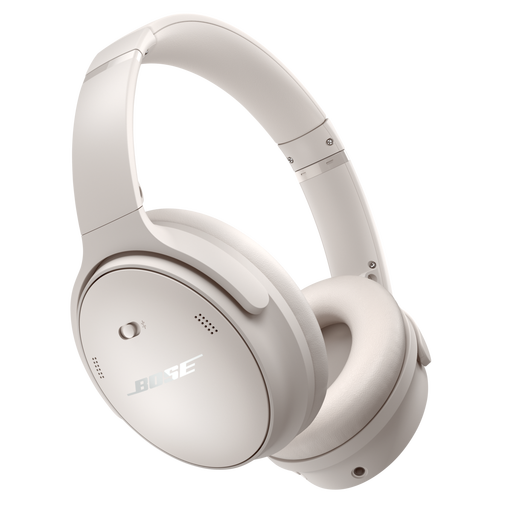 Image unavailable
Bose QuietComfort Wireless Bluetooth Headphones, White
The product information lists a closed-back design and active noise cancellation, which may be useful if you listen in a shared workspace.
The product information lists 3.5 mm and 2.5 mm connections. Check which one works with your audio source.
Joybuy
 Image unavailable
Sony WH-CH720N Wireless Bluetooth Headphones, Blue
The product information describes a closed-back over-ear design with active noise cancellation for listening in a shared space.
The stated weight is 192 g and the stated battery life is up to 35 hours with noise cancellation switched on. The product information also mentions multipoint connectivity.
Joybuy
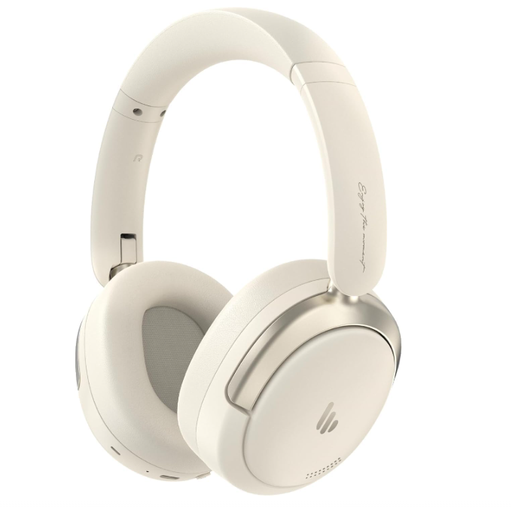 Image unavailable
Edifier Atom Max Foldable Over-Ear Headset, White
The product information lists hybrid active noise cancellation and an over-ear design, which may be useful for listening in a shared workspace.
The product information lists a wired USB-C connection and a 40 mm dynamic driver. The title mentions Bluetooth 5.4 and a foldable design.
Joybuy
 Image unavailable
Bose QuietComfort Ultra Headphones, 2nd Gen, Black
The product information lists a closed-back design with active noise cancellation, features that may suit listening in a shared space.
A detachable cable with USB-C and 3.5 mm connections is listed. Check that these connections work with your audio source.
Joybuy
Frequently asked questions
Are open-back studio headphones suitable for a shared desk?
If you need isolation and minimal sound leakage, closed-back headphones are a more sensible choice. According to beyerdynamic, an open-back design lets in background noise and can let sound out; an open-back model may be worth comparing in a quiet, separate room.
How should I use headphones during longer listening sessions?
Check that the plug, adapter and cable work with your audio source, and keep the volume at a safe level. Thuisarts advises not turning the sound up too loud and using a volume limiter if possible. If the ear pads wear out, check which ones are replaceable for your exact model.
What are my rights if headphones bought online aren’t suitable or break too soon?
According to ACM ConsuWijzer, consumers who buy online generally have a statutory cooling-off period of up to 14 days after delivery, subject to legal exceptions. This is separate from the statutory guarantee: if a product breaks sooner than you could reasonably expect under normal use, the seller must offer an appropriate solution, according to ACM. Check the seller and the applicable returns policy in advance.


