
Editor in a shared room
You’re editing bass parts while other people are around or can be heard; isolation and sound leakage both affect which design is practical.


If you work in a student room where you can hear your housemates, or record near a microphone, start with a well-fitting pair of closed-back wired headphones. If you can listen back in a quiet space, an open-back model may suit you for assessing your mix, but it lets room noise in and sound out. For either type, check the fit, connection and output of your equipment: a stated frequency range alone is no proof that you can hear the bass reliably.
You’re editing bass parts while other people are around or can be heard; isolation and sound leakage both affect which design is practical.
You can listen back without interruptions and want to focus on bass parts and how they sit in the mix; an open-back design is another option.
You work from a laptop or audio interface and want to check in advance that the version, plug and power requirements are compatible with your equipment.
Choose this if: you work in a shared or noisy room, or record close to a microphone. RTINGS.com and Focusrite describe closed-back models as better suited to reducing sound leakage and background noise.
Keep in mind: fit still matters; a poor seal can change how the bass sounds.
Choose this if: you mainly listen back in a quiet room and sound leaking out is not a problem. RTINGS.com describes open-back models as suitable for mixing and mastering.
Keep in mind: an open-back model lets room noise in and is less suitable when recording near a microphone if sound leakage is a concern.
| What to consider | What should you look for? | Who is this important for? |
|---|---|---|
| Isolation and sound leakage | Choose an open-back or closed-back design to suit the background noise and whether you record near a microphone. | If you can hear other people or are recording yourself, you’ll want background noise and sound leakage to interfere as little as possible. Around 36% of consumers prioritise isolation. |
| Assessing the bass | Check the seal around your ears and compare with familiar material; don’t treat the stated frequency range as proof of accuracy. | When making decisions about the bass part, you’ll want to trust what you hear. Around 29% of consumers give assessing the bass top priority. |
| Connection and power requirements | Check the exact impedance version, plug and output on your laptop or interface. Focusrite notes that higher impedance generally requires more power. | If you want to get started without connection or power issues, check the version and your equipment beforehand. Around 21% of consumers prioritise a direct connection. |
| Fit and maintenance | Try the headphones on and check whether the ear pads or cable are replaceable for that specific model. | For regular editing sessions, you’ll want a comfortable fit and to know which parts can be replaced. Around 14% of consumers give long-term use and ease of maintenance top priority. |
A stated range alone doesn’t tell you how the bass will sound to your ears. Headphone Test Lab explains that a poor seal on over-ear headphones can affect bass reproduction.
Check the fit using familiar material and compare the bass without turning up the volume.
Open-back models let room noise in and sound out. RTINGS.com and Focusrite describe closed-back models as better suited to situations where sound leakage matters during recording.
First decide whether you’ll mainly be working in a noisy space or listening back and assessing your work in quiet.
The beyerdynamic DT 770 PRO is available in 32, 80 and 250 ohm versions. Focusrite says that higher impedance generally requires more power from the headphone output.
Check the full version, plug and specifications of your laptop or audio interface before ordering.
The closed-back DT 770 PRO and open-back DT 900 PRO X suit different listening conditions; they are separate models.
The open-back HD 490 PRO is designed for production and mixing when isolation is not the priority.
The closed-back, wired ATH-M50x is a model worth comparing for monitoring and listening back in a shared space.
The closed-back, foldable K371 is an option to compare if you work in different locations.
The closed-back MDR-7506 is a pair of studio headphones worth comparing with other models for listening back.
The closed-back, wired PRO 4000 is a model worth comparing for fit and bass reproduction.
This Joybuy selection includes headphones with a stated wired listening option for editing bass in a student room. A wired connection alone doesn’t tell you how reliably you’ll hear your bass mix; assess that separately.
 No image available
The wired listening option described may be useful if you don’t want to use Bluetooth while editing.
The product description mentions a 3.5 mm cable and listening without battery power. The model name specifies noise cancellation and a 60-hour battery life.
 No image available
The audio cable described provides a wired listening option; check that the connection is compatible with your equipment.
The product specifications list a closed-back design, active noise cancellation and an audio cable included in the box.
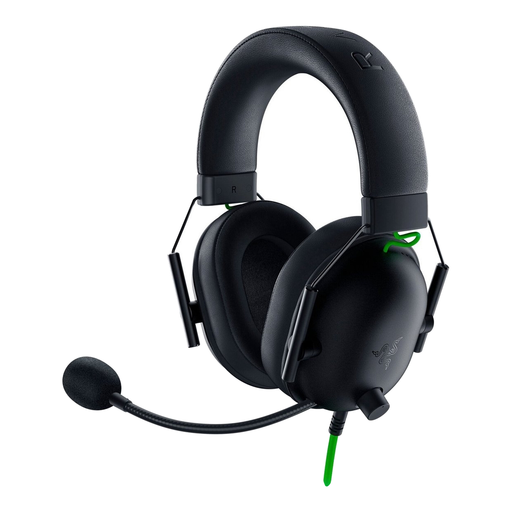 No image available
The wired connection listed makes this worth considering if you’re looking for a direct connection; it’s a gaming headset, not a pair of studio headphones.
The description lists a 1.3 m cable and a 3.5 mm connection.
 No image available
The detachable cable listed provides a wired listening option; check which connection your equipment requires.
The product description lists Bluetooth 5.4, active noise cancellation and a cable with USB-C and 3.5 mm connections.
If you’re recording close to a microphone, a closed-back model is generally better suited to reducing sound leakage. An open-back model may work for listening back in a quiet room; choose according to your working situation.
Not necessarily. Focusrite says the suitable impedance varies between interface ranges, and that factors such as the headphones’ sensitivity and the source material also matter. So check your output specifications and the exact version.
First, check that the ear pads still seal all the way around your ears. The arm of a pair of glasses, hair or a different position can affect bass reproduction on over-ear headphones; if the pads are worn, check whether replacements are available for your model.
Keep the volume down and take regular breaks. The World Health Organization stresses that both sound level and exposure time matter: as an example, it gives 40 hours per week at 80 dB and four hours at 90 dB. This is health guidance, not a purchase requirement or a setting displayed on every volume control.
According to ACM ConsuWijzer, online purchases generally come with a statutory cooling-off period of up to 14 days after delivery, subject to exceptions which you should check in advance. You’re also entitled to a statutory guarantee if a product doesn’t meet what you could reasonably expect under normal use; a manufacturer’s guarantee does not replace this legal right.