Who is this buying guide for?

Listener in a noisy household

You want to follow bass notes without turning up the volume to overcome background noise. The WHO recommends well-fitting headphones to reduce the need to increase the volume in noisy environments; fit and comfort still matter.

Detail-focused bass-line listener

You listen to short sections repeatedly and want to assess the notes in your own recording, rather than relying solely on a manufacturer’s claim about deep bass. Audacity describes features for repeating a selection and slowing down the tempo without changing the pitch.

Long-session home listener

As well as isolation, you consider the ear cups and whether the cable is suitable for longer sessions at a computer or audio interface. The Consumentenbond highlights soft over-ear earpads as something to consider when listening for long periods.

What should you look for when buying?

Strong passive isolation

Choose this when: household noise is drowning out your recording and you mainly want to compare how well the headphones seal around your ears.

The trade-off: beyerdynamic says the DT 770 M provides better isolation than the DT 770 PRO, but at the expense of sound quality and long-term comfort.

Closed-back wired studio headphones

Choose this when: you mainly listen closely to repeated sections and a good seal around your ears is enough for your room.

The trade-off: fit and passive isolation vary by model; manufacturer specifications aren’t a direct listening comparison using your recording.

Active noise cancellation

Compare this when: a constant low hum is mainly what makes you want to turn up the volume.

The trade-off: the Consumentenbond describes ANC as particularly effective against low vehicle noise; that doesn’t tell you how every pair of headphones handles every sound at home, or how clearly you’ll hear your bass line.

What to consider What to look for Who this matters to
Background noise Compare the seal around the earpads and how comfortable they are, including with your glasses on if you wear them; listen at a comfortable, low volume. If noise at home masks my recording, I want isolation without having to listen louder. Around 31% of consumers prioritise blocking out background noise when making this choice.
Distinguishing bass notes Compare the same tricky section; repeat a short clip or slow down the tempo without changing the pitch, as described in the Audacity guide. When notes are hard to follow in a busy mix, I want to check them against my own recording. Around 31% of consumers prioritise distinguishing bass notes.
Comfort Assess the ear cups and headband during a listening session that reflects how you’ll use them; check whether the earpads are replaceable. When listening at home repeatedly, I want headphones that stay comfortable, not just a strong seal. Around 23% of consumers give comfort top priority.
Connections and maintenance Check the output on your computer or audio interface, which plug or adapter you need, and which replacement parts are compatible with the exact model. If I move between listening spots or want to replace parts, I check the cable and connection in advance. Around 15% of consumers start with connections and maintenance.

Common buying mistakes

  • Focusing only on maximum isolation

    According to beyerdynamic, the DT 770 M provides better isolation than the DT 770 PRO, but the manufacturer says this comes at the expense of sound quality and long-term comfort.

    Compare how well each model seals and fits, and assess them with your recording during a listening session that reflects how you’ll use them.

  • Assuming a frequency range guarantees you’ll recognise bass notes

    A stated range doesn’t tell you whether a particular note will stand out clearly in your mix.

    Compare the tricky section for yourself. If needed, repeat a short clip or slow down the tempo without changing the pitch.

  • Treating ANC and passive isolation as the same thing

    Active noise cancellation and the seal around the earpads are different features. The Consumentenbond mainly discusses ANC in relation to low vehicle noise, not as a solution for every sound at home.

    Work out which sound is bothering you and compare headphones in your room, at a comfortable volume and using the same recording.

Brands to compare when making your choice

beyerdynamic

The DT 770 M is worth considering if you want to compare extra isolation; the DT 770 PRO is a different version.

  • beyerdynamic describes the DT 770 M as providing better isolation than the DT 770 PRO.
  • According to the manufacturer, this stronger isolation involves a trade-off in sound quality and long-term comfort.

Sennheiser

The closed-back HD 280 PRO is an option to compare if passive isolation and replaceable earpads matter to you.

  • Sennheiser lists attenuation of up to 32 dB and replaceable earpads.
  • The stated attenuation is a maximum, not a guarantee for every fit or sound source.

AKG

The closed-back K371 is worth considering if you want to compare a foldable design and different cables.

  • AKG lists three detachable cables and replaceable earpads.
  • AKG’s claims about neutral sound and isolation don’t prove that you’ll be able to pick out every bass line clearly; compare them using your own recording.

Audio-Technica

The closed-back, wired ATH-M50x is an option to compare if detachable cables matter to you.

  • Audio-Technica lists three detachable cables and a foldable design.
  • The manufacturer’s positive description of the sound isn’t an independent comparison for working out bass lines.

Shure

The closed-back SRH840A is an alternative to compare if you’re looking for a locking, detachable cable.

  • Shure describes the circumaural ear cups as designed to reduce background noise and lists a replaceable cable.
  • The description of the bass and mid-range sound is a manufacturer claim, not a measurement for your home setup.

Joybuy products

These active noise-cancelling headphones are worth comparing with wired, closed-back studio models if background noise is a problem at home. Noise cancellation won’t automatically make a bass line clearer; assess the sound using your own recording.
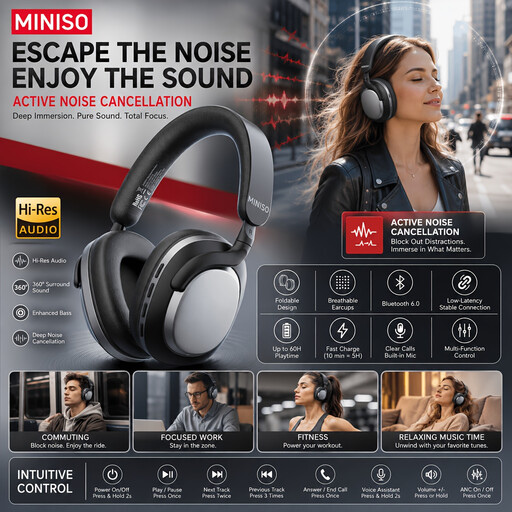
MINISO MG210 wireless noise-cancelling over-ear headphones

MINISO MG210 wireless headphones, 24-hour battery life

An option to compare if you want to try active noise cancellation in a noisy environment; check for yourself whether you can follow the bass line in your recording.

Wireless, noise-cancelling headphones with a 24-hour battery life, according to the product name.

View at Joybuy

Bose QuietComfort Ultra Bluetooth headphones, black

Bose QuietComfort Ultra Bluetooth headphones, black

An option to compare if you want to assess active noise cancellation alongside passive isolation; test how easy it is to recognise notes using your own recording.

Bluetooth headphones in black.

View at Joybuy

Sonos ACE over-ear Bluetooth headset, black

Sonos ACE over-ear Bluetooth headset, black

An option to compare if you want to weigh up active noise cancellation against using a closed-back studio model; assess the bass line using the same recording.

Over-ear Bluetooth headset in black.

View at Joybuy
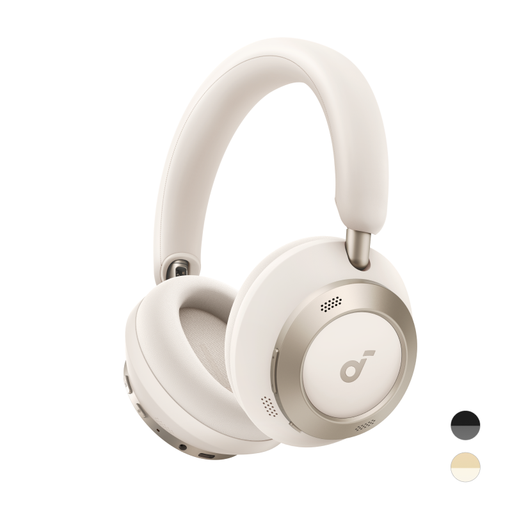
Soundcore by Anker Space One Pro wireless headphones

Soundcore by Anker Space One Pro wireless headphones

An option to compare if you want to factor active noise cancellation into your choice; check whether the bass notes remain recognisable in your own mix.

The product name lists adaptive active noise cancellation and a 60-hour battery life.

View at Joybuy
Sony PlayStation INZONE H9 II wireless noise-cancelling headset, white

Sony PlayStation INZONE H9 II wireless noise-cancelling headset, white

An option to compare if you want to assess a noise-cancelling headset alongside closed-back studio headphones; check the bass sound using your own recording.

Wireless noise-cancelling headset in white.

View at Joybuy

Frequently asked questions

Will headphones with a wider stated bass range automatically help me find the right notes?

No. A specification doesn’t prove that a note will be recognisable in your mix. Compare the same section and, if needed, repeat a short clip; according to the Audacity guide, you can slow down the tempo without changing the pitch.

How do I connect wired studio headphones to my setup?

Before buying, check your device’s headphone output, the plug and whether you need an adapter for the exact version. Sennheiser lists a 3.5mm plug with a 6.3mm adapter for the HD 280 PRO; that doesn’t mean it will work with every source.

Should I turn up the volume if I can’t hear the bass line?

Not as your first step: try getting a better seal, reducing background noise or listening to a short section again. The WHO recommends well-fitting headphones to reduce the need to turn up the volume in noisy environments; this advice is not a statutory volume limit in the Netherlands.

What can I do if the earpads wear out or the headphones are faulty?

Check whether suitable replacement earpads are available. In the Netherlands, statutory consumer rights apply to faulty products; there is no fixed statutory guarantee period and the seller must offer an appropriate solution. Normal wear and tear doesn’t automatically entitle you to a free repair.

Can I return headphones bought online in the Netherlands?

For a consumer purchase made online, you generally have up to 14 days after delivery to change your mind, with some exceptions. ACM ConsuWijzer explains these rules; check which terms apply to your purchase.
