Choose wired, passive headphones if you want to use your existing computer or audio interface output without having to charge your headphones. Closed-back models are a sensible starting point if you also record; open-back models may suit listening in a quiet room, but let more sound escape. Check that your output can provide enough volume: according to Focusrite Support, drive and listening volume depend not just on impedance, but also on factors such as sensitivity, source material and listening environment.
Who is this choice relevant to?
Bass player assessing the low end
You edit recorded bass parts and want to assess detail without treating a quoted frequency limit as proof of accuracy. Manufacturers position specific models for critical listening, but that is not an independent comparison of their bass reproduction.
Editor with few power sockets
You want to check whether the headphone output on your existing computer or audio interface is up to the job before adding more equipment. Focusrite Support points out that sensitivity, source material and listening environment matter alongside impedance.
Bass player who also records
You edit and record in the same workspace, so sound leaking from your headphones may be a concern. RTINGS.com describes open-back models as prone to sound leakage, making a closed-back model a sensible first comparison for recording.
What should you look for when choosing?
First decide whether you’ll mainly be recording or mixing in a quiet room. Then check whether your existing output can drive your chosen model to the volume you want. Focusrite Support lists sensitivity, source material and listening environment, as well as impedance, as factors to consider.
| What to consider |
What should you check? |
Who should pay particular attention? |
| Bass and detail |
Compare complete models using familiar bass recordings; don’t treat quoted frequency limits as proof of accurate reproduction. |
When I edit bass parts, I want to assess detail in the low end without relying only on a frequency limit. Around 34% of consumers make bass and detail their top buying priority. |
| Connection and drive |
Check the plug type, whether an adapter is needed and what your own output can do; don’t judge volume by impedance alone. |
I want to use my existing computer or interface output rather than add equipment unnecessarily. Around 33% of consumers prioritise using their existing output and having a straightforward connection. |
| Isolation for recording |
Consider whether you’ll be recording next to a microphone and whether the ear cups fit you well. |
When I record near a microphone, I want to stop sound from my headphones interfering with the recording. Around 20% of consumers put recording isolation ahead of other buying concerns. |
| Comfort and wear parts |
Check the fit and whether the ear pads or cable can be replaced on the exact model you’re considering. |
For long editing sessions, I want the fit and ear pads to remain comfortable, and to know whether parts can be replaced on my model. Around 13% of consumers name comfort and wear parts as their top priority. |
Pitfalls when buying studio headphones
-
Mistaking a frequency limit for proven bass accuracy
A quoted lower limit is not an independent, like-for-like test of how a model reproduces bass guitar. Separate manufacturers’ claims about sound from what the specification actually states.
Compare complete models using familiar bass material, and remember that frequency limits alone can’t tell you how your mix will sound.
-
Choosing an open-back model when you also record
RTINGS.com explains that open-back headphones let sound escape. This leakage may matter when recording with a microphone; how well a closed-back model seals also depends on its fit.
If you record near a microphone, compare closed-back models first and check how well the ear cups fit you.
-
Buying an amplifier or adapter before checking your existing connection
The plug, any adapter and the capabilities of the specific headphone output all affect whether your current setup will work. Impedance alone won’t predict listening volume.
Check the connection first, then test a suitable model with the output you actually use.
An unnecessary amplifier can add another device and power socket to an already cramped setup.
Relevant brands to compare
Audio-Technica
The ATH-M40x is a wired, closed-back model to compare if you record and edit in the same place.
- Audio-Technica’s European product specifications list an impedance of 35 Ω and two detachable cables for the ATH-M40x.
- Audio-Technica describes the tuning as flat and the model as isolating. These are manufacturer claims, not independent bass measurements or a guarantee of a good seal.
beyerdynamic
The DT 770 PRO 80 Ω and DT 900 PRO X are different wired models: the first is closed-back, while the second is open-back.
- The European product specifications describe the DT 770 PRO 80 Ω as closed-back, with replaceable ear pads. beyerdynamic lists the DT 900 PRO X as open-back, with 48 Ω impedance and a detachable cable.
- Features of the DT 900 PRO X don’t automatically apply to the DT 770 PRO. Compare the complete model variants, and don’t treat sound claims as independent bass measurements.
Sennheiser
The HD 490 PRO is a wired, open-back model that Sennheiser positions for listening and mixing in a quiet room.
- Sennheiser lists replaceable ear pads and a detachable cable for the HD 490 PRO.
- The open-back design lets sound escape, making it less suitable if leakage during recording is a concern. Claims about precise reproduction and bass performance come from the manufacturer.
Sony
The MDR-7506 is a closed-back, wired monitor model to compare if recording and storage are both considerations.
- Sony’s US product page lists a foldable design and an included 3.5/6.3 mm adapter.
- Sony’s description of its sound reproduction is not an independent comparison of bass accuracy.
Devine
The PRO 4000 is worth comparing as a closed-back, wired option if you also record.
- A closed-back design may be a relevant option when you’re working near a microphone.
- The design alone doesn’t prove how accurately the headphones reproduce bass guitar.
Joybuy headphone picks
The headphones and headsets below offer a range of wired and wireless connections. Before choosing one for bass editing, check the audio connection, whether it needs charging and whether it’s suitable for stereo work.
 No image available
Sennheiser MOMENTUM 4 Wireless, Black
The listed wired option may be useful if you want to listen without having to charge the headphones; check that it works with the output you use.
The product description mentions passive wired use and an included 3.5 mm audio cable. The product name also lists 60 hours of battery life for wireless use.
View at Joybuy
 No image available
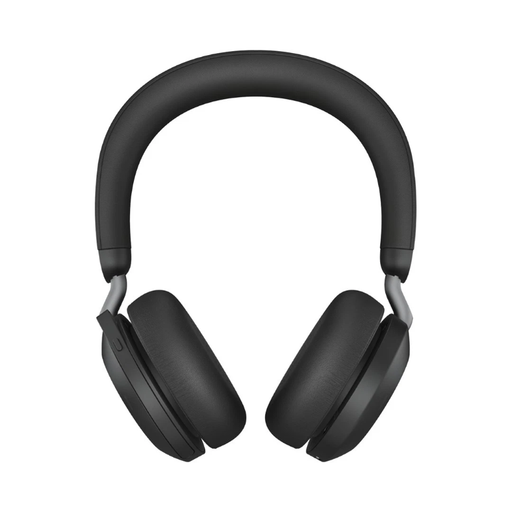
Jabra Evolve2 75 Headset
The listed USB-C connection may suit a computer setup with that port; check that the wired mode works with your editing workflow.
The product description mentions Bluetooth, a USB-C cable and up to 36 hours of battery life.
View at Joybuy
 No image available
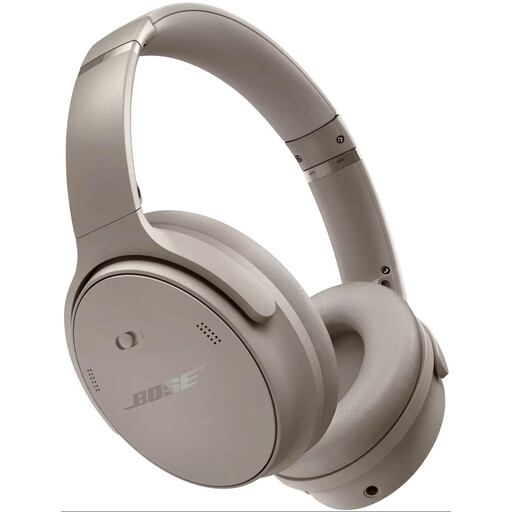
Bose QuietComfort Headphones Sandstone
If you have few power sockets, bear in mind that this wireless model has a battery that needs charging.
The product name mentions Bluetooth and noise cancelling; the product description says to charge the headphones when the battery is nearly empty.
View at Joybuy
 No image available
Bose QuietComfort Ultra Headphones, 2nd Gen, Black
The stated wired listening option may suit a setup with limited charging access, but check which mode you’ll need for your use.
The product description mentions a detachable cable with USB-C and 3.5 mm connections, a battery and a recommendation to charge it fully for optimum use. A charger is not included.
View at Joybuy
 No image available
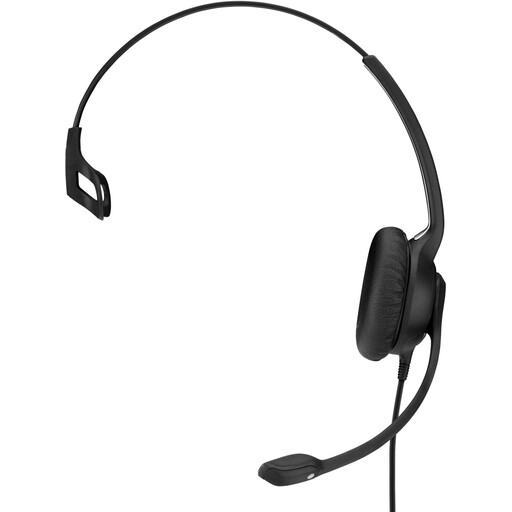
EPOS Sennheiser IMPACT SC 230 USB MS II Wired OE Headset Black
The wired USB connection may suit a computer with USB; its listed single-sided design is a limitation when assessing bass guitar in stereo.
The product description lists a wired USB 2.0 connection and a single-sided headset.
View at Joybuy
Frequently asked questions about studio headphones
Do you need a separate headphone amplifier if you have few power sockets?
Not necessarily. First check whether your computer or audio interface has a suitable output and whether it can provide enough volume for your material and listening environment. Focusrite Support points out that sensitivity, source material and listening environment matter alongside impedance. Recommendations for specific Scarlett models don’t automatically apply to every interface.
How do you connect and maintain studio headphones?
Compare the plug with the output on your own device and check whether an adapter is included with the specific model. Check the full model name when looking for replacement ear pads or a detachable cable; parts aren’t necessarily interchangeable between models.
How can you protect your hearing during long editing sessions?
Keep the volume at a sensible level, take breaks and don’t automatically turn it up to drown out background noise. The World Health Organization gives 80 dB for up to 40 hours a week as an example, and says that safe listening time decreases at higher levels. This is health advice, not a product specification.
What rights do you have as a Dutch consumer when buying online or if a product is faulty?
For eligible online distance purchases, the Dutch government says you generally have a 14-day cooling-off period in many cases; exceptions and the type of seller may matter. For a faulty product, the Dutch government outlines separate consumer rights, including free repair or replacement where the relevant conditions are met. An additional warranty service is separate from these statutory rights.


