
Creator with a full power strip
You assess effects using a laptop, recorder or audio interface and don’t want to add another powered device. Beyerdynamic offers the DT 770 PRO in 32, 80 and 250 ohm versions; check which one suits your output.


Start with wired, passive headphones that match the output of your existing equipment: the headphones themselves won’t need a power socket. Choose closed-back earcups if background noise or sound leakage gets in the way of your assessment; open-back earcups may suit a quiet room where you want to assess spatial detail. Before buying, check the connection, output power, fit and whether your equipment can drive the exact version sufficiently.
You assess effects using a laptop, recorder or audio interface and don’t want to add another powered device. Beyerdynamic offers the DT 770 PRO in 32, 80 and 250 ohm versions; check which one suits your output.
You want to hear the detail without background noise or sound leakage getting in the way. Closed-back models such as the DT 770 PRO and ATH-M50x are worth considering; fit and seal also matter.
You can accept some sound leakage and want to assess spatial detail. You could also consider open-back models, but check that your existing output can drive your chosen version sufficiently.
Choose this if: you work in a shared or noisy space, or want to limit sound leakage into a microphone.
Bear in mind: a closed-back design isn’t automatically a neutral reference; fit and connection still matter.
Choose this if: you assess stereo placement and spatial detail in a quiet room, and sound leakage isn’t a problem.
Bear in mind: open-back earcups don’t isolate sound like closed-back models; some versions also place greater demands on the output.
First compare the connection and power requirements with your existing equipment. Then decide which design suits your listening environment.
| What to consider | What should you check? | Who is this important for? |
|---|---|---|
| Connection and power | Check the connection, output power and impedance of the exact version; don’t judge suitability by the ohm rating alone. | If I don’t want to connect another powered device, my existing output needs to be able to drive the headphones. Around 33% of consumers prioritise working without an additional power source. |
| Background noise and sound leakage | Check whether the model is closed-back and whether the ear pads fit snugly around your ears. | When I listen to effects in a shared workspace, I want to be less affected by background noise or sound leaking into a microphone. Around 27% of consumers prioritise this kind of isolation. |
| Spatial detail | Consider open-back models only if sound leakage is acceptable and your output can drive the version sufficiently. | In a quiet room, I want to assess stereo placement and spatial detail clearly. Around 20% of consumers prioritise this kind of analysis. |
| Fit and replaceable parts | Consider the fit and check which cables or ear pads can be replaced for each model. | During longer editing sessions, I want a comfortable fit that stays comfortable and to know which parts I can replace. Around 20% of consumers prioritise wearing comfort or maintenance. |
The manufacturer offers the DT 770 PRO in 32, 80 and 250 ohm versions for use with different sources. The 250 ohm version may not be the best match for a basic headphone output.
Before buying, check the full model version and the output of your equipment.
A separate amplifier or interface may mean adding more equipment and possibly using a power socket.
Open-back models such as the DT 990 PRO and HD 650 don’t offer the same isolation as closed-back models. This may be an issue if background noise or sound leaking into a microphone gets in the way of your work.
Choose an open-back design only if the room is quiet enough and sound leakage is acceptable.
Beyerdynamic specifies a different driver and a detachable cable for the DT 770 PRO X, making it a different model from the DT 770 PRO.
Compare the full model name and version features before choosing a replacement.
The brand offers closed-back DT 770 PRO versions and a separate open-back DT 990 PRO.
The ATH-M50x is a closed-back, wired model with detachable cables.
The open-back HD 490 PRO and HD 650 are different models for listening and studio use.
The K371 is a closed-back, foldable studio headphone with a manufacturer-specified impedance of 32 ohm.
The SRH440A is a closed-back studio headphone with a detachable cable.
These products are wired headphones or headsets with a 3.5 mm connection specified. They aren’t a comparison of studio reference models; check that the connection and any headset features suit your equipment and editing work.
 No image available
An option to consider if you want to listen via an existing 3.5 mm connection without battery power.
The product information also specifies wireless use, which requires charging.
 No image available
A wired stereo headset to consider if you want to use an existing 3.5 mm connection.
The product information also specifies a USB controller; check which connection you want to use with your setup.
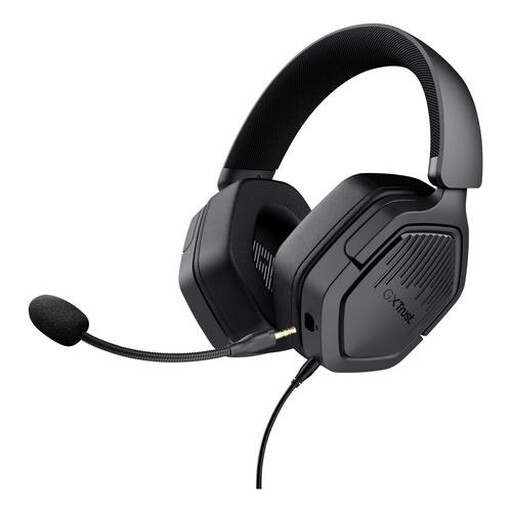 No image available
A wired, over-ear stereo headset for anyone wanting to use a 3.5 mm connection without charging.
The product information specifies a detachable microphone, so you can remove it when you don’t need it.
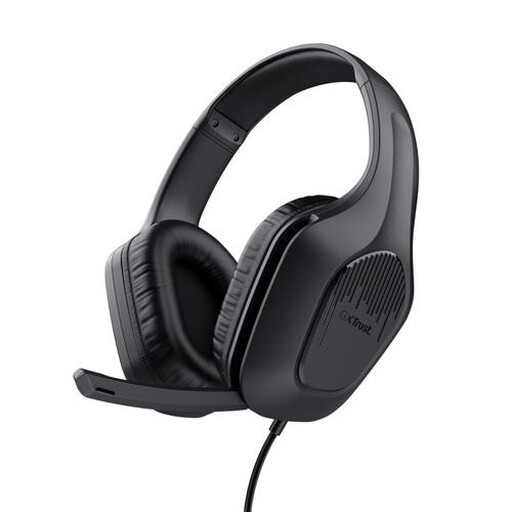 No image available
A wired, over-ear headset to consider if you want to listen via 3.5 mm without charging.
The cable is fixed and cannot be detached.
The passive wired models mentioned don’t need mains power themselves. If your existing output isn’t suitable for the exact version or can’t drive it sufficiently, you may still need a separate interface or amplifier.
Check that your source has a suitable headphone output. Beyerdynamic specifies a 3.5 mm plug and a 6.35 mm adapter for the DT 770 PRO; when looking for replacement pads or cables, check which parts are compatible with your exact model. The DT 770 PRO and DT 770 PRO X are different versions.
The World Health Organization advises keeping an eye on your listening volume and taking short breaks away from loud sounds. This advice doesn’t prove that a particular pair of headphones is safe at a specific volume setting.
According to ACM ConsuWijzer, you’re entitled to a legal guarantee if a product, under normal use, doesn’t do what you could reasonably expect. The seller is responsible for this; a commercial manufacturer’s warranty doesn’t replace your legal rights.
According to ACM ConsuWijzer, online consumer purchases generally come with a statutory cooling-off period that ends 14 days after delivery. Check which exceptions and return conditions apply to your purchase; the cooling-off period doesn’t give you an unlimited right to use the product.