
Archivist at a shared desk
Checks restored recordings while colleagues work nearby, so limiting sound leakage and distractions is a priority. AKG and Sennheiser’s closed-back models are worth comparing.


At a shared desk, start with closed-back, wired over-ear studio headphones if you want to limit sound leakage and background noise. Then compare the fit, connection to your playback device and availability of replacement parts. An open-back model is better suited to a quiet space where sound leakage is not a concern.
Checks restored recordings while colleagues work nearby, so limiting sound leakage and distractions is a priority. AKG and Sennheiser’s closed-back models are worth comparing.
Listens for remaining clicks, noise or other processing artefacts and wants to assess differences without automatically turning up the volume. Muziek Mixen Masteren describes such work as part of audio restoration.
Listens for extended periods, so checks the fit, connection and replaceable parts in advance. AKG and Sennheiser list replaceable ear pads for specific models; always check that parts fit the exact version.
Choose this option: if colleagues work nearby or background noise affects your assessment. AKG describes the K371 as closed-back; Sennheiser lists up to 32 dB of ambient noise attenuation for the HD 280 PRO.
Bear in mind: the fit affects how well the headphones seal. The stated maximum attenuation is not guaranteed for every wearer or frequency.
Consider this option: for critical monitoring in a quiet space where audible sound leakage is not a concern. beyerdynamic describes the DT 990 PRO as an open-back studio model.
Bear in mind: an open-back design offers less isolation, so check in advance whether it’s suitable for your shared workspace.
For consumers checking restored archive audio at a shared desk, the main considerations are isolation, detail, comfort and connectivity.
| What to consider | What to look for when buying | Who is this most important for? |
|---|---|---|
| Sound leakage and isolation | Check whether the model is closed-back or open-back, and assess the seal with your fit. | I don’t want to disturb colleagues working nearby or be distracted by conversations; for around 36% of consumers in this work setting, isolation is the top buying priority. |
| Subtle audio differences | Compare familiar archive clips on the same playback device, and don’t rely solely on the stated frequency range. | I want to assess remaining clicks, noise or other processing artefacts; around 29% of consumers in this situation prioritise detail over other buying considerations. |
| Comfort | If possible, try the headphones during a longer session and check whether the ear pads can be replaced on the exact version. | I listen for extended periods and want the fit and clamping force to remain comfortable; long-term comfort is the top priority for around 21% of consumers. |
| Connectivity and maintenance | Check the output on your audio device, any adapters included and the availability of compatible replacement parts. | I want to connect the headphones to my workspace setup and replace parts when needed; around 14% of consumers give connectivity and maintenance top priority. |
A product’s suitability for critical editing doesn’t automatically mean an open-back design is right for a shared desk; sound leakage and background noise still matter.
Assess your workspace first, and choose an open-back model only if audible sound leakage and background noise are not a concern.
beyerdynamic describes differences in driver design and sound between the impedance versions.
Check the full version and whether the connection suits your playback device; don’t silently substitute one version for the other.
A stated specification doesn’t prove how well the headphones will seal on your head or how your own archive recordings will sound.
Check the fit and compare familiar clips in the workspace where you plan to use them.
The closed-back K371 is worth considering if you want to compare studio headphones with detachable cables and replaceable ear pads.
The closed-back HD 280 PRO is worth comparing if its stated passive attenuation and replaceable ear pads are important to you.
The DT 770 PRO is a closed-back option; open-back studio models are an alternative for a quiet listening space, if conditions allow.
The ATH-M50x is worth considering if having different cables and an included adapter would be useful.
The MDR-7506 is a professional listening option worth comparing if a 3 m cable suits your workspace.
This selection includes consumer headphones whose product information mentions noise cancellation and/or wired connectivity. Check that the connection and the way you plan to use the headphones suit your playback device and the archive material you’re assessing.
 No image available
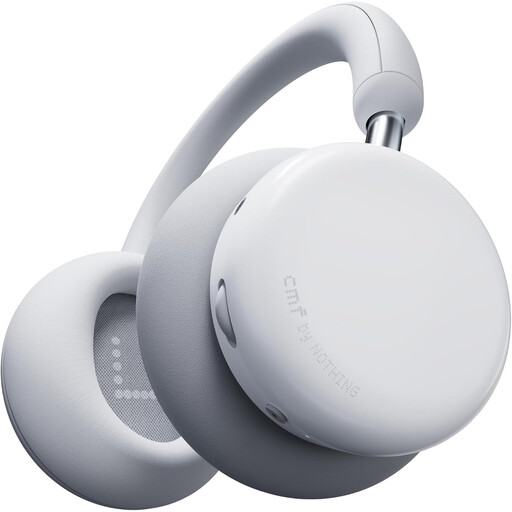
Could be worth comparing if you’re looking for headphones with noise cancellation and a wired listening option; noise cancellation doesn’t prove they’re suitable as a studio reference.
The product information mentions an included 3,5 mm audio cable and listening without battery power.
 No image available
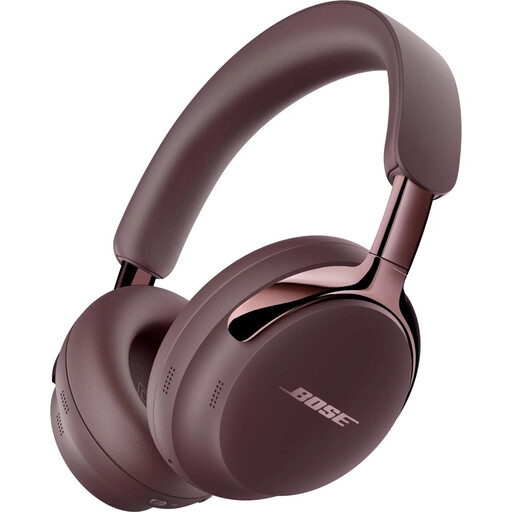
Could be worth considering if you want to compare noise cancellation in a shared space; check separately whether the headphones suit the way you assess archive audio.
The product information mentions hybrid ANC, a closed-back design, replaceable ear pads and a weight of 283 g.
 No image available
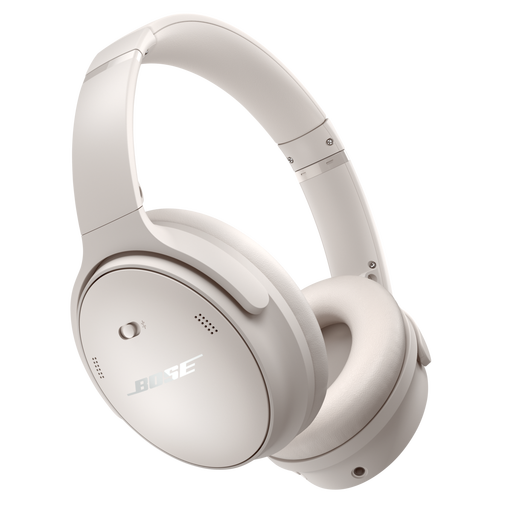
Could be an option if you want to compare active noise cancellation and wired connectivity; also check whether the sound suits your archive material.
The product information mentions a detachable cable with USB-C and 3,5 mm connections.
 No image available
Could suit a comparison of closed-back noise-cancelling headphones; check sound leakage and how they perform in your own workspace.
The product information mentions Bluetooth, 3,5 mm and 2,5 mm connections, a closed-back design and noise cancellation.
 No image available
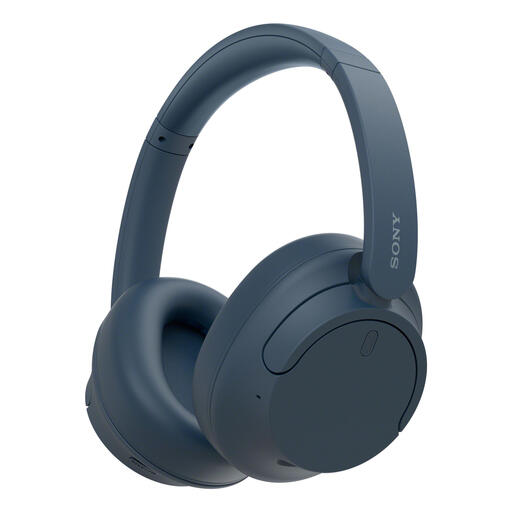
Could be worth comparing if adjustable noise cancellation is important; check that the headphones also meet your requirements for assessing archive recordings.
The product information mentions a multipoint connection, adjustable ANC levels and a weight of 192 g.
Start with a closed-back model if you want to block out colleagues and background noise. An open-back model is better suited to a quiet space where sound leakage is not a concern; then compare its sound with your own material.
Check the output on your playback device before buying. Sennheiser lists a 3,5 mm plug with a 6,3 mm adapter for the HD 280 PRO; Audio-Technica also lists a 6,3 mm adapter for the ATH-M50x. This doesn’t confirm that either will fit every output.
Regularly check the condition and fit of the ear pads. Sennheiser lists a replacement set for HD 280 PRO models from 2016 onwards, so check that the generation matches your version.
Don’t automatically turn up the volume to find details. The World Health Organization notes that sound level, listening duration and repeated exposure to loud sounds all matter. Assess details carefully without assuming that a headphone specification determines your actual listening exposure.
No. According to ACM ConsuWijzer, the statutory guarantee applies alongside any seller’s guarantee and depends on what you could reasonably expect from the product under normal use. There is therefore no single fixed period that applies to all headphones. This consumer guidance doesn’t establish which terms apply to a business purchase.