If you work in a quiet space, consider a wired open-back model for listening to the original and restored versions side by side. For example, Sennheiser describes the HD 560S as suitable for A/B comparisons, but this is not an independent test of archival audio. In a shared or noisy workspace, a closed-back model may be more practical to assess. In either case, check the fit, cable and connector, and whether your audio output can drive the chosen impedance effectively.
Who is this for?
Critical restoration listener
You compare the original with the edited version to assess whether unwanted clicks have been reduced without affecting audio you want to keep. A quiet workspace and careful A/B listening are key; iZotope warns that setting click removal sensitivity too high can also affect audio.
Editor in a shared workspace
You check archival recordings while background noise or colleagues could disrupt your listening. In this situation, a closed-back design may be more practical than an open-back model, which doesn’t block out your surroundings.
Long-hours screen worker
You listen for extended periods at a desk with two screens and want a headband and ear pads that suit you, plus a cable that stays out of your way. Whether parts can be replaced varies by model.
What should you look for?
Wired open-back model
Choose this option if: you work in a quiet space and want to listen to the original and edited versions side by side. Sennheiser lists A/B comparisons of remasters as one use for the HD 560S.
Bear in mind: an open-back design doesn’t block out your surroundings. According to Sennheiser, the HD 560S has an impedance of 120 ohms, so check that your audio output can drive it effectively.
Wired closed-back model
Choose this option if: noise from a shared or busy workspace could interfere with your listening assessment. Models to compare include the beyerdynamic DT 770 PRO and Audio-Technica ATH-M50x.
Bear in mind: isolation doesn’t prove that a pair of headphones reproduces sound more neutrally. Check the fit, connection and suitable impedance version for each model.
| What to consider |
What should you check? |
Who should pay particular attention? |
| Comparing the original and restoration |
Compare both versions at a suitable, matched listening level. Headphones don’t replace checking the original recording. |
If I want to assess whether clicks have been removed without losing audio I want to keep, I prioritise careful A/B listening. Around 33% of consumers put this comparison first. |
| Background noise |
Consider a closed-back model if your workspace isn’t quiet; check that the ear pads fit snugly. |
If I’m working with colleagues or background noise, I want to be able to listen to my material without needing to treat the room as quiet. Around 27% of consumers prioritise isolation. |
| Comfort and maintenance |
Try the headband and ear pads if possible; check whether the pads or cable can be replaced on the exact model you’re considering. |
For long listening sessions, I want a fit that works for me and to know how to replace worn parts. Around 20% of consumers put comfort and maintenance first. |
| Connection and amplification |
Check the audio output you’ll use, plug size, cable length and whether you can reach a suitable volume. Match the source to the impedance of the exact version. |
If I want to use my existing computer, interface or amplifier, the connection needs to be compatible. Around 20% of consumers start by checking the connection and source compatibility. |
Common pitfalls
-
Choosing an impedance version based on the model name alone
According to the manufacturer, the beyerdynamic DT 770 PRO is available in 32, 80 and 250 ohm versions, which aren’t necessarily equally suitable for every audio source.
Before buying, check the exact version against the output you’ll be listening through and make sure you can reach a suitable volume.
You may need a different audio output or a headphone amplifier.
-
Assuming more detail means better-verified restoration checks
Manufacturers’ descriptions of sound characteristics don’t prove that a model will make faults in your archival recordings easier to hear. The processing itself can also affect audio.
Use these descriptions as a starting point for comparing models, and listen to both the original and the edited version yourself.
-
Choosing an open-back model without considering your workspace
Open-back headphones don’t block out your surroundings. In a shared space, this may matter more than the reasons for considering an open-back model.
Choose an open-back design for a quiet listening space, and compare closed-back models if isolation matters more.
Brands to compare
Sennheiser
The wired, open-back HD 560S is worth considering for listening in a quiet space.
- Sennheiser describes the HD 560S as suitable for A/B comparisons, including remasters. The manufacturer lists an impedance of 120 ohms and a 1.8 m cable.
- An open-back design doesn’t block out your surroundings. The stated listening characteristics aren’t an independent test of archival audio; also check that your output can drive the impedance effectively.
beyerdynamic
The closed-back DT 770 PRO and open-back DT 990 PRO offer different listening designs within the same studio range.
- According to beyerdynamic, the DT 770 PRO has replaceable ear pads and is available in 32, 80 and 250 ohm versions.
- The manufacturer recommends different impedance versions for different sources. The open-back DT 990 PRO is a 250 ohm version, so check that your output can drive it.
Audio-Technica
The closed-back ATH-M50x is worth a look if passive isolation and cable choice are important to you.
- The European product information lists three detachable cables and a 6.3 mm adapter.
- Audio-Technica’s descriptions of sound and comfort are manufacturer claims. Check for yourself whether the fit suits you.
Sony
Sony describes the MDR-7506 as wired reference headphones for studio environments.
- For the MDR7506.EU, Sony lists a 3 m cable and a weight of 230 g, among other specifications.
- A 3 m cable can be handy at a desk with two screens, but it could also get in the way. Sony’s description of comfort can’t predict how the model will fit you.
AKG
The closed-back, foldable K371 is worth comparing if both isolation and portability matter to you.
- AKG lists an impedance of 32 ohms, a weight of 255 g and included cables in different lengths.
- AKG’s claims about neutral sound reproduction and comfort are manufacturer claims. Check the fit for yourself and make sure the cables suit your setup.
Joybuy products
This selection features over-ear headphones whose product information mentions a wired listening option. That doesn’t automatically make them reference models for checking restoration work; make sure the wired mode, connection and fit suit the way you work.
 No image available
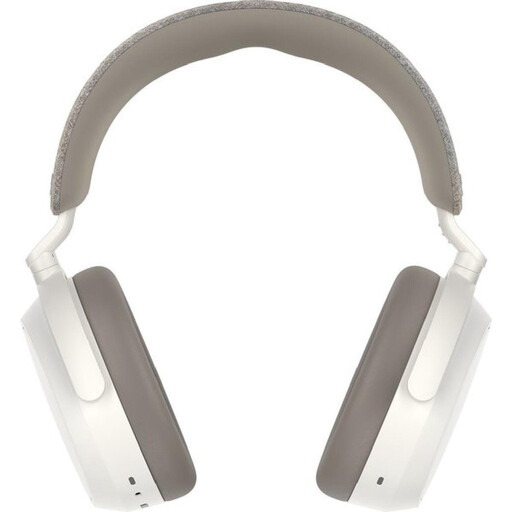
Sennheiser MOMENTUM 4 Wireless, white
The product information mentions a wired listening option; check whether the wired mode described suits your A/B workflow.
The description lists a 3.5 mm audio cable and passive use without a battery. It also mentions a padded headband and deep ear pads.
Joybuy
 No image available
Bose QuietComfort Ultra Bluetooth Headphones, black
The product information lists a closed-back over-ear design and an audio cable for wired listening; check that the cable and wired mode are compatible with your equipment.
The product specifications list active noise cancellation. The description mentions leather ear pads and a design with minimal clamping force; fit is a personal matter.
Joybuy
 No image available
Bose QuietComfort Ultra Headphones (2nd Gen), black
The product information lists a detachable cable with a 3.5 mm connector and active noise cancellation. Check that the wired connection is compatible with your audio source.
The description states that no charger is included and PD fast charging isn’t supported.
Joybuy
Frequently asked questions
Do I need headphones with two connections for two monitors?
No. The number of monitors doesn’t, by itself, determine how many audio connections you need. Check which device is playing the sound, then check its plug, cable and output capability; separately, decide whether you want to switch between two audio sources.
How can I check that restoration hasn’t affected audio I want to keep?
Compare the original and edited passage repeatedly at a suitable, matched listening level. iZotope warns that setting click removal sensitivity too high can also cause unwanted distortion; this doesn’t prove that a particular pair of headphones will always make it audible.
How can I protect my hearing during long listening sessions?
Keep the volume low and take listening breaks. The World Health Organization gives an average of 80 dB for up to 40 hours a week as an example of safe listening for adults; at 90 dB, it recommends four hours a week. These figures aren’t a measurement of the volume produced by your headphones.
Can I replace parts on studio headphones?
Check the exact model and version. beyerdynamic lists replaceable ear pads for the DT 770 PRO; Audio-Technica lists detachable cables for the ATH-M50x. This doesn’t mean parts are interchangeable between models or versions.
What rights apply when buying online from a business in the Netherlands?
According to the Dutch government, when you buy at a distance from a business, you usually have a 14-day cooling-off period; a purchase from a private seller isn’t automatically covered by these rules. You’re also entitled to a product that meets legal standards, with no fixed statutory warranty period in the Netherlands. Before ordering, check the seller’s information and the terms that apply to your transaction.


