
Everyday stock-up shopper
You’re looking for rusks for regular breakfasts or lunches in your room, and want to compare wholegrain varieties and their fibre content.


Choose rusks for your student room based on when you’ll eat them, not just because they’re labelled premium. For everyday staples, compare wholegrain varieties and their fibre content. For a more substantial breakfast, size and seeds are worth considering, while a variety with a different protein or carbohydrate profile is a good fit if those are the nutritional values you want to compare. Whatever you choose, check the ingredients and allergen information on the packaging.
You’re looking for rusks for regular breakfasts or lunches in your room, and want to compare wholegrain varieties and their fibre content.
You’re buying rusks for brunch with housemates or visitors, and are considering their size, seeds and kernels.
You’re checking protein, fibre and carbohydrates per 100 g and per rusk, so you can compare products on a like-for-like basis.
First, decide whether you’re mainly buying rusks for everyday use or a special occasion. Then compare the nutritional information and check the ingredients and allergens. A larger rusk or one with a more generous sprinkling of seeds won’t necessarily have the nutritional profile you’re looking for.
| What to consider | What to check before buying | Who should pay particular attention? |
|---|---|---|
| Wholegrain and fibre | Compare the ingredients and fibre content per 100 g of different wholegrain varieties. | If rusks are a regular part of my breakfast or lunch, I want to know which grain base and fibre content I’m choosing. For around 45% of consumers, this everyday comparison matters most. |
| Size and seeds | Check the size, number of rusks, and the seeds and kernels listed; remember to check the allergens too. | For breakfast with housemates, I want rusks that suit what I’m serving. Around 33% of consumers prioritise this occasion. |
| Nutritional values | Compare protein, fibre and carbohydrates on the same basis: per 100 g and, where stated, per rusk. | When I’m choosing specifically for these nutritional values, I also want to know the weight of each rusk. For around 22% of consumers, this comparison comes first. |
With rusks, the emphasis may be on size, seeds, fibre or a particular nutritional profile. The word ‘premium’ alone doesn’t tell you which of these qualities a variety has.
Decide what matters for your needs, then compare the ingredients and nutritional information for the products you’re considering.
Pack sizes can vary in weight and number of rusks, so the size of the pack doesn’t tell you much about how many portions you’ll get.
Check the number of rusks and, if you’re comparing nutritional values per portion, the weight of each one.
The PLUS and TastyBasics seeded varieties described here contain sesame, among other ingredients. These varieties also list egg and cereals containing gluten.
Check the allergen information on the current packaging, especially if you’re buying rusks for someone with an allergy.
Bolletje offers dark wholegrain rusks and a seeded variety, among other options. The brand is worth considering if you want to compare these two types of product.
The sunflower and pumpkin seed rusks described here are a good option if you want to compare protein and fibre per 100 g.
PLUS sells both wholegrain rusks and a seeded wholegrain variety. When comparing them, check the details of each pack.
Jumbo stocks varieties such as wholegrain, multigrain and spelt rusks, alongside products from other brands.
Lidl has product pages for wholegrain rusks and artisan multigrain rusks; the multigrain pack described weighs 230 g.
These three products cover the choice between rusks with sunflower seeds and two wholegrain varieties for your store cupboard. Check the nutritional information and allergens on the packaging of the pack you choose.
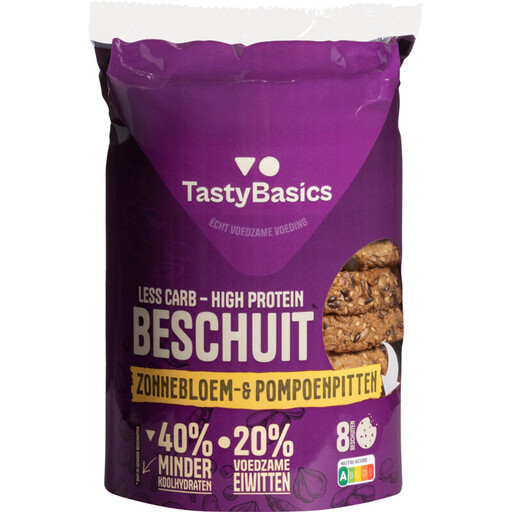 Image unavailable
An option if you’re looking for rusks with sunflower seeds for a more substantial breakfast.
The pack contains 8 pieces. Compare the nutritional values for this variety and check the allergens on the current packaging.
 Image unavailable
A wholegrain variety to consider for regular breakfasts or lunches.
The pack contains 10 pieces. PLUS lists 100% wholegrain cereals and 10 g of fibre per 100 g for Bolletje’s dark wholegrain variety; check the allergens on the packaging.
 Image unavailable
A wholegrain option if you’re looking for a pack of rusks to enjoy regularly.
The pack contains 13 pieces. Compare this variety’s nutritional information and allergens with those of other wholegrain packs.
No. Wholegrain is a useful point of comparison if the grain base and fibre content matter to you. According to the Voedingscentrum, wholegrain cereal products contain more fibre and other important nutrients than products made from white flour. Also compare the nutritional information and allergens for the rusks you buy.
Check the allergen information on the specific pack, particularly for sesame, egg and cereals containing gluten. The PLUS seeded variety described contains wheat, barley, oats, egg and sesame; the TastyBasics variety described lists cereals containing gluten, egg and sesame.
Store rusks in a cool, dry, dark place and seal the pack tightly once opened. This helps stop moisture from making them less crisp.