
Student with limited freezer space
You occasionally freeze a few portions of carrots and want to find out whether an existing freezer compartment will do or whether a compact appliance of your own would fit.


You don’t necessarily need your own freezer. First, check whether the freezer compartment you already have access to can be set to at least −18 °C and has enough room for your portions. If space is limited and you only freeze small amounts, a mini freezer could work; for larger batches, both capacity and the stated freezing capacity in kg per 24 hours matter. A table-top model offers more storage space but takes up more room. Compare each model’s annual energy consumption and stated noise level too.
You occasionally freeze a few portions of carrots and want to find out whether an existing freezer compartment will do or whether a compact appliance of your own would fit.
You blanch larger amounts more often, so you need to consider both storage space and freezing capacity per 24 hours.
You need to consider the available space, stated noise level, ongoing electricity use and any arrangements for sharing the appliance.
A good fit if: you have access to enough free freezer space that can be set to at least −18 °C.
Bear in mind: available space and temperature may depend on the appliance and how your housemates use it.
A good fit if: you freeze small portions and have limited space for an appliance of your own.
Bear in mind: limited capacity and freezing power may be a drawback when you have a large amount of carrots.
A good fit if: you regularly prepare more portions and have room for a larger appliance, possibly with drawers.
Bear in mind: a table-top model takes up more space than a mini freezer. Check whether it has No Frost if you want to spend less time defrosting by hand.
The percentages below show the estimated share of consumers who rank each factor as their main reason for buying in this student scenario.
| What to consider | What to look for when buying | Who might prioritise this? |
|---|---|---|
| Space | Measure the available space, room for the door to open and ventilation clearance specified in the manual. Check the net freezer capacity. | If space is limited, I want to know whether the appliance and its door will fit in my kitchen. Around 28% of consumers prioritise saving space. |
| Freezing capacity | Compare the amount of carrots you freeze in each batch with the stated freezing capacity in kg per 24 hours. This is different from the total storage capacity. | If I blanch a larger amount at once, I want to be able to freeze it in portions without overlooking the appliance’s capacity. Around 22% of consumers prioritise freezing capacity. |
| Energy consumption | Compare the stated annual consumption in kWh per year and the capacity of models suited to how you’ll use them. The European Commission explains what information the energy label includes. | If I use the appliance all the time, I want to factor in its annual consumption and work out an estimated cost using my own electricity tariff. Energy consumption is the main priority for around 22% of consumers. |
| Noise | Compare the stated noise level in dB(A) for the exact models you’re considering, and check where the appliance can be placed according to its installation instructions. | If my freezer is close to where I study or sleep, I want to take its stated noise level into account without assuming that one figure guarantees it will seem quiet to me. Noise is the top priority for around 17% of consumers. |
| Maintenance | Check whether the exact model has No Frost and read the maintenance instructions. Remember that a manufacturer’s warranty is separate from your statutory rights against the seller. | If I want to minimise manual defrosting, I check whether the model has No Frost and what maintenance and servicing involve. Around 11% of consumers prioritise maintenance and aftercare. |
Litres tell you how much you can store; kg per 24 hours tells you the stated freezing capacity. So even a freezer with enough storage space may still have a limit on how many fresh carrots you can add at once.
Compare both specifications with the amount you want to freeze in each batch, and don’t add too much at once.
According to the Netherlands Nutrition Centre, freezer compartments with one or two stars cannot be set to at least −18 °C.
Check the star rating and the temperature the compartment can reach before using an existing one or buying an extra appliance.
The energy label also shows annual consumption. This helps you compare models with suitable capacity by their stated kWh per year.
First compare models that suit your needs, then work out a personal estimate of electricity costs using your own tariff.
No Frost relates to frost build-up and ease of defrosting; freezing capacity is a separate specification for each model.
As well as checking the maintenance features, look at capacity, stated freezing capacity and the space available.
The TFM4402W is an example of a freestanding mini freezer for small portions and limited space.
The VR550 is a table-top model with drawers, for anyone who wants to organise their frozen food.
The GTV15NWEB is a table-top model to compare if capacity, freezing capacity and model specifications matter to you.
The FNdi 1624 is a table-top model to include in your comparison if No Frost is important to you.
These models offer options for having your own freezer space, from a compact mini freezer to a table-top model or chest freezer. For the exact model, check that its temperature settings, placement and capacity suit how you plan to use it.
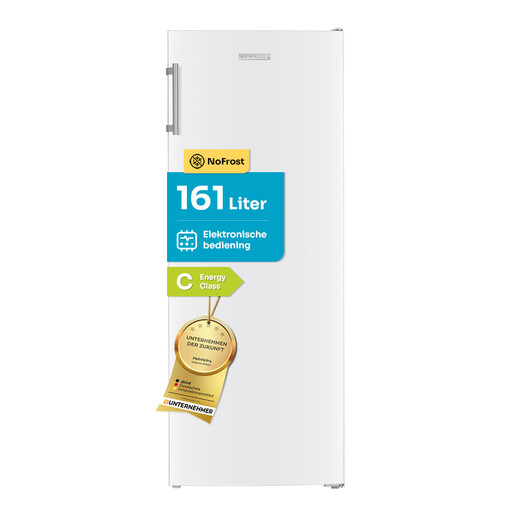 No image available
An option if you’re looking for more storage space and want to consider No Frost.
The product name lists a 161-litre capacity, No Frost, freezer drawers, a temperature range of −14 °C to −22 °C and energy rating C.
 No image available
A table-top model to consider if No Frost is an important maintenance feature for you.
The product name lists No Frost and energy rating D.
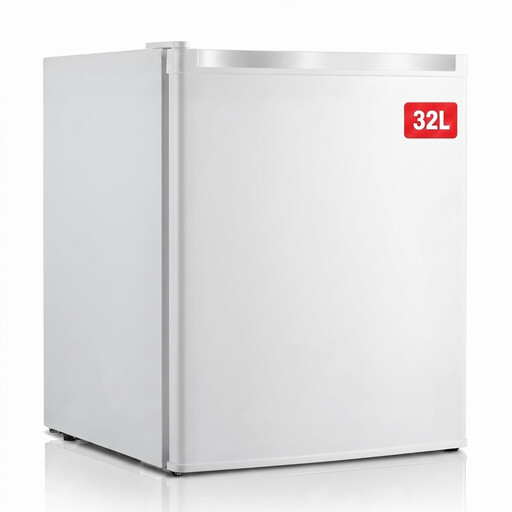 No image available
A compact option if you’re looking for a small amount of freezer space of your own.
The product name lists a 32-litre capacity, 43 dB, seven temperature settings and a reversible door.
 No image available
A chest freezer to consider if a top-opening lid and removable basket suit your set-up.
The product name lists a 95-litre capacity, switchable fridge and freezer modes, energy rating E, a seven-setting thermostat and a defrost drain.
 No image available
A larger chest freezer to consider if you’re looking for extra storage space and a basket.
The product name lists a 140-litre capacity, a storage basket, a counterbalanced lid, an adjustable temperature control, adjustable feet and energy rating E.
Not if you need to be able to set the freezer compartment to at least −18 °C. According to the Netherlands Nutrition Centre, compartments with one or two stars cannot be set to that temperature. Check the rating and the temperature of the space you plan to use.
The Netherlands Nutrition Centre recommends briefly blanching carrots. Then cool them quickly in iced water, drain and dry them thoroughly. Freeze them in small portions, and don’t add too much at once.
Follow the ventilation and installation instructions for your chosen model, keep escape routes clear and avoid overloading extension leads. This is fire safety advice from the Netherlands Fire Service. Whether you’re allowed to install an appliance in your rented accommodation depends on the house rules and your tenancy agreement.
Multiply the stated annual consumption in kWh per year by your own electricity tariff to get a personal estimate; actual consumption may differ. In the Netherlands, statutory consumer protection applies, but there is no fixed statutory warranty period. If a product is faulty, contact the seller, even if the manufacturer’s warranty also applies.
For a new household refrigerating appliance covered by the relevant EU energy labelling rules, the label must be clearly displayed, including when it is sold online. According to the European Union, these labelling rules do not apply to second-hand products.