What should you look for?
The Netherlands Nutrition Centre recommends storing cut vegetables in a sealed container in the fridge and setting the fridge to 4 °C. So first check whether your existing fridge meets your storage needs before choosing an extra appliance.
| What to consider |
What should you check? |
Who should pay particular attention? |
| Temperature and storage |
Check whether you can set and measure the temperature, and whether sealed containers will fit. |
I want to store cut carrot sticks in a sealed container and check the temperature; around 31% of consumers prioritise storage and temperature. |
| Space and fridge capacity |
Measure the space where it will go, and check the external dimensions, door clearance and layout to make sure your containers will fit. |
In a small or shared kitchen, I want to know whether containers and groceries will fit; around 25% of consumers prioritise available space and usable fridge capacity. |
| Annual energy use |
Compare the stated energy use in kWh per year with the fridge capacity you need. |
If I’m running an appliance all the time, I want to take its stated annual energy use into account; around 19% of consumers prioritise energy use. |
| Freezer compartment |
Compare the stated fridge and freezer capacities separately. |
I want to freeze food as well as chill groceries, and want to know how much space each compartment offers; around 13% of consumers prioritise freezer space. |
| Noise |
Compare the stated noise level in dB(A) and consider how close the appliance will be to where you study or sleep. |
If the fridge will be close to where I spend time, I want to compare its stated noise level; around 12% of consumers prioritise noise. |
Fridges for compact kitchens
These product picks focus on freestanding under-counter fridges for compact kitchens, including models with and without a freezer compartment.
 No image available
Bella BKK090.1BE under-counter fridge
A freestanding under-counter model with a crisper drawer, ideal if you want to store vegetables separately in a compact space.
88-litre capacity; energy rating E; crisper drawer, adjustable glass shelves and a temperature control dial.
View at Joybuy
 No image available
Bella BKV555‑040CW under-counter fridge with freezer compartment
A good fit if you want to keep groceries chilled and need a separate freezer compartment too.
Energy rating C; 95 litres of fridge space and 14 litres of freezer space, 109 litres in total; crisper drawer, adjustable shelves and adjustable temperature.
View at Joybuy
 No image available
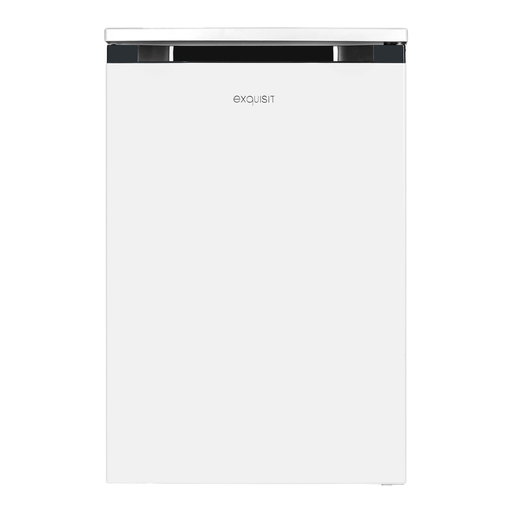
Exquisit KS16-4-051CW under-counter fridge with freezer compartment
An option if you want to freeze food as well as keep groceries chilled.
Energy rating C; 107 litres of fridge space and 13 litres of freezer space, 120 litres in total; temperature control dial.
View at Joybuy
 No image available
Wiggo WL-BTT88E(W) under-counter fridge
A model without a freezer compartment, for anyone looking for a crisper drawer and more space for chilled groceries.
129-litre capacity; energy rating E; two glass shelves, a crisper drawer and a temperature control dial.
View at Joybuy
 No image available
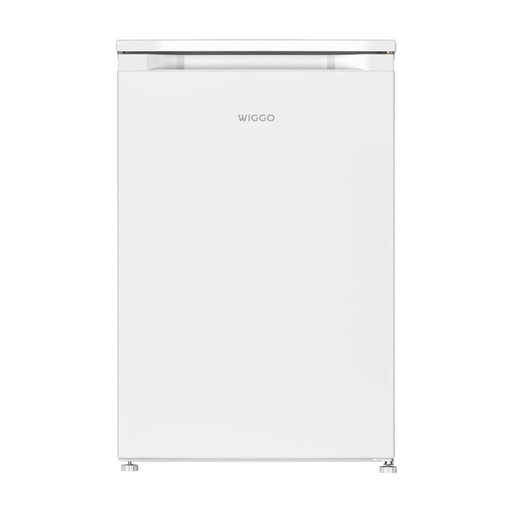
Wiggo WL-TT82D(W) under-counter fridge
An under-counter model without a freezer compartment, with a crisper drawer and mechanical temperature control.
107-litre capacity; energy rating D; crisper drawer, glass shelf and reversible door.
View at Joybuy
Frequently asked questions
How should I store freshly cut carrot sticks?
Store cut vegetables in a sealed container in the fridge. The Netherlands Nutrition Centre recommends a fridge temperature of 4 °C. For opened pre-cut vegetables, it recommends keeping them chilled for up to two days; if the packaging is unopened, follow the instructions on the label too.
How can I check whether my fridge is cold enough?
Use a fridge thermometer and compare the reading with the recommended 4 °C. The Netherlands Nutrition Centre recommends placing the thermometer in the middle of the bottom shelf and leaving it there for half a day or overnight. Adjust the fridge if the reading is higher.
Can I simply fit an under-counter model snugly beneath my worktop?
No. First check the external dimensions and which way the door opens, and consult the manual to find out how much ventilation space is needed. The external dimensions alone don’t confirm whether a model can be built in or placed snugly.
How can I compare the energy use of fridges?
Compare the stated annual energy use in kWh for the exact models. To work out the electricity costs, multiply that figure by your own price per kWh.
What does a fridge’s energy label tell me?
The EU energy label gives information including energy use, compartment volumes and noise emissions. The European Commission describes the A-to-G scale used since 1 March 2021; compare the labels for the specific models you’re considering.


