
Student with limited kitchen space
Looking for an appliance that fits the space while leaving enough room to chill opened cream and everyday groceries.


First, choose a fridge that fits the available space and has enough usable fridge capacity for opened cream and shared groceries. A compact under-counter model with a freezer compartment is best if you only need a little freezer space. If you share more fridge and freezer provisions with housemates, a larger fridge-freezer could be a better fit, provided you have room for it. Once it’s in place, use a separate fridge thermometer to check that the fridge compartment reaches 4 °C. For models that fit, compare the stated annual energy consumption in kWh.
Looking for an appliance that fits the space while leaving enough room to chill opened cream and everyday groceries.
Want to choose fridge and freezer capacity to suit what they store together, and check whether a larger appliance will fit in the kitchen.
Considers the stated noise level and annual electricity consumption, as well as size and food storage. A dB rating is not the same as how noticeable the noise will be in your own room.
A good fit if: you have limited floor space, mainly need fridge capacity and only store a small amount of frozen food.
The trade-off: the freezer compartment takes up space that could otherwise be used for chilling. Compare the capacity of each compartment separately.
A good fit if: several people share one appliance or you regularly store more frozen food.
The trade-off: this combination takes up more space. Choose a capacity that suits how you share food and compare the annual energy consumption of models that fit.
A good fit if: you already share freezer space and mainly need extra fridge capacity.
The trade-off: the fridge itself has no freezer space. An extra appliance that stays switched on all the time can increase your combined electricity consumption.
Start by checking the available space and how many litres of fridge capacity you actually need. Then compare freezer capacity, annual energy consumption and noise. None of these features can replace checking the actual fridge temperature.
| What to consider | What to look for | Who should pay particular attention? |
|---|---|---|
| Chilling opened cream | Is there room for the sealed container? Once the fridge is in place, use a separate thermometer to check whether the fridge compartment reaches 4 °C. | If I want to keep opened cream properly chilled, I want to be able to check the temperature rather than relying only on a dial or display. Around 29% of consumers give reliable chilling for opened cream top priority. |
| Size and fridge capacity | Measure the available space and doorway; compare the litres in the fridge compartment separately from the freezer capacity. | If my kitchen has limited space, the appliance needs to fit without leaving too little room for chilled groceries. Around 23% of consumers prioritise a suitable size and usable fridge capacity. |
| Freezer space | Compare the freezer compartment capacity separately. If you want to freeze fresh leftovers, look for a 4-star freezer compartment. | If I want to store frozen food or freeze fresh leftovers, I need enough freezer space and a compartment suited to how I’ll use it. Around 18% of consumers consider freezer space their main priority. |
| Energy consumption | For models that fit your kitchen, compare both the energy label and the stated consumption in kWh per year. | If I want to factor in ongoing electricity costs, I compare the annual consumption of appliances in a suitable size. Around 18% of consumers put energy consumption first. |
| Noise | Compare the stated dB(A) rating of models that fit; don’t assume it tells you exactly how noticeable the noise will be. | If my kitchen is next to my living or study area, I want to take the stated noise level into account without assuming it will predict exactly what I’ll hear. Around 12% of consumers make quietness near the kitchen their main priority. |
The total capacity of a fridge with a freezer compartment includes both sections. So a large total figure doesn’t tell you how much room there is for cream and other chilled groceries.
Compare the stated fridge and freezer capacities separately, and measure the available space before choosing a model.
A dial or digital display doesn’t necessarily show the actual temperature inside the fridge compartment.
The Netherlands Nutrition Centre recommends 4 °C. Once the appliance is in place, check the temperature with a separate fridge thermometer and adjust the setting if needed.
Salora lists both energy class E and F in the product information for the 47CFT80BL. This means it’s best not to make a definitive comparison based on the class alone.
Check the current energy label or EU product information sheet for the version on offer, and compare its consumption in kWh per year too.
An integrated freezer compartment may have limited capacity. The star rating also matters if you want to freeze fresh leftovers.
Choose freezer capacity to suit what you store. The Consumers’ Association says a 4-star freezer compartment is suitable for freezing fresh food.
The KV550 is an under-counter model with separately stated fridge and freezer capacities, for anyone looking for relatively generous fridge space in a compact appliance.
The TRT4702W is an under-counter model with an integrated freezer compartment, designed for a smaller kitchen.
The KVV956WIT is an under-counter model with a generous fridge compartment and a smaller freezer compartment.
The KTL15NWEB is an under-counter model with a freezer compartment and door alarm, a feature that may be useful when it’s shared.
The 47CFT80BL is a slim under-counter model with smaller fridge and freezer compartments.
This selection includes under-counter models with freezer compartments and larger fridge-freezers for anyone who wants to store chilled cream and everyday groceries in a small kitchen, possibly alongside shared freezer provisions.
 No image available
This under-counter model has a separate freezer compartment and could suit you if you need fridge space for opened cream and everyday groceries.
95 litres of fridge capacity and 14 litres of freezer capacity; 109 litres in total. Energy label C, 89 kWh per year and 37 dB. Dimensions: 85 × 55 × 58 cm. Reversible door hinges.
The freezer compartment holds 14 litres, so bear this in mind if you store a lot of frozen food.
 No image available
An under-counter model with separately stated fridge and freezer capacities for anyone who needs both, but should measure the available kitchen space first.
107 litres of fridge capacity and 13 litres of freezer capacity. Energy label C, 87 kWh per year and 37 dB. Dimensions: 84,50 × 54,90 × 55,70 cm. Temperature is controlled with a dial.
The freezer compartment holds 13 litres, so consider whether that’s enough for the frozen food you store.
 No image available
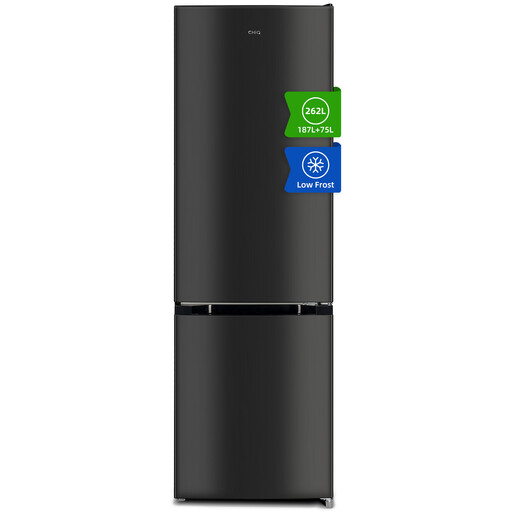
This fridge-freezer could suit anyone who needs room for a larger shared supply as well as chilled cream.
262 litres of total capacity, a 4-star freezer function, Low Frost, a reversible door and a stated noise level of 39 dB.
 No image available
This model has separate fridge and freezer compartments for anyone who wants to share more food with housemates. Check first that it will fit in your kitchen, both in height and width.
153 litres of fridge capacity and 52 litres of freezer capacity; 205 litres in total. Energy label E and 191 kWh per year. Dimensions: 540 × 550 × 1440 mm. The door is reversible and the model has Low Frost.
 No image available
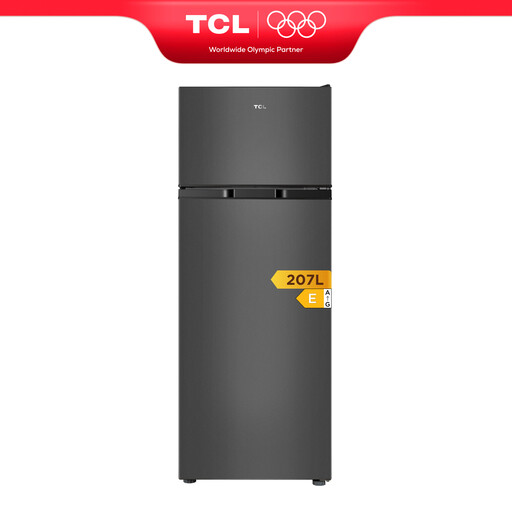
The stated capacity is split between the fridge and freezer compartments. Compare this balance with the shared groceries and frozen food you want to store.
167 litres of fridge capacity and 40 litres of freezer capacity; 207 litres in total. The width is 55 cm. The model has adjustable shelves and adjustable feet.
It depends on the product: the Netherlands Nutrition Centre says opened, unwhipped whipping cream keeps for 4–6 days in the fridge, while opened cooking cream keeps for 3–5 days. Put the container back in the fridge promptly after use. Keep cooking cream in its closed bottle or carton, and follow the instructions on the packaging too.
The Netherlands Nutrition Centre recommends 4 °C. Place a separate fridge thermometer in the middle of the bottom shelf and leave it there for half a day or overnight. Adjust the fridge if needed: a dial or digital display doesn’t necessarily show the actual temperature.
No. According to the Consumers’ Association, you need a 4-star freezer compartment for this. The star rating doesn’t tell you how quickly a particular model freezes food or how consistently it maintains its temperature.
The EU energy label for fridges includes information such as the energy class, annual consumption in kWh, fridge and freezer capacity, and noise. First compare appliances that fit your kitchen. For a personal cost estimate, use your own electricity tariff.
If there’s a problem with a product, contact the seller to find a solution. The Dutch Government states that there is no fixed statutory two-year guarantee period in the Netherlands. When a private customer buys a new, similar appliance, the retailer must take back the old one free of charge under the take-back scheme, including for online purchases.