
Students creating a poster for print
You want to assess text and images clearly and submit a file that meets the printer’s requirements. Canva recommends paying attention to margins and bleed, and checking a proof.


You may not need a powerful creative laptop to design a student festival poster, especially if you mainly work in Canva. Screen comfort, portability and the export options you need are important considerations. If you use Photoshop or other desktop software, check the latest requirements for that application and weigh memory, storage and screen space against weight and cost. Make sure your final export meets the printer’s requirements, and check a proof if possible.
You want to assess text and images clearly and submit a file that meets the printer’s requirements. Canva recommends paying attention to margins and bleed, and checking a proof.
You use installed image-editing software as well as designing your poster layout. Check that the exact laptop configuration and operating system are compatible with your software. For the desktop version of Photoshop referenced here, Adobe recommends 16 GB or more.
You work at home, at university and with your festival team. Lenovo highlights portability and collaboration as considerations for design students, so compare the size, weight and ports of the exact model you’re considering.
Best suited to you if: you mainly work in Canva and also take your laptop with you for your studies.
Bear in mind: check that your account includes the export options you want, and ask the printer about its submission requirements.
Best suited to you if: Photoshop or similar installed software is an essential part of your workflow.
Bear in mind: requirements vary between applications. For the desktop version of Photoshop referenced here, Adobe lists 8 GB as the minimum and recommends 16 GB or more. This is not a general requirement for every laptop used to design posters.
Four questions can help you choose: how you’ll assess the poster, which software you use, how often you’ll take your laptop with you, and what else you need to finish the job.
| Consideration | What to look for | Who it matters to |
|---|---|---|
| Screen and print proof | Compare the screen size, resolution and stated colour gamut of the exact model. Ask the printer about the size, margins and bleed, and check the poster at its intended size. | If I want to check small text and the finished poster, I need to know what the design looks like and how it will be supplied for print. Around 33% of consumers give displaying and checking the poster top priority. |
| Software and workspace | Check the operating system, memory and available storage against the latest requirements for your application. For the desktop version of Photoshop referenced here, Adobe recommends 16 GB or more. | If I use Photoshop or other installed design software, I want to check in advance that it works on my chosen configuration and has enough space. Around 27% of consumers prioritise software compatibility and workspace. |
| Portability and collaboration | Weigh screen size and weight against portability, and check that the ports work with the external monitor you want to use. | If I take my laptop between home, university and meetings every day, I’m looking for a practical balance between screen space and portability. Around 20% of consumers prioritise portability and collaboration. |
| Overall requirements | Check what’s included with the laptop, which export options your account offers, and whether you have a suitable charger. | If I want to understand the full cost, I also consider software options, whether I need a charger and what the printer requires. Around 20% of consumers give the total purchase and running costs top priority. |
Colours can look different on screen and in print. Canva points out that screens use RGB, while printing uses CMYK, so some colour variation is possible.
Ask the printer about the settings you need and check a proof before ordering a print run.
An extra proof or a revised print order could mean extra time and costs.
Canva makes some export settings, such as scaling, compression and CMYK options, available only with certain account types.
Check whether your own account includes the options requested by the printer before budgeting for software costs.
You may need a different account type to access certain export settings.
A laptop may be sold without a new charger. An existing USB-C charger must also meet the charging requirements of the exact model.
Check what’s in the box and the model’s charging specifications before buying a separate charger.
If there isn’t a suitable charger included, you may need to source one.
Apple describes a MacBook Air configuration with M5, 16 GB unified memory, a 512 GB SSD and a 13.6-inch display. It may suit you if you’re looking for macOS and often take your laptop with you.
The ASUS Vivobook S14 S5406SA-QD077W is a Windows model with a 14-inch OLED screen, 16 GB RAM and a 512 GB SSD.
Acer describes the Acer Swift Go 14 OLED SFG14-63 NX.KTSEH.007 as having 16 GB RAM, a 512 GB SSD and a 2880 × 1800-pixel OLED screen.
Lenovo discusses layout, image editing and collaboration as considerations for design students. The IdeaPad range may be a Windows option to compare by configuration.
These Joybuy laptops are options to compare for poster design, studying and, depending on the configuration, image editing with desktop software.
 Image unavailable
The 16-inch model offers a larger screen for viewing your poster layout.
16-inch OLED screen, 2880 × 1800 pixels, 120 Hz, 32 GB RAM, 1 TB SSD and Windows 11 Pro.
 Image unavailable
The 15-inch screen is an option if you want more room for your poster and your macOS software is compatible.
15-inch screen, M5, 16 GB memory and a 512 GB SSD. The product description states that a power adapter is not included.
 Image unavailable
This 14-inch model is worth comparing if you’re looking for an OLED screen and often take your laptop with you.
Snapdragon X, 16 GB RAM, 512 GB SSD and WUXGA OLED. The product description lists a weight of approximately 0.98 kg and requires a 65 W USB-C Power Delivery charger, which is not included.
 Image unavailable
The 14-inch screen with a 16:10 aspect ratio could be a good fit if you’re looking for a compact laptop for studying and design work.
WUXGA IPS screen, 1920 × 1200 pixels, 16 GB RAM and a 512 GB SSD. The stated weight starts at approximately 1.39 kg.
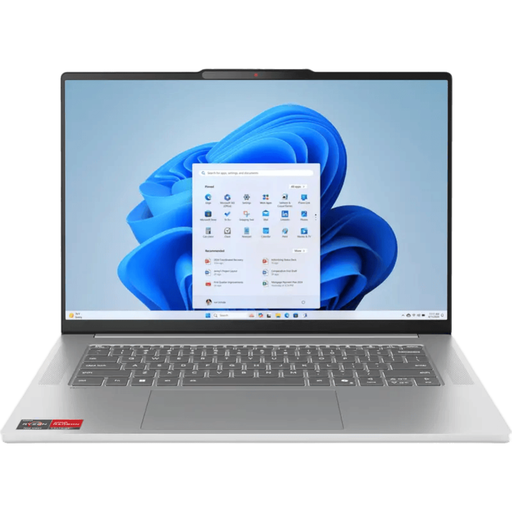 Image unavailable
The 15.3-inch screen gives you more room to view a poster layout; bear the stated weight in mind.
IPS screen, 1920 × 1200 pixels, 16:10, 16 GB memory and a 512 GB SSD. The product description lists a weight of approximately 1.49 kg and says a suitable charger must be purchased separately.
No, it depends on the software you use. For the desktop version of Photoshop referenced here, Adobe lists 8 GB as the minimum and recommends 16 GB or more. That recommendation isn’t a general requirement for working in Canva.
First, ask the printer about the finished size and submission requirements. Canva describes PDF Print and recommends paying attention to margins and bleed, as well as checking a proof. Also check which export settings your account offers.
Don’t assume it will be. According to the European Commission, the rules on USB-C chargers have also applied to laptops since 28 April 2026, giving consumers the option to buy a laptop without a new charger. Check whether a charger is included with the specific offer and what charging capacity the laptop requires.
There is no fixed statutory warranty period in the Netherlands. You’re entitled to a product that works properly, and if something is wrong, the seller is your first point of contact, according to the Dutch Government. For many eligible online purchases from a business, you have a 14-day cooling-off period, although exceptions may apply.
Check the rights and get permission before using or publishing images. According to the Dutch Government, you may generally use copyright-protected photos only with the creator’s permission. The Dutch Data Protection Authority also highlights the need for permission to take and publish photos of identifiable visitors, colleagues or pupils at events. Don’t assume that a public poster counts as private use.