
The planned treat sharer
You want to have a set amount of stroopwafel with your coffee or when friends come round. A pack with clearly stated servings or a countable number of waffles makes it easier to decide how much to serve before you start.


A large pack of stroopwafels can work for a get-together if you decide in advance how many you’ll have, serve only that amount and put the rest away. To help you choose, compare the stated serving size and nutritional information. Smaller waffles or a lower-sugar variety won’t automatically determine how many you end up eating.
You want to have a set amount of stroopwafel with your coffee or when friends come round. A pack with clearly stated servings or a countable number of waffles makes it easier to decide how much to serve before you start.
You’re buying for several people, but don’t want a large pack left on the table afterwards. The Netherlands Nutrition Centre points out that larger packs and portions can lead people to eat more.
You compare the nutritional information and take your guests’ allergies or intolerances into account when sharing the waffles. Check the label on the pack you’re actually serving.
First decide how many stroopwafels you want to serve and how you’ll keep your own portion separate. Then compare the nutritional information per 100 g with the stated serving size. If anyone has an allergy, check the ingredients too.
| What to consider | What should you check? | Who is this most important for? |
|---|---|---|
| Energy and sugars | Compare the nutritional information per 100 g on the same basis, then consider how much you plan to have. | If I have a stroopwafel while watching my weight, I want to know what my chosen amount means. This is the most important consideration for around 34% of consumers. |
| Portion control | Check the number of waffles and the stated serving size; decide how much to serve before you start eating. | When people come round, I want to join in without repeatedly reaching into an open pack. Around 33% of consumers mainly prioritise being able to decide on their own portion in advance. |
| Guests and leftovers | Match the number of waffles to the number of guests and the other snacks; think about what you’ll do with any leftovers. | I want to put out enough for my guests, but I don’t want a large pack left in view for days. For around 20% of consumers, this is the main consideration. |
| Allergens | Check the current ingredients, allergens and any may-contain warnings on the pack. | If a guest needs to avoid certain ingredients, I want to know whether these stroopwafels are suitable before serving them. This is the top priority for around 13% of consumers. |
A pack bought for a group doesn’t tell you how much you want to eat yourself. The Netherlands Nutrition Centre says larger packs and portions can lead people to take more.
Before your guests arrive, count how many waffles you want to put out and keep the rest out of sight.
Comparing sugar levels doesn’t tell you how much energy you’ll get from the amount you actually eat. A product name is no substitute for the nutrition table.
Check the values per 100 g and the stated serving size, then compare them with the amount you plan to have.
Smaller stroopwafels are easy to share, but several minis still add up to a portion. Albert Heijn lists four Daelmans Mini’s, weighing 32 g, as one serving.
Agree on a number per person in advance and don’t automatically serve the whole pack.
A gluten-free stroopwafel may contain other allergens. For example, PLUS lists egg and lupin in its gluten-free variety.
For every guest with an allergy or intolerance, check the current ingredients and allergen information on the pack you’ve chosen.
These product ranges show different pack sizes and serving information. Always compare the specific variety: information about one stroopwafel doesn’t automatically apply to every product from the same brand.
Albert Heijn states that AH Stroopwafels have a serving size of 39 g, with ten servings per pack. The range also includes AH butter stroopwafels with less sugar.
Daelmans Mini’s are smaller stroopwafels. Albert Heijn lists four minis, weighing 32 g in total, as one serving for this product.
PLUS sells Korenlanders butter stroopwafels, among other varieties, as well as a separate gluten-free stroopwafel option.
Lidl Netherlands lists Sondey butter stroopwafels in a pack of 12, weighing 480 g.
ALDI Netherlands lists stroopwafels in a pack of 12, weighing 378 g.
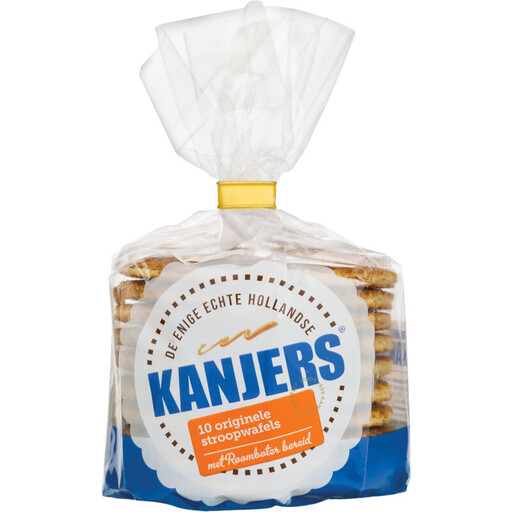
This pack of ten stroopwafels is an option if you’re buying for several people. Before serving, decide how many you want to have yourself.
 No image available
For a get-together, you can decide in advance how many of the ten stroopwafels to serve and how many to have yourself. Check the nutritional information on the pack if you want to assess the amount you’ve chosen.
Yes, if you decide on your own amount in advance and put the rest away after serving. The Netherlands Nutrition Centre says larger packs and portions can encourage people to eat more. If you find it hard to limit yourself with a large pack, choose a smaller one.
No. That claim isn’t a reason to have a larger portion. Compare the nutritional information per 100 g, then consider how much you actually want to eat. Albert Heijn compares the sugar content of its butter stroopwafels with less sugar against its regular butter variety, not against every other stroopwafel.
You can count minis and share them among your guests, as long as you decide on a number in advance. For Daelmans Mini’s, Albert Heijn lists four pieces, weighing 32 g in total, as one serving. That’s the serving size on the label, not an amount everyone has to eat.
Read the current ingredients, allergens and any may-contain warnings on the pack you’re serving. Check the other ingredients in a gluten-free variety too: PLUS lists egg and lupin in its gluten-free stroopwafels.