
Student stocking a cupboard
You want to know how many waffles you’ll have at home and whether the pack suits what you eat yourself or share with housemates. Compare the number of waffles with the pack weight.


When stocking up for your first term in student accommodation, practical things to consider include how many waffles you need, what size you prefer and which flavours you like. If you need to avoid gluten, choose a stroopwafel explicitly labelled gluten-free and check the full allergen label. Also compare the nutritional information per 100 g. The word ‘digestive’ is no reason to assume that stroopwafels have an effect on digestion.
You want to know how many waffles you’ll have at home and whether the pack suits what you eat yourself or share with housemates. Compare the number of waffles with the pack weight.
Only a stroopwafel clearly labelled gluten-free is suitable for you. Read the rest of the current ingredients and allergen information too: gluten-free does not mean free from other allergens.
You’re looking for a stroopwafel to enjoy with coffee or tea, take with you or share. A mini, classic or butter-rich variety might suit a different occasion; compare the nutritional information on the same basis.
First, decide whether an allergen limits your choice. Then compare the size and pack contents, and check the label for flavour details and nutritional values.
| What to consider | What to check | Who it matters to |
|---|---|---|
| Pack size | Compare the number of waffles and pack weight, especially if you plan to share. | When stocking a cupboard for the first time, I want enough waffles for myself and my housemates without choosing an awkwardly large pack. For around 39% of consumers, choosing the right amount to stock up on comes first. |
| Portions and sharing | Check the size of each waffle and compare the nutritional values per 100 g. | If I want to take stroopwafels with me or hand them out, the size of each one makes a difference. Around 23% of consumers prioritise portion size and ease of sharing. |
| Gluten and allergens | Check for a gluten-free label, as well as the full ingredients and allergen list. | If I need to avoid gluten or another allergen, the current label must be suitable for my needs. For around 15% of consumers, checking this comes first. |
| Flavour | Check whether the product information mentions butter or a particular syrup filling. | For enjoying with coffee or tea, I’d rather choose a flavour and size to suit the occasion than focus only on pack size. Flavour is the most important consideration for around 23% of consumers. |
A pack with more waffles doesn’t necessarily contain waffles of the same size or have the same total weight.
Check both the number of waffles and the pack weight before deciding how much to buy for your cupboard and how you plan to enjoy them.
The size of a waffle and whether it contains butter don’t tell you how much sugar, fat or fibre the product contains.
Compare the nutritional information per 100 g, then consider how much you actually eat. The Netherlands Nutrition Centre recommends using the per-100 g figures when comparing products.
A gluten-free stroopwafel may still contain other allergens. For example, the gluten-free PLUS variety reviewed lists egg and lupin.
Read the full ingredients and allergen information on the pack you buy; don’t rely only on the brand name or the ‘gluten-free’ label.
Moisture and a poorly sealed pack can affect the quality of stroopwafels.
Store them in a cool, dry, dark place in a well-sealed container, as recommended by the Netherlands Nutrition Centre. Also follow the storage advice on the pack.
A classic stroopwafel for those who focus on the syrup filling and enjoy one with coffee or tea.
Standard stroopwafels in a range of pack sizes for anyone keeping an eye on the number of waffles.
A Lidl range that includes butter stroopwafels.
An ALDI range of butter stroopwafels for those who value this ingredient.
Offers standard stroopwafels, mini stroopwafels and a separate variety labelled gluten-free.
These two Kanjers varieties are standard stroopwafels in packs of 10 or 8. Choose the pack size that suits your cupboard, and check the label if allergens are relevant to you.
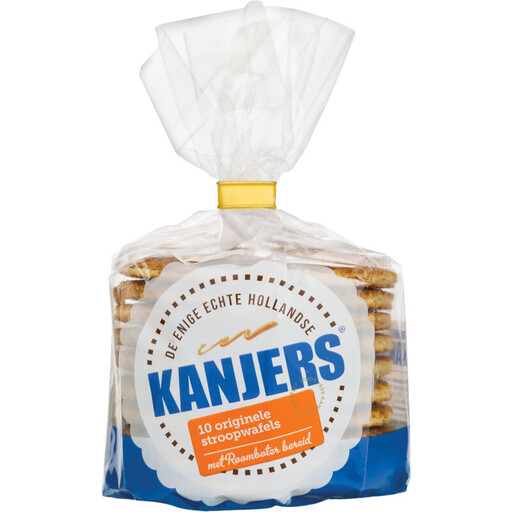 Image unavailable
An option if you want to take stroopwafels with you or share them, and a pack of ten suits your needs.
If you have allergies, check the current label for wheat, milk and soya, as well as any warnings about traces of egg or nuts.
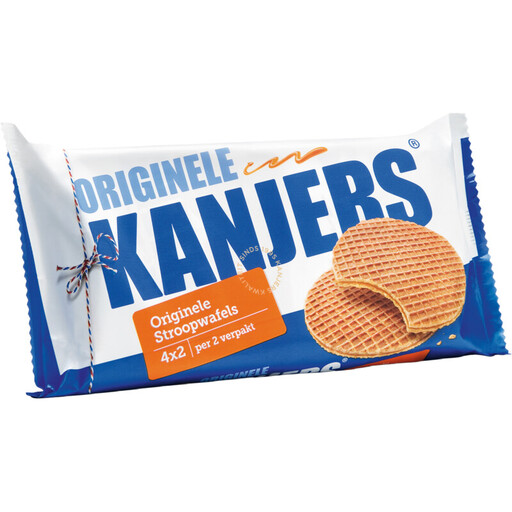 Image unavailable
An option if a pack of eight is a better fit for how many you want to store, share or take with you.
If you have allergies, check the current label for wheat, milk and soya, as well as any warnings about traces of egg or nuts. Check the basis given before comparing nutritional values with another variety.
No. Don’t assume that stroopwafels have an effect on digestion just because of that word. Assess the product by checking the ingredients and nutritional information on the label.
A standard stroopwafel made with wheat isn’t suitable if you need a gluten-free option. Look for a product explicitly labelled gluten-free, and check the full label for any other allergens that are relevant to you.
Read the ingredients and allergen information on the pack you’re actually buying. The Netherlands Food and Consumer Product Safety Authority says that the allergens required by law must be clearly listed on the label. When choosing, don’t rely only on a product photo or the front of the pack.
Store an opened pack in a cool, dry, dark place in a well-sealed container, as recommended by the Netherlands Nutrition Centre. Also check the instructions on the pack.
First compare the nutritional values per 100 g, then consider how much you usually eat. The Netherlands Nutrition Centre recommends using the per-100 g figures to compare products; also check the ingredients and allergens for each variety.