
Stocking up for the biscuit tin
You regularly top up a shared tin and want to know how many waffles and how much product one pack will give you.


If you regularly top up your biscuit tin, a pack of around 468–480 g is better suited to this than a small duo or mini pack. If you’d rather find it easy to share out the waffles, look at the size per portion. Also compare the ingredients, allergens and storage instructions on the pack you choose.
You regularly top up a shared tin and want to know how many waffles and how much product one pack will give you.
You’re choosing between standard stroopwafels, varieties made with butter and a particular filling. The ingredients list helps you compare them.
You’re looking for a smaller size to share out, or need to check the ingredients and allergens on the current label before eating.
First decide how many waffles you want to bring home at a time. Then check whether the ingredients and size suit the people who’ll be eating them.
| What to consider | What to check | Who it matters to |
|---|---|---|
| Amount per pack | Compare the net weight, number of waffles and best-before date. | If I regularly top up a biscuit tin, I want one pack to contain enough waffles. For around 40% of consumers, the amount per pack comes first. |
| Flavour and ingredients | Check the ingredients if you’re looking for butter or a particular filling; compare the nutritional information per 100 g on a like-for-like basis. | If you’re looking for a variety made with butter or a particular filling, focus on the ingredients. For around 30% of consumers, this is their main priority. |
| Portions and allergens | Check the size of each waffle or pack and look at the current allergen information on the label. | If I want to share out the waffles or need to take allergens into account, the size and label need to suit my needs. Portions or ingredients come first for around 30% of consumers. |
The size and the butter label don’t tell you which allergens you can avoid. The PLUS mini waffles and butter stroopwafels described here list ingredients including wheat, soya and milk.
Always check the ingredients and allergens on the packaging itself before eating, especially if someone has an allergy.
A pack shown online won’t necessarily be stocked at the branch where you shop. Lidl lists the Sondey variety described here as a store product.
Check your store’s range before relying on a particular variety being available.
The bag described contains ten stroopwafels. There’s also a duo pack if you’re looking for a smaller option.
The Jumbo pack of butter stroopwafels described here weighs 468 g and is an option for filling your biscuit tin.
The PLUS packs described here include 480 g of standard stroopwafels, a 400 g butter variety and 300 g of mini waffles.
This ALDI own-brand has a pack described as containing twelve butter stroopwafels, with a net weight of 480 g.
The Lidl caramel and sea salt variety described here contains ten stroopwafels in a 400 g pack.
This pack of eight stroopwafels suits anyone who wants to share out the waffles. If you’re filling a biscuit tin, it’s also worth looking at the number of waffles in larger packs.
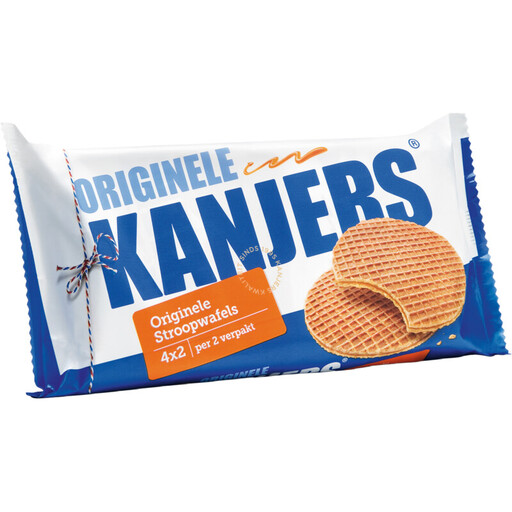 Image unavailable
An option if you’d rather share out your stroopwafels than choose one large pack for the biscuit tin.
The product name states that the pack contains 8 pieces. Check the ingredients and allergens on the label before serving the waffles.
Compare both the net weight and the number of waffles, not just the wording on the front. PLUS and ALDI describe 480 g packs; Jumbo lists a 468 g butter variety. Also check whether you can finish the pack within the stated shelf life.
Don’t assume regular stroopwafels are suitable if you have one of these allergies. The PLUS and Daelmans varieties described here list wheat, soya and milk; always check the allergen information on the current packaging before eating.
Follow the storage instructions on your pack and seal it well once opened. For its 468 g butter variety described here, Jumbo recommends storing it in a cool, dry place. Also check the best-before date on the pack.
Check the ingredients, allergens, net weight and nutritional information. Your Europe lists this information among the EU rules for prepacked foods. Compare the nutritional values of different packs per 100 g, and also check the weight of each waffle if portion size is important to your choice.