
Night shifts with a shared supply
If the stroopwafels are kept in one place, the number of pieces and portions per pack matter more than individual packs. For example, Jumbo lists 12 portions in its 468 g bag.


Choose a bag of regular stroopwafels when colleagues will help themselves from a shared supply, and minis when smaller portions are more convenient. Packs of two are better for handing out at different workstations, but offer less flexibility if someone only wants one small waffle. Whichever option you choose, check the number of pieces, how they are packed and the label for the exact variant.
If the stroopwafels are kept in one place, the number of pieces and portions per pack matter more than individual packs. For example, Jumbo lists 12 portions in its 468 g bag.
Minis make it easy to take a smaller portion from a shared bag. PLUS lists a Daelmans stand-up pouch containing 25 mini stroopwafels.
If allergies or nutritional values matter, the exact variant is more important than the sharing format. Check the ingredients, allergens and nutritional information on the pack; don’t assume they’re the same for another size or flavour from the same brand.
First decide whether your team needs a shared supply, small portions or packs to hand out. Then check that the variant you’ve chosen is suitable for the people who’ll be eating it.
When: colleagues help themselves from a shared supply during their breaks; a 468 g bag from Jumbo lists 12 portions.
Consider: once opened, the shared bag needs to be sealed properly again, and a whole waffle is less flexible if someone only wants a small portion.
When: colleagues want to take a small stroopwafel from a bag now and then; the Daelmans stand-up pouch at PLUS contains 25 minis.
Consider: a smaller piece doesn’t, by itself, change the ingredients or nutritional values per 100 g.
When: colleagues take their snack to different workstations or are given a pack each.
Consider: a pack of two gives you less choice over portion size than individual minis. Check how the packs are arranged for the exact variant.
| What to consider | What to check when buying | Who it matters to |
|---|---|---|
| Enough to share | Compare the number of pieces or stated portions with the number of colleagues who’ll be sharing. | If several colleagues are taking them from one bag, I want to know there’ll be enough for everyone. Having enough to share is the top priority for around 37% of consumers. |
| Small portions | Check whether the pack contains minis or regular stroopwafels; don’t just look at the total weight. | For a short break, I’d rather have a small stroopwafel than a large one. Smaller portions are the main concern for around 27% of consumers. |
| Handing them out at different locations | Check how many packs there are and how the waffles are actually packaged. | When colleagues don’t all take their breaks at the same time, I want to be able to give someone a pack to take away. Individual packs are the top priority for around 18% of consumers. |
| Allergens and nutritional values | Read the allergen information and compare sugars and fats per 100 g or per portion on the exact pack. | Before sharing something with the team, I want to know whether colleagues can check the ingredients. Checking the label is the top priority for around 18% of consumers. |
The packaging format says nothing about whether the ingredients are suitable for every colleague. The Netherlands Nutrition Centre also points out that many snacks are high in sugar or saturated fat.
Leave the packaging out so people can check the ingredients, allergens and nutritional information, and bear in mind that some colleagues may prefer to eat something else.
Ingredients can vary between variants. For Kanjers Original Stroopwafels, 4 x 2 pieces, Jumbo lists egg, milk, wheat and soya, among other allergens, and notes that nuts may be present.
Before sharing, check the allergen information on the physical packaging of the exact variant you’re putting out.
A bag of 25 minis, a pack listing 12 portions and a pack of 4 x 2 pieces each give the team a different way to share.
First decide whether people will help themselves from a shared supply, take a small portion or be given a pack each. Then compare the number of pieces on the packaging.
An option if you want to share mini stroopwafels from a communal bag.
A supermarket own-brand option for a shared bag of regular stroopwafels.
A brand with a Jumbo-listed pack of 4 x 2 regular stroopwafels.
A supermarket own brand offering regular stroopwafels in different pack sizes.
A supermarket with listed packs of regular and mini stroopwafels.
These Kanjers packs are particularly useful if you want to hand out stroopwafels in pairs during a night shift. Compare the number of pieces and check the packaging to see how they’re grouped.
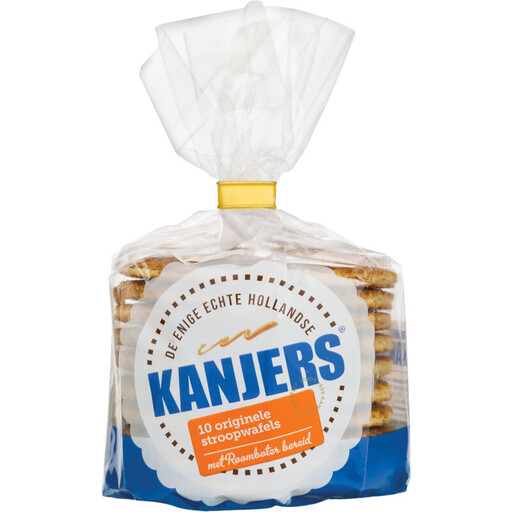 Image unavailable
An option if you want colleagues to take two stroopwafels each: the product description states that the 10 pieces are packed in pairs.
Compare the net weight on the packaging if the total amount for the team matters. Before sharing, check the allergens for this variant; the product information lists wheat, gluten, milk and soya, among other ingredients.
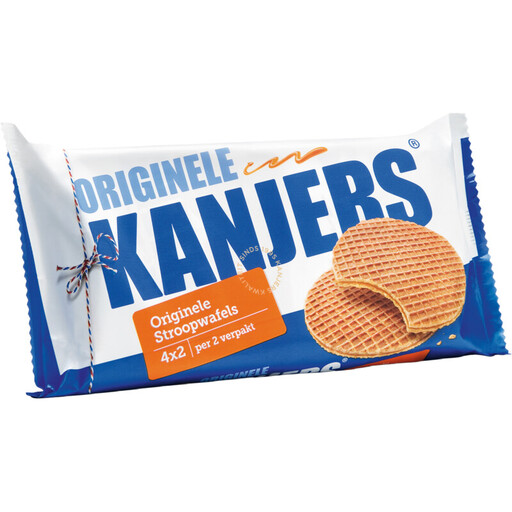 Image unavailable
For handing out in pairs: according to the product information, this pack contains 8 stroopwafels.
The stated net weight is 320 g. Before sharing, check the label for this variant; the product information lists wheat, gluten, milk and soya, among other ingredients.
A bag of regular stroopwafels works if colleagues are sharing from one supply; minis suit smaller portions, while packs of two are handy for handing them out at different locations. Compare the number of pieces or stated portions with what your team needs, and check how the packs are arranged.
Check the ingredients list and allergen information on the physical packaging of the exact variant. The Netherlands Food and Consumer Product Safety Authority explains that 14 allergens must be declared on pre-packed foods; when sharing, don’t rely on the label for a different flavour or pack size.
For the stroopwafels you’re actually sharing, use the nutritional information on their current packaging. Albert Heijn points out that ingredients and nutritional values can change; compare values per 100 g when looking at different packs side by side.
Follow the storage instructions on the pack you’ve chosen and seal the bag properly after opening. Keep the shared snack area clean and leave the label where it’s easy to see, so colleagues can check the information on that pack.