
For hosts putting out a shared platter
If you want to serve whole stroopwafels to several guests, check the number of pieces and the net weight. ALDI, for example, lists a pack of 12 weighing 480 g; PLUS offers a 400 g pack.


Choose regular stroopwafels in a larger pack if you want to fill a platter with whole waffles; mini stroopwafels are better for small bites or dessert. For lunchboxes or serving away from the buffet, individually wrapped portions are more practical, provided that packaging is available for your chosen variety. Before serving, check the pack for its contents, allergens, use-by date and storage instructions.
If you want to serve whole stroopwafels to several guests, check the number of pieces and the net weight. ALDI, for example, lists a pack of 12 weighing 480 g; PLUS offers a 400 g pack.
Mini stroopwafels work well alongside other desserts or on a platter where guests can help themselves to small bites. Jumbo, PLUS and ALDI each list a 300 g mini variety.
If the stroopwafels need to stay sealed until they’re handed out, portion packaging matters more than how they look on an open platter. Albert Heijn describes a Daelmans variety that is wrapped in pairs; check whether your preferred variety is available.
First decide whether you’ll serve the stroopwafels on a shared platter, offer them as small dessert portions or hand them out sealed. Then compare the pack contents and check the label for your chosen variety.
| What to consider | What to check before buying | Who it matters to |
|---|---|---|
| Enough whole waffles | Check the number of pieces and the net weight; consider whether whole waffles will fit alongside the other desserts. | If I’m filling a platter for several guests, I want to know in advance how many whole waffles I can serve. For around 40% of consumers, having enough to fill the platter comes first. |
| Small portions | Check that they really are mini stroopwafels and find out how many are in the pack. | If you’re offering a selection of desserts, you may want guests to be able to choose a small stroopwafel too. Small portions are the top priority for around 30% of consumers. |
| Sealed portions and labelling | Check how the portions are wrapped and read the current allergen information, use-by date and storage instructions. | For lunchboxes or serving away from the buffet, I want to be able to hand out sealed portions and give guests information about the variety I’ve bought. For around 30% of consumers, this way of serving and checking the label takes priority. |
A 300 g pack of mini stroopwafels gives you a different portion size from a pack of whole waffles. Weight alone won’t tell you how many whole waffles you can put on the platter.
For a shared platter, compare the number of pieces too; if you want small dessert portions, choose a mini variety deliberately.
Product information varies by variety and can change. The examples listed by Jumbo, PLUS and Daelmans include wheat, milk and soya.
Before serving, read the label on the pack you’ve bought, including any warnings about possible traces of other allergens. Keep this information handy for guests who ask.
You’ll often have some of the pack left over when serving from a shared platter. The Voedingscentrum advises storing stroopwafels in a cool, dry, dark place in a tightly sealed container.
If needed, put out smaller quantities at a time and reseal the rest of the pack properly after opening.
The pack you want may vary from shop to shop. Lidl describes its Sondey variety as an in-store purchase.
Before you shop, check that your chosen size is available at your local shop or through your delivery service.
These brands offer examples of different stroopwafel sizes. Choose based on the specific pack, not just the brand name.
Albert Heijn lists regular and mini Daelmans stroopwafels, as well as a duo variety.
The range includes regular and mini stroopwafels, as well as varieties made to different recipes.
Jumbo lists regular stroopwafels in a 468 g pack and mini stroopwafels in a 300 g pack.
Lidl describes Sondey butter stroopwafels in a pack of 12 weighing 480 g.
ALDI lists regular butter stroopwafels in a pack of 12 weighing 480 g, as well as 300 g mini stroopwafels.
PLUS lists Korenlanders butter stroopwafels in a 400 g pack and PLUS Mini stroopwafels in a 300 g pack.
These Kanjers packs contain a stated number of stroopwafels. For a buffet platter, check the number of whole waffles; if you want to hand out sealed portions, check how your chosen variety is packaged.
 Image unavailable
The number of waffles is useful if you want to count out whole ones for a platter. If you want to hand them out sealed, check the pack to see how the eight stroopwafels are grouped.
Before serving, check the label on the pack you’ve bought for allergen information and storage instructions.
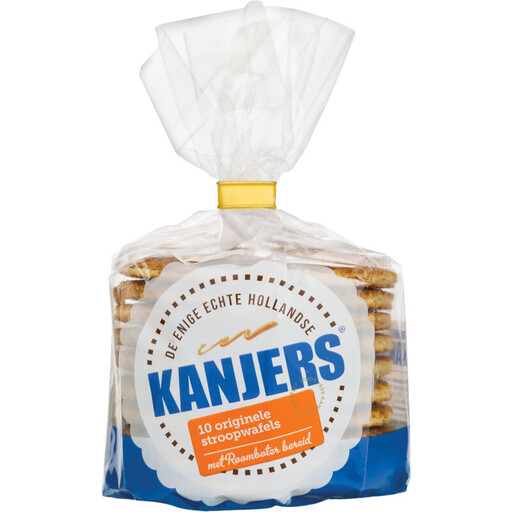 Image unavailable
The pack of ten gives you a countable number of whole stroopwafels for a platter. If you need sealed portions, check how the waffles are individually wrapped.
Also check the net weight and read the allergen information on the pack you’ve bought before serving.
Choose mini stroopwafels for small self-service portions or as part of a dessert; choose regular waffles if guests can take a whole stroopwafel from the platter. For both sizes, check how many are in the pack so you can make sure there’s enough to go around alongside the rest of the buffet.
Seal the pack tightly and store the stroopwafels in a cool, dry, dark place, as advised by the Voedingscentrum. Also check the storage instructions and use-by date on the pack you’ve bought.
Read the ingredients list and allergen information on the pack of the exact variety you’re serving. Examples from Jumbo, PLUS and Daelmans list wheat, milk and soya; also check for any warnings about possible traces of other allergens. Keep the pack handy in case guests need more information.