Choose a stroopwafel if you fancy a syrup-filled biscuit with your coffee; mini stroopwafels are an option if you’d rather serve smaller portions. A digestive is suited to a different purpose: according to Rutger Bakt, its crumbly texture also makes it a good choice for a cheesecake base. For either type, check the ingredients and allergen information on the specific packaging you choose; digestives are not automatically gluten-free.
Who might prefer each option?
If you’re looking for a biscuit to enjoy with coffee
A classic stroopwafel is a good option if you’d like to serve a biscuit with a syrup filling. Albert Heijn and Jumbo describe the stroopwafel varieties they reviewed as treats to enjoy with coffee or tea. Then choose the size that suits the occasion.
If you need to check ingredients and allergens
Compare the specific varieties, not just the brands. The Netherlands Food and Consumer Product Safety Authority highlights the importance of allergen labelling, while Jumbo’s reviewed gluten-free stroopwafel, for example, lists egg and lupin as allergens.
If you’re looking for a biscuit to make a cheesecake base
A digestive is worth considering if you want to crush biscuits for a cheesecake base. Rutger Bakt recommends this use because of their firm, crumbly texture. Also check the ingredients on the digestive packaging: the Jumbo variety reviewed contains wheat.
What should you look for when choosing?
First, decide whether you’ll serve the biscuit with coffee or use it in a cake. Then compare the packaging for each specific variety and, where relevant, check the label.
| What to consider |
What should you check? |
Who is this important for? |
| A biscuit with coffee |
Decide whether you’d prefer a standard or butter stroopwafel, and how many you’d like to serve. |
If I’m serving a stroopwafel with coffee, I mainly want a biscuit with a syrup filling that suits the occasion. Around 40% of consumers give this choice priority. |
| Gluten and allergens |
Read the ingredients, highlighted allergens and any warnings on the packaging for the specific variety. |
If certain ingredients aren’t suitable for me, I need to be able to check the packaging before choosing. Around 30% of consumers put this check first. |
| Packaging and portions |
Compare the net weight, number of biscuits and storage instructions after opening. |
When I’m expecting visitors, I want to have enough biscuits in the cupboard. But if I only have one occasionally, I’d rather not leave a pack open for too long. Packaging is the first thing around 20% of consumers consider. |
| Biscuit for a cheesecake base |
Check whether you need a crumbly digestive. If you’d prefer a less sweet option, compare the sugar content per 100 g and per serving for the specific products. |
If I’m crushing biscuits for a cheesecake base, I look for a biscuit with the right texture rather than a filled stroopwafel. Around 10% of consumers prioritise this use. |
Common mistakes
-
Assuming the name ‘digestive’ tells you about its nutritional value
The product name won’t tell you whether a biscuit suits the ingredients or nutritional profile you’re looking for. The Jumbo Digestive Wholemeal variety reviewed contains wheat.
Compare the ingredients and nutritional information for the specific digestives and stroopwafels, both per 100 g and per serving.
-
Confusing gluten-free with allergen-free
Jumbo lists egg and lupin as allergens in the reviewed Lekker Vrij van Gluten Stroop Wafels; nuts and sesame are listed as ingredients the product may contain.
As well as checking the gluten-free label, read the full allergen information on the packaging you choose.
-
Relying on an old photo of the label
When choosing between a standard, butter or gluten-free variety, the ingredients in that specific product are what matter.
Check the packaging again before serving, particularly if allergens or other ingredients are key to your choice.
Brands and varieties compared
Daelmans
A classic stroopwafel to compare with other biscuits to enjoy with coffee.
- For the Daelmans stroopwafel variety reviewed, Albert Heijn lists wheat, milk and soya as allergens.
- Don’t assume this allergen information applies to other Daelmans varieties; check their individual labels.
Albert Heijn
The range includes standard AH Stroopwafels and a separate butter variety.
- Albert Heijn describes the standard AH Stroopwafels variety reviewed as vegan.
- This doesn’t automatically apply to the butter variety. Check the ingredients and allergens on each pack, including any warnings about milk.
Jumbo
Jumbo’s standard stroopwafels and separate Lekker Vrij van Gluten variety suit different label requirements.
- Jumbo’s reviewed Lekker Vrij van Gluten Stroop Wafels carry the Crossed Grain quality mark.
- According to Jumbo, the same variety contains egg and lupin and may contain nuts and sesame. So don’t judge it on the gluten-free label alone.
Lidl / Sondey
Sondey offers butter stroopwafels in standard and mini sizes.
- Lidl describes the standard butter stroopwafels pack reviewed as containing 12 biscuits and weighing 480 g.
- Check the physical packaging if the ingredients, allergens or nutritional information affect your choice.
ALDI / Heerlijck Banket
Standard ALDI stroopwafels and Heerlijck Banket mini stroopwafels come in different sizes.
- For the standard pack reviewed, ALDI lists 12 biscuits and a weight of 378 g; the Heerlijck Banket mini pack described contains 300 g.
- Check the current packaging for ingredients and allergens in the variety you choose.
PLUS
PLUS offers standard stroopwafels, among other options, as well as a separate butter and honey variety.
- The PLUS product information for the stroopwafel reviewed lists wheat, cereals containing gluten, soya, milk and lactose.
- Don’t assume this allergen information applies to every PLUS variety without checking the label.
Stroopwafels to enjoy with coffee on Joybuy
These Kanjers stroopwafels are a good fit if you’re choosing a biscuit to enjoy with coffee or tea. For a crumbly cheesecake base, this article looks at digestives as an alternative.
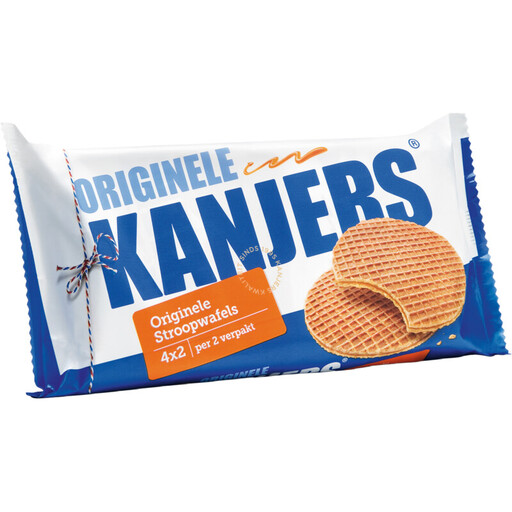 Image unavailable
Kanjers Original Stroopwafels, 8 pieces
A classic stroopwafel to serve with coffee or tea; the pack contains 8 biscuits.
Check the ingredients and allergens on the packaging if they’re important to your choice.
View on Joybuy
Frequently asked questions
Are standard stroopwafels gluten-free?
Don’t assume they are: the standard stroopwafels reviewed list wheat or cereals containing gluten. Jumbo describes its separate Lekker Vrij van Gluten Stroop Wafels as gluten-free, but lists egg and lupin as allergens, and says they may contain nuts and sesame.
Is the ‘may contain’ warning the only allergen information that matters?
No. First check which ingredients and allergens are listed as present. A ‘may contain’ warning refers to the possibility of unintended traces and doesn’t replace that first check.
Is a digestive automatically a healthier choice than a stroopwafel?
No. The name ‘digestive’ doesn’t tell you anything about its nutritional value. Compare the nutritional information for the specific products, including sugar, fat and fibre per 100 g and per serving, and consider the portion you’ll actually serve.
How should I store the biscuits after opening?
Follow the storage instructions on the packaging you choose and seal it well after use. Check the instructions again if you switch between a pack of stroopwafels and one of digestives.


