
Listener with a regular listening spot
You want to position the instruments in a string quartet separately and have room for a left and right speaker. Genelec stresses that similar reflections for both speakers are important for stereo reproduction.


If you want to hear the instruments in a string quartet positioned to your left and right from a fixed listening spot, start with two speakers that can be placed separately. A single wireless speaker may be more practical if you tend to listen casually from different places, but it won’t give you the same left-and-right setup. Also check that you have room for the speakers and that their connections suit your music source.
You want to position the instruments in a string quartet separately and have room for a left and right speaker. Genelec stresses that similar reflections for both speakers are important for stereo reproduction.
You listen in an open-plan space where furniture, walls or your seating position make a symmetrical setup difficult. Genelec explains how walls, floors, ceilings and furniture can reflect, scatter or absorb sound.
You want to play music from different places without having to operate a separate amplifier. Check that the streaming options and connections on your chosen model suit your source.
Start with your usual listening spot and decide whether you want separate left and right channels. Then check whether two speakers will fit comfortably in your open-plan space and which connections and components your music source requires.
The percentages below relate to the main buying concern identified for this listening setup.
| What to consider | What to look for when buying | Who prioritises this? |
|---|---|---|
| Stereo imaging from your listening spot | Check that two speakers can work as a stereo pair and that you can place them on either side of your listening spot. | I want to hear the instruments to my left and right from my regular listening spot, and I have room for two speakers. Around 36% of consumers put stereo placement first. |
| Placement and acoustics | Work out possible positions for both speakers; treat any room calibration as a supplement to positioning and moving them around. | Furniture or walls make it difficult to position the speakers evenly in my open-plan space, so I want to be able to adjust their placement. Around 29% of consumers prioritise room layout and calibration. |
| Music source and controls | Note how you play music, then compare your source with the model’s actual wireless capabilities and inputs. | I want to connect or control my music source without unnecessary steps. Around 21% of consumers give the most weight to their source and controls. |
| Complete setup | Check whether you need one or two speakers, and whether an amplifier or adapter is included. | I want to know in advance which components make up a usable setup, especially if I don’t already have an amplifier. Around 14% of consumers consider completeness their main buying concern. |
A stereo pair uses separately positioned speakers for the left and right channels. Before buying, check whether the exact model can be paired with a second unit.
First decide whether you mainly listen from one fixed spot. This will help you work out whether separate channels matter for your needs.
The distance from walls and furniture, and the position of your listening spot, can affect what you hear. Genelec describes reflections and absorption as factors in a room’s acoustics.
Plan possible positions for both speakers and your seat in advance. Treat any room calibration as a supplement, not a substitute for good placement.
A passive pair needs a suitable amplifier; some wireless models may need an adapter for a particular input.
Compare the components required by your source and preferred listening setup, not just the type of speaker.
The LSX II LT is an active stereo system with streaming capabilities.
The Era 100 is an app-controlled speaker that can form a stereo pair with a second speaker of the same model.
Two WiiM Sound speakers can be set up as a wireless stereo pair.
The S2000MKIII is an active stereo system with Bluetooth and wired inputs.
Worth considering if you’re looking at passive speakers to use with an existing amplifier or one you choose separately.
This Joybuy selection includes passive bookshelf speakers and 5.1 soundbars. Check each model to see whether its setup suits your preference for separate left and right channels.
 No image available
A pair of passive bookshelf speakers for separate left and right placement; you’ll need a suitable amplifier.
6.5-inch; passive; one pair.
 No image available
A passive pair for separate left and right placement; remember that you’ll need a suitable amplifier for a complete setup.
6.5-inch; passive; one pair.
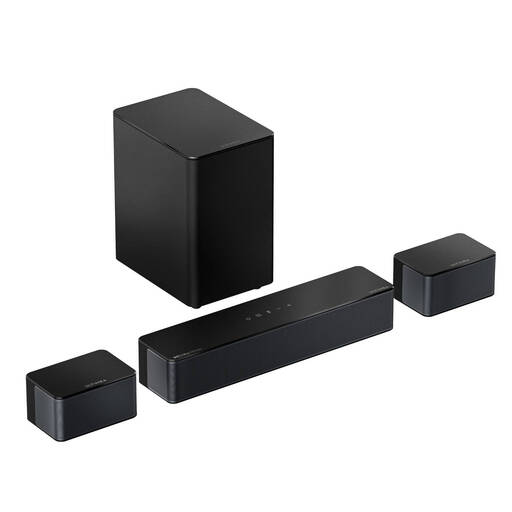 No image available
This is a 5.1-channel soundbar system with surround speakers, not a pair of separately positioned stereo speakers.
5.1 channels; 450W; 5.25-inch wireless subwoofer.
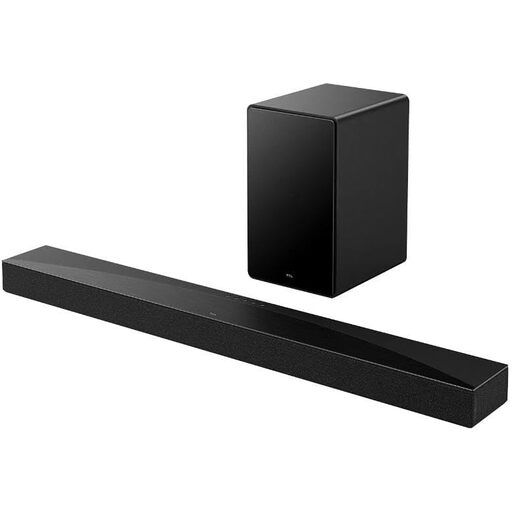 No image available
This is a 5.1 soundbar setup with a subwoofer, not a pair of separately positioned stereo speakers.
5.1 channels; 580W.
The product description states that initial setup requires the TCL Home app.
For listening from one fixed spot with separate left-and-right placement, a stereo pair gives you more options than a single speaker. If you mainly listen casually from different places, one speaker may suit your needs; check whether you can pair the model with a second unit later.
Start by considering possible positions for both speakers in relation to your usual listening spot, then listen again after moving them. Genelec describes walls, furniture, floors and ceilings as factors that can reflect, scatter or absorb sound; any room calibration is an additional feature of the model.
If you don’t already have one, you’ll need a suitable amplifier for passive speakers. Sonos lists a separate adapter for the Era 100’s line input; you’ll need two compatible speakers for a stereo pair.
According to the Dutch government, there is no fixed statutory guarantee period in the Netherlands. What you can reasonably expect from a product is taken into account when assessing a claim; contact the seller if a product is faulty.