
Viewers who want to use Eye Film Player
You’re looking for a playback method that works with your TV, not just a device with lots of apps. Eye Film Museum describes options including casting from Chrome and connecting via HDMI.


Start with how you want to play the films: Eye Film Player explains how to cast from Chrome and connect a computer directly to your TV via HDMI. A compact stick may be a good fit if you have little space behind your TV; a separate box takes up more room but may offer different connections. Before choosing, check that your preferred playback method works with your devices, and don’t automatically zoom old films to fill the screen.
You’re looking for a playback method that works with your TV, not just a device with lots of apps. Eye Film Museum describes options including casting from Chrome and connecting via HDMI.
You want to keep visible equipment to a minimum and check there’s room around the HDMI port and power supply.
You want to watch older films without a zoom that fills the screen cutting off parts of the frame. The British Film Institute describes 4:3 as a standard aspect ratio for 35mm film.
A good fit if: you want to use as little space as possible behind the TV and can play the service you want using a compatible app or casting method.
Keep in mind: the stick uses an HDMI port and needs power; also check there’s enough clearance around the connection.
A good fit if: you have space beside the TV and need the connections offered by your chosen box.
Keep in mind: a box takes up space; the HDMI cable for the Google TV Streamer (4K) is sold separately.
A good fit if: you want to watch Eye films without first choosing a separate streaming device. Eye Film Museum describes this option for a computer and TV with HDMI.
Keep in mind: your computer and cable will remain part of your setup while you watch.
| What to consider | What should you check? | Who is this important for? |
|---|---|---|
| Access to films | Choose your film service first, then check that the app, casting or HDMI method described works with your source device, TV and streaming device. | If you mainly want to watch silent films from a particular service, you’ll want to know in advance how to get them on your TV; around 36% of consumers prioritise access to the films they want. |
| Positioning by the TV | Check the space around the HDMI port, power supply and cable route, and see whether an HDMI extension cable is included. | If you have limited space behind or beside the TV, it matters how much equipment and how many cables you can fit; around 29% of consumers prioritise a compact setup. |
| Original framing | Check your TV’s picture mode without forced zoom, and don’t assume every film has the same aspect ratio or frame rate. | If you want to watch older footage without unintentionally cropping it, preserving the composition matters more than filling the whole screen; around 21% of consumers prioritise the original framing. |
| Listening privately | Decide whether you want to listen through the TV or streaming device, and check that your chosen setup supports your headphones. | If you want to listen to a film’s music without disturbing anyone else, check the headphone connection in advance; around 14% of consumers prioritise private listening. |
Eye describes specific browser, casting and HDMI methods. That doesn’t mean the service is available as a dedicated app on every device.
Let your preferred film service and its playback method guide your choice.
A stick uses an HDMI port and needs power. The position of the connection may therefore affect how you set it up.
Check the available space, connections, power supply and included accessories for the exact model.
Zooming in on a film with a narrower original frame can cut off parts of the picture.
Compare your TV’s picture modes and choose a setting that preserves the original framing.
The Google TV Streamer (4K) is a separate box for anyone looking to cast with Google TV and possibly use built-in Ethernet.
The Xiaomi TV Stick 4K (2nd Gen) offers a compact Google TV option with Chromecast built-in.
Apple TV 4K is a box available in Wi-Fi and Wi-Fi + Ethernet versions.
Fire TV Stick HD is a compact HD option for services available on this model.
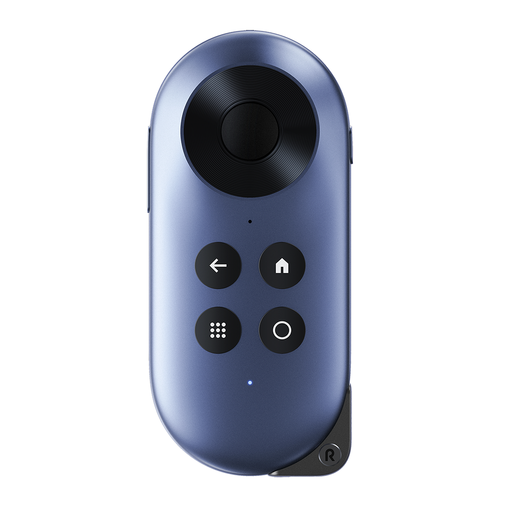
This Joybuy pick is a portable Android TV streaming box; check separately that your preferred film service and playback method work with it.
 No image available
May suit you if you’re looking for a portable Android TV streaming box; the product information does not confirm a specific playback method for Eye Film Player.
The product name mentions Google certification and an included Rokid Station remote control. It also describes the device as a companion for Rokid Max and Air glasses.
Eye Film Museum describes options including connecting a computer via HDMI and casting from Chrome to Chromecast. According to Eye, casting from Chrome is intended for desktop or Android, not Chrome on iOS; when casting, your source device and receiver must be on the same Wi-Fi network.
That isn’t confirmed by the playback methods described by Eye Film Museum. Check whether the app you want is available for your chosen model, or whether you can cast from a compatible source device or connect a computer via HDMI.
Not just because of the genre. According to Google, 4K playback depends on both the TV and the content being streamed, so check your film source, screen and playback method first.
A film with a narrower frame may leave space at the sides on a wider screen when the original framing is preserved. The British Film Institute describes 4:3 as a standard aspect ratio for 35mm film; zooming in to fill the screen can cut off parts of the picture.
For a consumer purchase in the Netherlands, the seller must offer a solution under ACM guidance if a product does not meet what you could reasonably expect during normal use. Reasonably necessary updates may also be relevant for smart devices; this does not mean every device has a fixed statutory warranty period of exactly two years.