
Vandaag of morgen in huis

Kwaliteit gegarandeerd

Welkomstaanbiedingen ontgrendelen: GRATIS bezorging | Tot 80% korting | Gratis 30 dagen JoyPlus-proefperiode
Download de app
Strawberry snacks and drinks come in all sorts of varieties, from strawberry sweets and chocolate to mochi, bubble tea, syrup and dried fruit. But eye-catching packaging doesn’t always tell you enough about what you’re buying. A small bag, for example, may contain a relatively high amount of sugar, while a large multipack may be less practical if you only use the product occasionally.
This guide helps you compare strawberry products based on ingredients, portion size, allergens, storage and when you plan to enjoy them. That way, you can choose more confidently for home, a party, a day out or as a gift.
The flavour may come from strawberry powder, flavouring, concentrate or a small amount of purée. So check the ingredients list. In strawberry soft drinks and bubble tea, the fruit content may be low, while sugar, sweeteners and flavourings make up a larger proportion.
For example, Fanta Strawberry Lemonade lists carbonated water, glucose-fructose syrup, natural flavourings and colour. Fanta Strawberry Kiwi lists, among other ingredients, lemon juice concentrate, sweeteners and natural kiwi flavourings. These drinks may taste fruity, but they’re not the same as a product with a high strawberry content.
Dried strawberries lose a lot of water during drying, which makes their nutritional values more concentrated per 100 grams. According to the product information, MUSHAN BASE Strawberry Slices contains dried strawberries and sugar, with 57.4 grams of sugars per 100 grams.
Sweets, chocolate and mochi also often contain sugar alongside syrup, chocolate or dough. So compare the nutritional values per 100 grams as well as the amount in the actual pack.
A box of several cans or small packs can be handy for a party, but less suitable if you don’t need much in stock. Check:
Always check the current packaging before buying. Online product information can change, and the manufacturer may include additional details on the label. In particular, look out for:
Meiji Milk & Strawberry Chocolate Uproll 10 lists milk and soya as allergens. According to the product information, Bamboo House Double Filling Strawberry Mochi contains egg and milk. If you have allergies, it’s best not to rely on the product title alone.
Individually wrapped products are practical for days out. Sakuraseika Amaou Strawberry Castella comes in three individually wrapped pieces. That can be handy for sharing or taking with you, but the product information also says to store it chilled. So check that you’ll be able to follow the storage instructions while you’re out.
For a party, cases of drinks may make more sense. Fanta Strawberry Lemonade is available as 12 cans of 355 ml, and Fanta Strawberry Kiwi as 24 cans of 330 ml. For everyday use, a bottle of syrup can offer more flexibility, as you can choose how much to add to each glass.
Compare drinks per 100 ml and snacks per 100 grams. According to the product information, 100 ml of Mogu Mogu Strawberry contains 36 kcal and 7.6 grams of sugars. The drink also contains 25% nata de coco, so it has pieces of coconut jelly in it. This makes it a different drinking experience from ordinary lemonade.
JENI Strawberry Syrup contains strawberry purée, sugars and sweeteners. It’s intended for lemonade, cocktails, desserts and baking. The nutritional values per glass will therefore depend on how much syrup you use and what type of water or drink you add.
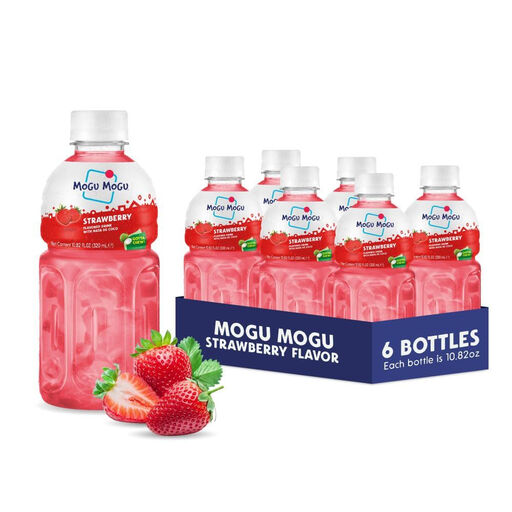
Why it suits this shopper: A multipack of six bottles for anyone who wants to try strawberry bubble tea-style drinks without buying several different varieties straight away.
The packaging states the contents per bottle and the nutritional values per 100 ml. This helps you work out the sugar content and total amount you’ll have in stock in advance.
320 ml per bottle, nata de coco for added texture and, according to the product information, none of the 14 major EU allergens.
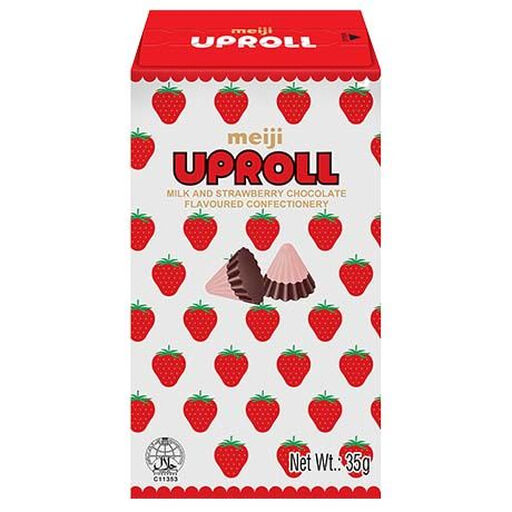
Why it suits this shopper: A good choice if you’re looking for a small Japanese strawberry chocolate treat for a little gift, a coffee break or a snack to share.
The ingredients and allergens are clearly specified, so you can see that milk, lactose and soya are part of the product.
35 grams per pack, with milk chocolate and strawberry powder according to the product description. Store in a cool, dry place, away from direct sunlight.
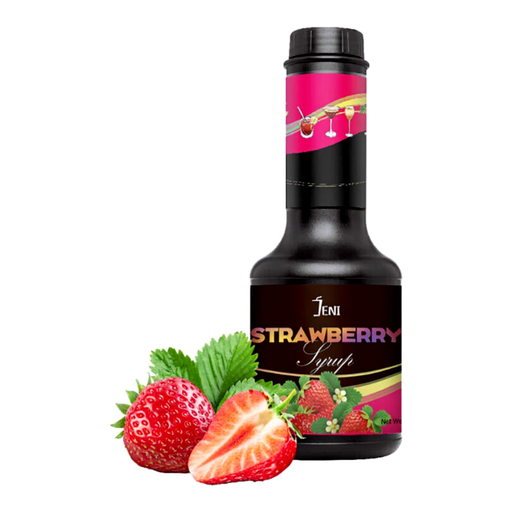
Why it suits this shopper: Handy if you regularly make your own lemonade, desserts, cocktails or bubble tea-style drinks.
You decide how much to add to each glass. Be sure to check the recommended serving on the label, as the syrup contains sugars and sweeteners and, according to the product information, 48 grams of sugars per 100 grams.
456 ml/600 g contents, strawberry purée in the ingredients list and suitable for a range of uses.
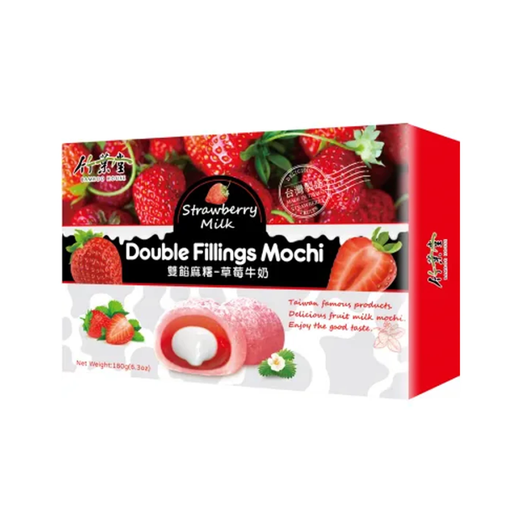
Why it suits this shopper: A Taiwanese mochi to share, with a soft rice cake, strawberry filling and a milky filling for a different kind of snack.
The product information states that the pack contains 180 grams, is individually wrapped and contains the allergens egg and milk. This helps you decide in advance whether it’s suitable for everyone you’re sharing it with.
180 grams, a soft, sticky rice texture and two fillings. According to the product information, chilling it for 20 minutes can change the serving experience.
We’ve put together a complete, up-to-date list of products that meet these strict selection criteria and the applicable European safety regulations.
Individually wrapped mochi, castella, chocolate or small bags of dried fruit are practical to take with you. Just check whether the product needs to be kept chilled. Sakuraseika Amaou Strawberry Castella needs chilled storage, while dry products such as Pocky or dried strawberries are generally easier to take along.
Strawberry syrup is an ingredient you can use to make your own drink, dessert or lemonade. A bubble tea mix often contains several components, such as powder, tapioca starch or ready-to-drink cups. JENI Bubble Tea Cup Mix comes in three flavours: taro, milk tea and strawberry. When you buy, check the preparation instructions and ingredients for each flavour.
In most cases, store both products in a cool, dry place, away from direct sunlight, unless the label says otherwise. Seal the packaging well after opening to help prevent moisture getting in and the product losing quality. Always check the current packaging for the best-before date, allergens and instructions for after opening.
