
Vandaag of morgen in huis

Kwaliteit gegarandeerd

Welkomstaanbiedingen ontgrendelen: GRATIS bezorging | Tot 80% korting | Gratis 30 dagen JoyPlus-proefperiode
Download de app
Fancy a sweet strawberry snack with your coffee, on the go or in your lunchbox? Strawberry biscuits, wafers and biscuit sticks are all tempting options. The packaging often features a large strawberry and words such as “creamy”, “fruity” or “Japanese”. But that doesn’t always tell you enough about the ingredients, portion size or whether the product suits your needs.
This guide helps you compare strawberry biscuits using information you can check. That way, you can avoid a disappointing purchase and find something to suit your taste, budget and occasion.
The strawberry flavour may come from strawberry powder, flavouring, colourings or a combination of these. Some products list the percentage of strawberry powder, such as Glico Pocky Strawberry Flavor Biscuits, whose product information states that it contains 10% strawberry powder. Other biscuits are simply described as having “strawberry flavour”.
So always check the ingredients list. A fruity picture is no substitute for checking what’s actually in the product.
A small pack of strawberry biscuits can still be relatively high in energy, fat or sugar. Nutritional values are usually given per 100 grams, while a pack might contain 36, 40, 45 or 55 grams. So remember to work out the values for the portion you’ll actually eat.
For comparison, Meiji Chocorooms Strawberry lists 566 kcal and 37.8 grams of sugar per 100 grams. Bourbon Alfort Mini Strawberry lists 301 kcal and 32.3 grams of sugar per 55-gram pack. These figures aren’t directly comparable unless you take the portion size into account.
Japanese strawberry biscuits may be made in Japan, but some Asian snacks are made elsewhere or have a European importer. So check the country of origin, manufacturer and allergen information. For example, Hello Panda Strawberry lists Japan as its country of origin, while the Glico Pretz Strawberry Milk product information gives China as its country of origin.
Pay particular attention to:
The information on the website may differ from what’s on the packaging. Always check the current label before eating, especially if you have an allergy or intolerance.
Choose the type that suits the occasion:
Don’t just compare the price of a bag or box: check the price per 100 grams too. A multipack can be handy for families, while a 36- to 55-gram pack may be a better choice for an individual treat.
Store biscuits as directed on the packaging: usually somewhere cool and dry, away from direct sunlight. Wafers and coated biscuit sticks lose their crisp texture more quickly when exposed to heat or moisture. Seal opened packaging securely, and don’t use the product if the packaging is damaged.
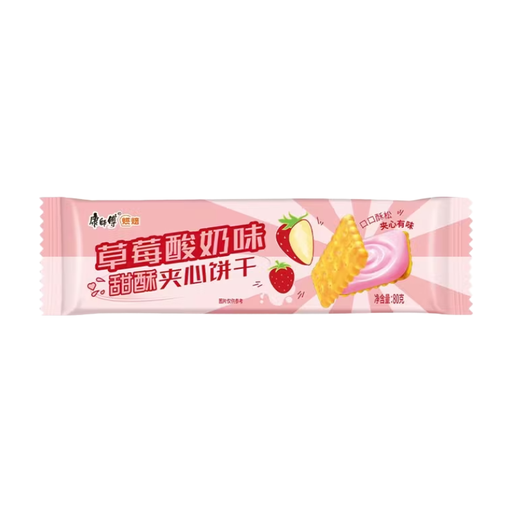
Why it suits this profile: A straightforward 80-gram pack of crisp sandwich biscuits with a strawberry yoghurt flavour. A good introduction to biscuits with strawberry filling.
The product information includes the weight, ingredients, allergens and nutritional values. This lets you check what to expect from the flavour and ingredients, rather than relying on the packaging alone.
80 grams, a crisp biscuit texture and individually wrapped portions that are handy to take along or share.
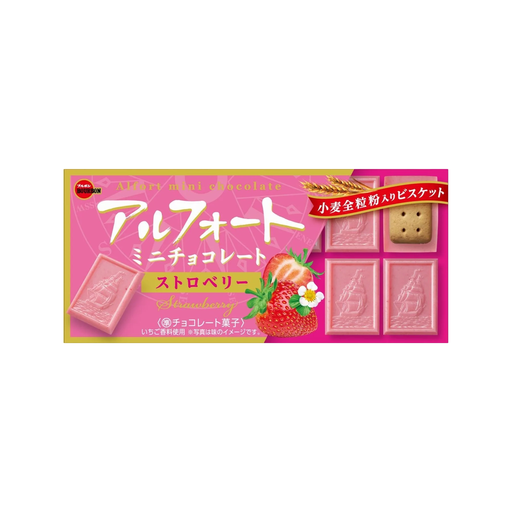
Why it suits this profile: A Japanese snack for anyone looking for a combination of wholemeal biscuit, chocolate and strawberry flavour. The set contains 12 packs of 55 grams.
The product information specifies the 55-gram portion and lists wheat, milk and soya among the ingredients. This helps you compare the flavour, portion size and allergens.
12 packs, a combination of chocolate and strawberry, and nutritional information per pack.
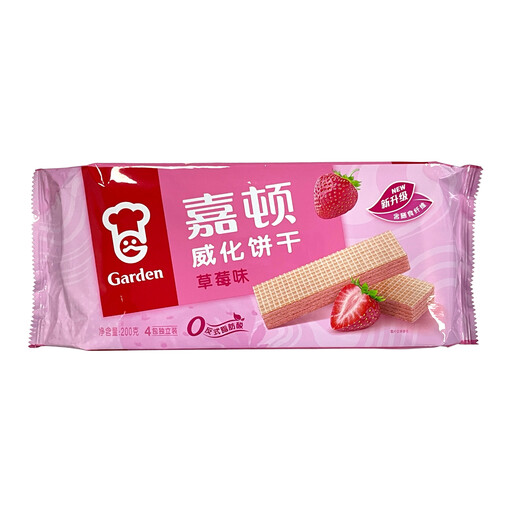
Why it suits this profile: A larger pack for families, visitors or regular sharing over tea and coffee. These wafers have several crisp layers with a strawberry flavour.
The 200-gram pack and individual portions make it easier to share without opening the whole pack at once. If this is something you monitor, check the listed colouring E120.
200 grams, individual packs and a light, airy wafer texture with strawberry flavour.
We’ve put together a complete, up-to-date list of products that meet these strict selection criteria and the applicable European safety regulations.
Biscuit sticks and small packs of around 36 to 55 grams are practical for taking with you. They take up little room, and you don’t have to open a large pack straight away. Once opened, check whether the packaging can be sealed securely again.
Store them somewhere cool and dry, away from direct sunlight. Moisture makes wafers go soft, while heat can discolour a chocolate or cocoa coating. Always follow the storage instructions on the packaging and check the use-by date.
Check the pack size, individual portions, allergens and price per 100 grams. A 200-gram pack is handy for sharing, while individually wrapped packs may be more suitable for school, work or a day out. If you’re buying for children, check the ingredients list and any warnings about colourings too.
