
Map player at a desk
You want to view the map, menus and text on your laptop screen without a separate monitor. Compare the screen specification and check how the game interface appears at the chosen resolution.


If you usually play in one place, compare a gaming laptop with a built-in 17- or 18-inch screen for readability, processor, memory and the requirements of your specific game. Screen size or the GPU name alone won’t tell you enough. If you often take your laptop with you, a smaller model with an external monitor may be a better fit, provided the laptop, connection and monitor support the display you want. For Europa Universalis V, Paradox Interactive lists 16 GB RAM as the minimum and 32 GB as the recommended amount; these requirements don’t automatically apply to other strategy games.
You want to view the map, menus and text on your laptop screen without a separate monitor. Compare the screen specification and check how the game interface appears at the chosen resolution.
You want to check whether the processor and memory configuration meet the requirements of your specific strategy game. Paradox Interactive publishes separate minimum and recommended requirements for Europa Universalis V.
You want to take your laptop with you and use an external monitor at home. Microsoft Support explains how Windows arranges multiple displays and adjusts scaling; also check that the specific laptop and monitor support the combination you want.
A good fit if: you want to play on a spacious laptop screen in different places, without a separate monitor.
Bear in mind: a larger panel doesn’t automatically make a laptop faster or text easier to read. Also check the weight, resolution and scaling settings.
A good fit if: you want to take a smaller laptop screen with you and play on a separate, larger display at home.
Bear in mind: you’ll need a monitor and a suitable connection where you play; check the complete laptop and monitor combination.
For Europa Universalis V, Paradox Interactive lists 16 GB RAM as the minimum and 32 GB as the recommended amount; don’t treat these requirements as a general benchmark for other strategy games.
| Consideration | What to look for | Who should pay particular attention? |
|---|---|---|
| Screen overview and readability | Compare the screen size, native resolution and aspect ratio of the exact configuration; also check your game’s scaling settings and interface. | I want to see the map and menus clearly without a separate monitor; around 26% of consumers give screen overview top priority. |
| Processing power for campaigns | Start with the requirements of your most demanding game and compare the full laptop processor model; a similar desktop name doesn’t prove that laptop performance will be the same. | If campaign simulation is the deciding factor for me, I want the processor to match the game’s requirements; around 26% of consumers prioritise this. |
| Memory and storage | Check how much RAM the specific configuration actually includes, whether it can be upgraded and how much SSD storage is available. | I want enough memory and space for my games, without mistaking a product range’s maximum capacity for what the configuration includes; around 21% of consumers make this their top priority. |
| Graphics | If you play real-time battles, compare the GPU and laptop resolution with the requirements of that specific game. | If visuals during real-time battles matter most to me, I want to assess the GPU for that style of play; around 16% of consumers give this priority. |
| Setup and equipment | Check whether your chosen setup requires a monitor, cable or adapter, and whether the laptop connection is compatible with the monitor. | I switch between places to play and want to know what equipment I need at each one; around 11% of consumers give this combination the most weight. |
Specifications can vary between configurations. ASUS lists different GPU and memory configurations for the ROG Strix SCAR 18, so check the full variant code and the exact configuration.
Before you buy, compare the variant code, installed RAM, GPU and panel of the laptop on offer.
The processor names in the Europa Universalis V requirements don’t, on their own, show how a laptop with a similar name will perform in the game.
Use the official game requirements as a starting point. If performance is a deciding factor, look for benchmarks of the exact laptop configuration in the game you want to play.
This setup requires a monitor and a suitable connection where you play.
Check what equipment you already have and compare the laptop’s connections with the monitor you want to use.
You may also need a suitable cable or adapter.
The ROG Strix SCAR 18 is worth considering if you’re looking for a built-in 18-inch screen and comparing configurations with different memory options.
The Legion 9i Gen 10 is an 18-inch option for anyone who wants to assess the screen, memory and other specifications of one configuration together.
Alienware 18 Area-51 is an 18-inch product range on the Dutch Dell website.
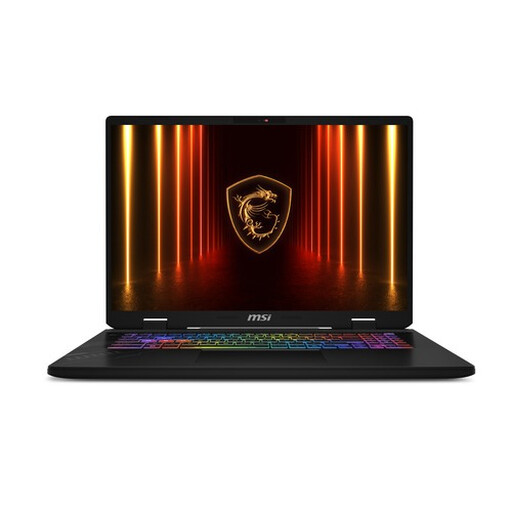
Raider 18 HX is an 18-inch alternative to compare with other laptops featuring a large built-in screen.
The OMEN 17 described on the Dutch HP website is worth considering if you don’t specifically need an 18-inch laptop.
This Joybuy selection features gaming laptops with built-in 16-, 17- or 18-inch screens for playing on the laptop display.
 No image available
The built-in 18-inch UHD+ Mini LED configuration is worth considering if you want to play on a large screen without a separate monitor.
3840 × 2400, 120 Hz, Intel Core Ultra 9 285HX, 64 GB DDR5, 6 TB SSD and NVIDIA GeForce RTX 5090 24 GB. The listed 64 GB RAM is above the 32 GB recommended by Paradox Interactive for Europa Universalis V; this alone says nothing about performance in other games.
The listed weight is 3.6 kg, which may be a consideration if you take the laptop with you often.
 No image available
The built-in 17-inch configuration is an option if you want a large laptop screen alongside the listed memory configuration.
QHD+ 2560 × 1600, 240 Hz, Intel Core Ultra 7 255HX, NVIDIA GeForce RTX 5060 8 GB, 32 GB DDR5 and 1 TB SSD. Paradox Interactive recommends 32 GB RAM for Europa Universalis V; check the requirements for your other games separately.
 No image available
The built-in 16-inch configuration could suit you if you’re looking for a laptop with its own screen and want to compare a smaller size than 17 or 18 inches.
2560 × 1600 IPS screen, 32 GB RAM and 1 TB SSD. The product name also lists an RTX 5070 and a 240 Hz refresh rate.
 No image available
The built-in 18-inch configuration is designed for playing on the laptop screen; pay attention to the listed RAM if you’re considering Europa Universalis V.
1920 × 1200 screen, 16 GB RAM, 1 TB SSD and RTX 5070 Laptop GPU. Paradox Interactive recommends 32 GB for Europa Universalis V. The product description says that the charger must be purchased separately.
 No image available
The built-in 18-inch configuration is an option if you’re looking for a large laptop screen; compare its resolution and memory with the requirements of your own games.
2560 × 1600 WQXGA screen, 240 Hz, Ryzen 9 8940HX, RTX 5060, 16 GB RAM and 1 TB SSD. Paradox Interactive recommends 32 GB for Europa Universalis V. The product description says that the charger must be purchased separately.
No. Paradox Interactive lists 16 GB as the minimum and 32 GB as the recommended amount for Europa Universalis V on Windows. These aren’t general requirements for other historical strategy games; also check how much memory the laptop configuration you’ve chosen includes.
Windows supports setting up and arranging multiple displays. Before you buy, check that the specific laptop output, cable and monitor support the resolution you want; Windows support alone doesn’t automatically confirm compatibility.
Keep the vents clear and follow the cleaning instructions for your model. ASUS warns that dust and hair can block vents and reduce performance; this is maintenance advice, not a guarantee of better performance.
For online consumer purchases, you generally have a statutory cooling-off period of up to 14 days after delivery, subject to legal exceptions. The seller is also responsible for the statutory guarantee if the product doesn’t meet what you can reasonably expect during normal use; an extra commercial warranty doesn’t replace these rights. The Netherlands Authority for Consumers and Markets (ACM) explains these consumer rights.
According to the Dutch government, electronic devices offered on the EU market must carry a CE mark. For the specific offer, also check who the seller is and what return and warranty terms apply; a Dutch-language product page alone doesn’t prove where the seller is based.