
Narrator in an echoey room
Your main aim is to keep one voice clear, and you can position the microphone close to the speaker. Shure explains how the distance between the speaker and microphone affects the recorded speech.


For clear narration in an echoey rehearsal room, starting with a microphone close to the speaker makes sense. If you want to capture more of the room, or have several speakers, adjust the positioning accordingly. Choose USB for a straightforward computer setup, or XLR if you have a suitable audio interface. For models with both connections, check which features are available through each output.
Your main aim is to keep one voice clear, and you can position the microphone close to the speaker. Shure explains how the distance between the speaker and microphone affects the recorded speech.
You want to record without a separate audio interface and listen along during the session. Audio-Technica describes direct headphone monitoring on the AT2020USB-X; check that the connection is compatible with your computer.
You need to decide whether speakers can share a microphone placed close to them or whether each person needs their own position. Shure’s guidance on microphone placement shows why the distance from each voice matters.
| What to consider | What should you look for? | Who is this important to? |
|---|---|---|
| Clarity in an echoey room | Make a test recording in your intended position and try different microphone distances and angles. | If you mainly want to capture one voice clearly, you’ll want to position the microphone close to the narrator. Around 36% of consumers give clarity top priority. |
| Connection and monitoring | Check your computer’s ports, the cable and whether you need an audio interface. | If you want to record directly to a computer and listen along during the session, check the connection and monitoring options. Around 29% of consumers prioritise a straightforward connection. |
| Multiple speakers | Decide whether speakers can share a microphone and how many recording inputs are available. | If speakers are in different positions, you’ll want to know whether everyone can speak close enough to a microphone. Around 21% of consumers give speakers who take turns or are spread out top priority. |
| Audible sense of space | Make a test recording from the planned position and decide how much echo you want to hear. | If you want the rehearsal room to be part of the story, weigh that against how clearly the voice comes through. Around 14% of consumers prioritise the sense of space. |
A cardioid polar pattern doesn’t remove the effect of the distance between the speaker and microphone. Shure explains that reflected sound can affect the recorded speech when the microphone is further away from the speaker.
Assess the microphone together with your planned positioning, then listen back to a short test recording in the rehearsal room.
On the Shure MV7+, the digital processing mentioned isn’t applied to the XLR signal.
Check which features are available through each output and what equipment you already have. You’ll need a suitable audio interface to record to a computer using an analogue XLR connection.
A speaker standing further from the microphone may have relatively more echo in the recording.
Make a test recording from every speaking position. If clarity is your priority, see whether each speaker can use a microphone positioned nearby.
Worth considering for dynamic cardioid microphones and models with USB-C and XLR connections.
Audio-Technica describes the AT2020USB-X as a cardioid USB-C condenser microphone for a fixed recording position with a computer.
According to RØDE, the NT1 5th Generation combines a cardioid condenser microphone with USB and XLR connections.
Sennheiser describes the e 835 as a dynamic cardioid vocal microphone with an XLR connection.
These product picks suit storytelling recordings with one or more speakers, from wireless microphone systems to USB desktop microphones. Before you buy, check that the connection and receiver are compatible with the device you want to record with.
 No image available
The two transmitters could suit a recording setup with two speakers.
The set includes 2 TX, 1 RX and a charging case; the transmitters have built-in microphones. The product description lists compatibility with computers, smartphones and cameras.
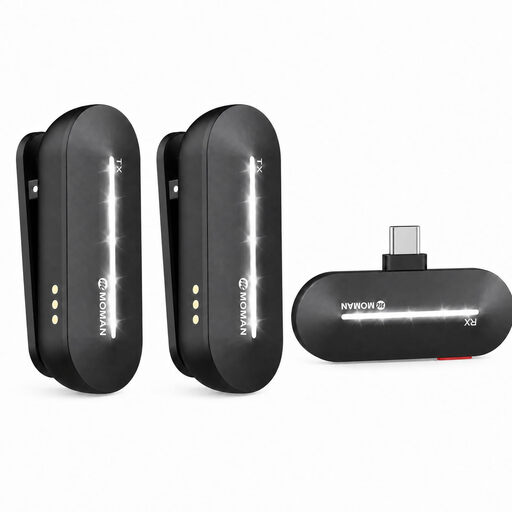 No image available
This set could suit a storytelling session with two speakers and a compatible USB-C recording device.
The product description lists two omnidirectional transmitters, USB-C and a monitoring port on the receiver. Check that your recording device is compatible.
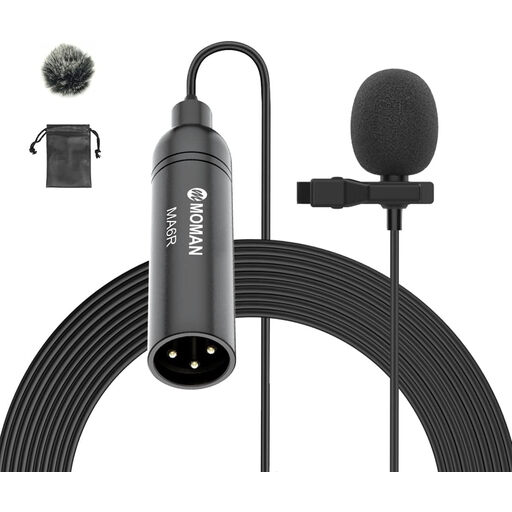 No image available
A clip-on microphone could work well if one narrator wants to move around while speaking and is using a compatible recording device.
The product description lists a 6-metre cable, an omnidirectional microphone and a 3.5 mm connection; compatibility with smartphones and cameras is also mentioned.
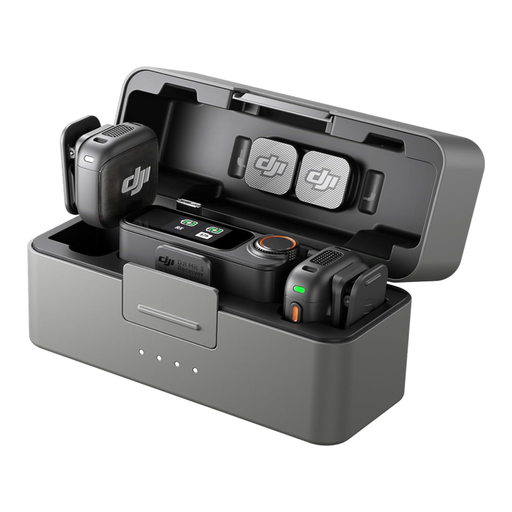 No image available
The two transmitters could suit a recording with two speakers.
According to the product description, the set includes two transmitters, a receiver and a charging case. Compatibility with cameras, smartphones and computers is listed; check that the receiver connects to your equipment.
 No image available
This compact USB microphone could suit a fixed narration position with a compatible computer.
The product description lists a supercardioid polar pattern and a tap-to-mute function. Compatibility with PC and Mac is mentioned.
Make a test recording with the narrator in their actual position, then listen for both the words and the echo. Shure explains that reflected sound can affect a speech recording when the microphone is far from the speaker, so there’s no one ideal distance for every rehearsal room.
You’ll need a suitable audio interface to connect an analogue XLR signal to a computer. A hybrid microphone may also offer a USB connection; Shure states that the MV7+’s digital processing isn’t available through the XLR signal.
First, check the speaking distance, direction and position with a short test recording that you listen back to. Then check whether the connection you’re using supports the features you expect; the MV7+ has different features over USB and XLR.
In the Netherlands, when you buy remotely from a business, you’ll usually have a 14-day cooling-off period, with some exceptions. The Dutch government also explains that if a product is faulty, you may have statutory rights against the seller. Check the terms that apply to your purchase.
It depends on who can be identified and how you use the recording. The Dutch Data Protection Authority states that processing personal data for purposes beyond purely personal or household use requires an applicable legal basis under the GDPR; consent is one possible basis. If you publish someone else’s protected story, also check copyright and any applicable exceptions.