
People storing fresh food
You want to keep radishes and other fresh food chilled, and freezer space is less important to you. The Voedingscentrum advises storing radishes in the fridge and protecting them from drying out.


For fresh radishes, the relevant choice is a fridge or the fridge compartment of a fridge-freezer: set it to 4 °C, check the temperature and keep the radishes protected from drying out. The Voedingscentrum advises against freezing them. Only choose freezer space if you need it for other food, and if your holiday home is unheated, check that the climate class of the exact model is suitable for the temperature where it will be installed. If you don’t store frozen food, consider a fridge without a freezer compartment too.
You want to keep radishes and other fresh food chilled, and freezer space is less important to you. The Voedingscentrum advises storing radishes in the fridge and protecting them from drying out.
You want to know whether the appliance will keep working at the temperature where it will be installed, including outside the holiday season. The Consumentenbond and Beko advise checking the climate class and the guidance for the exact model.
You’re looking for an appliance that fits and offers enough separate fridge and freezer space, without taking up more room than your food requires.
A good fit if: you mainly store fresh food and don’t need freezer space.
The trade-off: you won’t be able to store frozen food; compare the annual energy consumption and usable fridge capacity of suitable models.
A good fit if: you store frozen food for your stay as well as fresh vegetables, and the capacity and dimensions suit your needs.
The trade-off: freezer capacity varies by model; radishes themselves are not suitable for freezing.
A good fit if: more guests or longer stays genuinely require extra fridge and freezer space.
The trade-off: check the space available and the energy consumption of the exact model; Milieu Centraal warns that an oversized fridge can use electricity unnecessarily.
| What to consider | What to check before buying | Who is this relevant to? |
|---|---|---|
| Keeping radishes fresh | Check whether the fridge compartment can be set to 4 °C and whether you can check the temperature with a thermometer; also consider whether there’s practical space for packaged radishes. | I want to keep radishes chilled, without the leaves, and prevent them from drying out. Around 33% of consumers prioritise keeping fresh food. |
| Cold location | Compare the temperature where the appliance will be installed with the climate class and the manual for the exact model. The Consumentenbond gives 10 °C as the lower limit for climate class SN. | I want to know whether the appliance will work when the holiday home is unheated. Around 27% of consumers prioritise suitability for a cold location. |
| Capacity and dimensions | Measure the available height, width and depth, and compare the fridge and freezer capacities separately. | In a small kitchen, I want enough room for my food without the appliance taking up more space than necessary. Around 20% of consumers prioritise fit and capacity. |
| Energy consumption | Compare the stated consumption in kWh per year across models that fit the available space; don’t use the annual figure to calculate your personal energy costs. | If the appliance stays on between visits, I want to take its annual consumption into account and avoid choosing a larger model than necessary. Around 20% of consumers put energy consumption first when buying. |
The Voedingscentrum advises against freezing radishes. So, decide how much freezer space you need based on other food.
Choose the balance between fridge and freezer space based on everything you store during your stay, not just radishes.
Unnecessary freezer space can reduce the usable fridge capacity. Milieu Centraal points out that an oversized fridge can use electricity unnecessarily.
A fridge-freezer may not cool or freeze as effectively outside its permitted ambient temperature range.
Check the temperature where the appliance will be installed and compare it with the climate class and manual for the exact model, especially if you’ll be using it in winter.
An unsuitable ambient temperature can put chilled or frozen food at risk.
The energy rating, annual energy consumption and separate fridge and freezer capacities each answer different questions.
For models that fit the available space, compare both the kWh per year and the fridge and freezer capacities in litres separately.
The KV1430B is a freestanding fridge-freezer with 163 l of fridge space, 41 l of freezer space and a salad drawer.
The CTe 2131 is a shorter freestanding model, measuring 124.1 cm tall, with a total capacity of 196 l and a freezer compartment at the top.
According to Bosch, the KGN362LAF has 218 l of fridge space, 103 l of freezer space and No Frost.
Beko describes models with different cooling systems, including narrower models with static cooling and 54 cm-wide No Frost models.
Here you’ll find a fridge without a freezer compartment alongside fridge-freezers. Choose based on the fresh food you store, how much freezer space you need and the space available.
 Image unavailable
Suitable if you mainly want to chill fresh food at your holiday home and don’t need a freezer compartment.
54 cm wide; energy rating E.
This model has no freezer compartment.
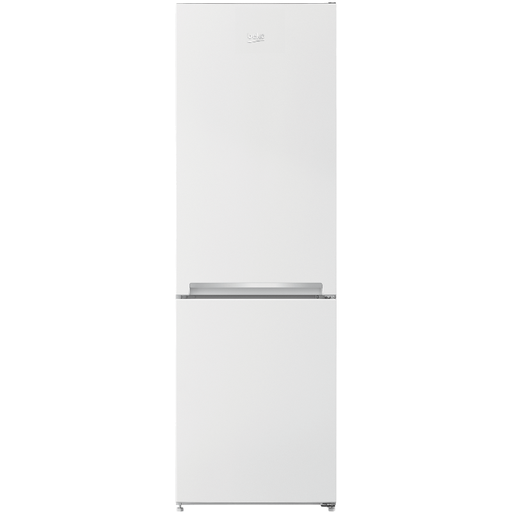 Image unavailable
An option if you need freezer space as well as room for fresh food; check that the total capacity suits your needs.
Total capacity: 251 l; No Frost; energy rating E.
 Image unavailable
Suitable if you want to store chilled and frozen food separately.
Total capacity: 205 l, with 153 l of fridge space and 52 l of freezer space; Low Frost; reversible door; energy rating E.
 Image unavailable
An option for chilling food if you’re looking for a narrower appliance and don’t need a freezer compartment.
Capacity: 92 l; width: 47 cm; Chill Drawer; 7 temperature settings; energy rating E; reversible door.
This model has no freezer compartment.
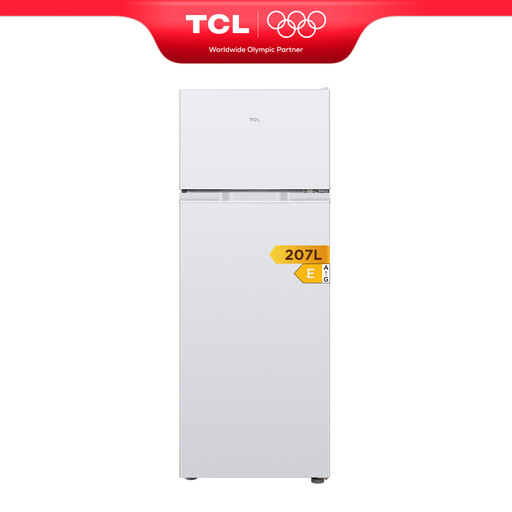 Image unavailable
Suitable if you want to store fresh and frozen food in separate compartments.
Total capacity: 207 l, with 167 l of fridge space and 40 l of freezer space; energy rating E.
No, the Voedingscentrum advises against freezing radishes. Remove the leaves and package the radishes to protect them from drying out while chilled. The stated storage period of six days applies to an opened product and is not a guarantee for every type of packaging or situation.
Set the fridge compartment to 4 °C and check the temperature with a thermometer. The Consumentenbond advises placing the thermometer in a glass of water; also consult the manual for your model.
Compare the ambient temperature where the appliance will be installed with its climate class and the guidance for the specific model. According to the Consumentenbond, climate class SN starts at 10 °C and N at 16 °C, so an SN label does not mean the appliance is suitable below 10 °C.
According to the European Commission, the EU energy label includes information such as annual energy consumption, fridge and freezer capacity, and noise. The Dutch government states that there is no fixed statutory guarantee period and that you should contact the retailer if a fault occurs. When a private individual replaces an appliance, the old appliance must be taken back free of charge under the old-for-new scheme, provided it is of a similar type.