
Anyone looking for a safe place to keep food chilled
You want to store cooked lentils for a short time and check whether the shared fridge is cold enough where you plan to keep them.


If sealed portions fit in the shared fridge and you can check the temperature with a thermometer to make sure it’s around 4 °C, you may not need an extra fridge. If there’s consistently too little space, choose an appliance that suits your containers and the space available. A freezer compartment is most useful if you want to store portions for longer than two days. Once it’s in place, check the actual temperature, and compare annual energy consumption when you’re buying.
You want to store cooked lentils for a short time and check whether the shared fridge is cold enough where you plan to keep them.
You’re looking for a tidy, sealed place for your portions without using more space or appliances than necessary.
You cook for several days and want to decide whether you need freezer space as well as fridge space.
First, check whether you can use the shared fridge and measure the temperature where you’ll store the lentils. Only then consider buying your own appliance. If you want to keep portions for longer than two days, suitable freezer space is also important.
| What to consider | What should you check? | Who is this most important for? |
|---|---|---|
| Temperature you can check | Use a separate fridge thermometer and aim to store the lentils at around 4 °C. | If I want to store leftovers safely, I need to be able to check the temperature where my container is kept. Around 29% of consumers prioritise being able to check the temperature. |
| Capacity and positioning | Measure the available space and your containers; compare the fridge capacity and external dimensions of the exact model. | I want to fit in sealed portions without an extra appliance making the shared kitchen unnecessarily crowded. Around 23% of consumers prioritise suitable capacity and space for positioning. |
| Keeping your food separate | First check whether an agreed shelf or compartment in the shared fridge will be enough. | If I want to keep my food clearly separate, having a designated space and sealed containers matters more than immediately buying my own fridge. Around 18% of consumers prioritise having their own space. |
| Freezer space | Compare fridge and freezer capacity separately, and check that your containers will fit. | If I batch-cook and want to keep portions for longer than the recommended fridge storage time, I need usable freezer space. Around 18% of consumers prioritise freezing food. |
| Energy use and noise | Compare the stated energy use in kWh per year and noise level in dB for the exact models. | If I’m putting an extra fridge in my living space, I want to take its energy use and stated noise level into account. Around 12% of consumers prioritise these considerations. |
The Netherlands Nutrition Centre advises cooling cooked lentils quickly, putting them in a sealed container in the fridge within two hours and keeping them there for no more than two days. They can be kept in the freezer for three months. According to the Netherlands Nutrition Centre, a dial or display doesn’t necessarily show the actual temperature where the food is stored. The European Commission says energy labels provide information including energy class, annual energy consumption, capacity and noise level.
A dial or display doesn’t necessarily tell you how cold it is where your lentils are kept.
Once the fridge is in place, check the temperature with a separate fridge thermometer and adjust the setting towards 4 °C if needed. The Netherlands Nutrition Centre advises leaving the thermometer in the middle of the bottom shelf for half a day or overnight.
A second appliance takes up space and uses electricity. Milieu Centraal advises considering whether one suitable appliance will be enough.
First check whether there’s room for sealed containers and measure the temperature. Only if an extra fridge is necessary should you compare annual energy use in kWh.
With a fridge-freezer, the full stated total capacity isn’t available for chilled containers.
Compare fridge and freezer capacity separately, and measure your containers before choosing a model.
Information about the energy class and annual energy use of the Salora CFB4300BL varies. An older manufacturer document also uses a previous energy label scale.
Check the current EU energy label or product information sheet for the appliance you’re considering, and compare like-for-like information.
The KK550 and KV550 offer different layouts, depending on whether you mainly need fridge space or would also like a freezer compartment.
The CFB4300BL is a compact drinks fridge to consider if you’re short on space and only want to keep a few portions separate.
The TSE1285N is a tabletop model to consider if a drinks fridge would be too small.
The Rd 1400 Pure is a tabletop model to consider if you want to compare capacity and the stated noise level.
These product options range from compact portable coolers to tabletop models, with and without a freezer compartment. If you’re storing cooked lentils, always check that the appliance can reach and maintain the required storage temperature where you plan to put it.
 No image available
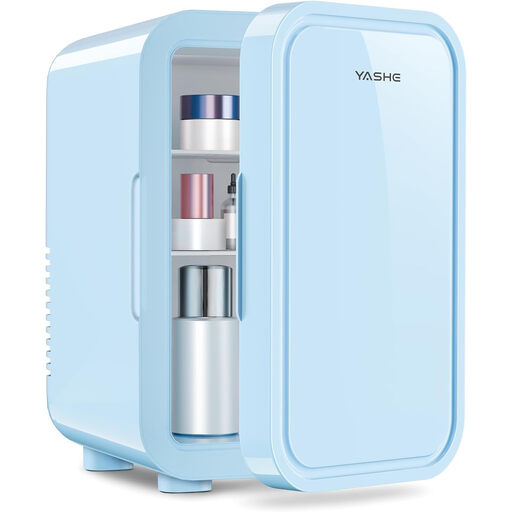
The 6-litre capacity is designed for a small, separate chilled space. Check whether your sealed containers will fit and whether the temperature stays suitable for lentils.
The product description lists a cooling setting of 1–2 °C, a removable shelf and AC and DC power. A stated cooling setting doesn’t guarantee the temperature where food is stored.
 No image available
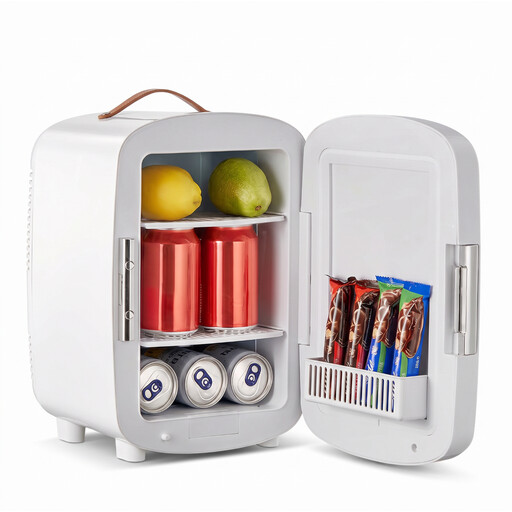
With a capacity of 10 litres, this is a compact option to consider for a few sealed portions. Check that your containers will fit and measure the temperature while it’s in use.
The product title mentions a handle and AC/DC power. Capacity alone doesn’t tell you whether the appliance can maintain the required storage temperature.
 No image available
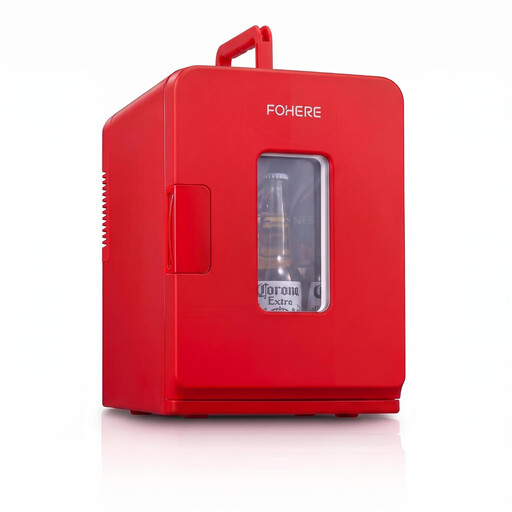
The 15-litre capacity and removable shelves could be useful if you want to store several small containers separately. Check the space available and the temperature where the food will be kept.
The description lists both cooling and heating functions, and says the cooling temperature is 15–20 °C below the ambient temperature. This doesn’t confirm that the appliance will maintain around 4 °C for storing cooked lentils.
 No image available
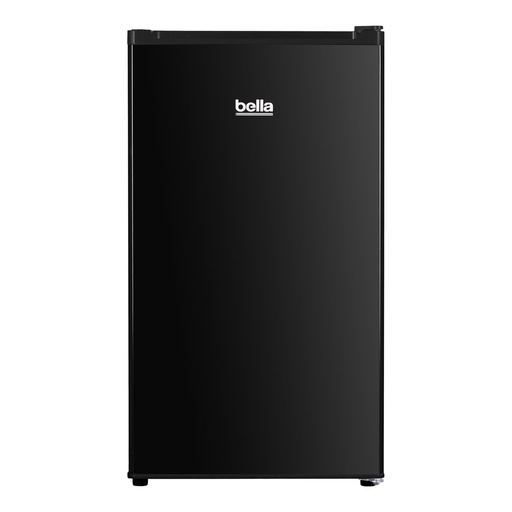
This tabletop model could suit you if you’re looking for a permanent chilled space for sealed portions and don’t need a freezer compartment. Measure the space available and check the temperature after installation.
The product description lists 88 litres of fridge space, mechanical temperature control, adjustable shelves, a salad drawer and door shelves. It says the model doesn’t have a freezer compartment.
 No image available
Consider this model if you need space for chilled portions as well as a separate freezer compartment. Check that both compartments are large enough for your containers.
The product description lists 95 litres of fridge space and 14 litres of freezer space, giving a total of 109 litres. It also mentions two glass shelves, a salad drawer and three door shelves.
The Netherlands Nutrition Centre advises keeping cooked lentils without salt in the fridge for no more than two days. Cool leftovers quickly and put them in the fridge in a well-sealed container within two hours. Freezing is an option if you want to keep them for longer.
Use a fridge thermometer; the Netherlands Nutrition Centre recommends around 4 °C. Place the thermometer in the middle of the bottom shelf and leave it there for half a day or overnight. Don’t rely on the dial or display alone.
Not necessarily. If sealed portions fit in the shared fridge and you can check the temperature where they’re stored, it may be enough. Consider getting your own fridge if there’s consistently no suitable space, and check that the temperature is right once it’s in place.
A freezer compartment is useful if you want to keep portions for longer than the recommended fridge storage time and don’t have any other suitable freezer space. Compare freezer capacity separately from fridge capacity: some of the total volume won’t be available for chilled containers.
Compare the energy class with the stated energy use in kWh per year and the capacity you need. The European Commission says fridge energy labels provide information including energy class, energy use, capacity and noise level.