
If you prepare vegetable snacks
You’ve sliced some carrots after a trip to the market and want to know whether your existing fridge and a sealed container will do the job. The Netherlands Nutrition Centre provides storage advice for cut vegetables.


You probably don’t need a new fridge for carrot sticks from the market: store them in a sealed container and check that your current fridge is set to around 4 °C. The Netherlands Nutrition Centre recommends keeping cut raw vegetables in the fridge for no more than 2 days. Only replace your appliance if it doesn’t cool properly or doesn’t offer enough space. If you do need a replacement, choose based on your kitchen space, the rest of your shopping and annual energy use—not on a freshness feature that hasn’t been shown to extend recommended storage times.
You’ve sliced some carrots after a trip to the market and want to know whether your existing fridge and a sealed container will do the job. The Netherlands Nutrition Centre provides storage advice for cut vegetables.
You need to replace your fridge and want to know whether a table-top model will fit, with enough usable space for your containers and other shopping. The Consumers’ Association points out that the stated capacity doesn’t always reflect the space you can actually use.
You store more than just carrot sticks and need to weigh up fridge and freezer space against annual energy use. Milieu Centraal recommends taking both size and energy use into account when choosing.
First, check that your current fridge cools properly and that your container fits inside. If you need a replacement, decide how much space you need and what size will fit in the available space.
| What to consider | What to look for when buying | Who is this important for? |
|---|---|---|
| Cooling properly | Measure the temperature with a fridge thermometer and check that a sealed container fits. The Netherlands Nutrition Centre recommends 4 °C. | If I want to keep cut carrots safely chilled, I’ll first check the temperature and whether there’s room for my container. Around 31% of consumers prioritise reliable cooling. |
| Fitting the available space | Measure the available space. For a built-in model, also check the niche dimensions and door-mounting system for the exact model. | If my kitchen is short on space, the fridge needs to fit not just on paper, but in the intended spot too. Around 31% of consumers prioritise the space available in their kitchen. |
| Room for your shopping | Consider how much space you need for your containers and the rest of your shopping; compare fridge and freezer capacity separately. | If I want to store the rest of my shopping as well as carrot sticks, I need enough usable fridge space. Around 23% of consumers choose mainly based on the space they need for everyday storage. |
| Annual energy use | Compare kWh per year for models of a suitable size with the features you need. | If my fridge otherwise meets my needs, I’ll take its stated annual energy use into account. Around 15% of consumers prioritise energy use. |
The Netherlands Nutrition Centre distinguishes between whole raw carrots and pre-cut vegetables. Cut raw vegetables have a shorter recommended storage time.
Store the sticks in a sealed container in the fridge and follow the advice for cut raw vegetables: no more than 2 days.
Storing them for too long can lead to food waste.
The temperature setting doesn’t tell you exactly how cold the fridge actually gets. An extra appliance also uses energy continuously.
First, measure the temperature and check whether the container fits. Only compare replacement appliances if you find you need one.
A second appliance means extra electricity use too.
Some of the capacity in a fridge-freezer is taken up by the freezer. The European Commission explains that the EU energy label shows, among other details, the energy class, annual energy use and compartment volumes.
For models of a suitable size, compare the kWh per year and the fridge and freezer volumes separately. Also check whether the layout suits your shopping.
Choosing the wrong size could mean using energy to cool space you don’t need, or having too little usable fridge space.
Worth considering if you’re looking for a compact, freestanding table-top fridge without a freezer compartment.
A model to compare if you’re looking for a larger freestanding fridge-freezer.
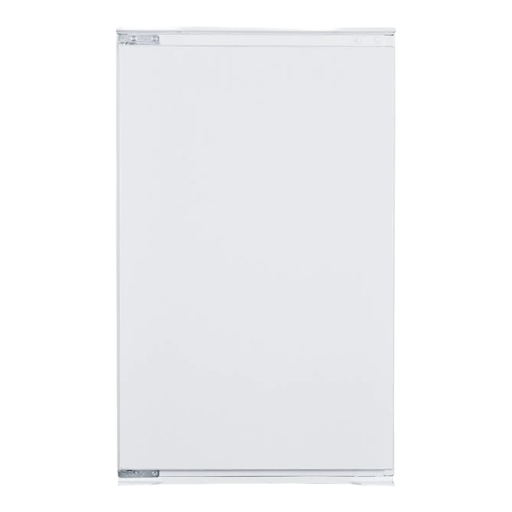
Worth considering if your kitchen requires a built-in fridge; the IRBc 4121 is a specific model you can compare.
An option to compare if you’re looking for plenty of fridge space without extra freezer space.
This selection of Joybuy products focuses on compact freestanding fridges; some models also have a freezer compartment.
 No image available
A compact model without a freezer compartment to consider if you mainly need fridge space.
82 l capacity, adjustable glass shelves and a vegetable drawer.
The product information lists mechanical temperature control.
 No image available
A table-top model to consider if you’re looking for a compact fridge for containers and other shopping.
107 l capacity and 54 cm wide.
The product information lists a vegetable drawer, glass shelves and door compartments.
 No image available
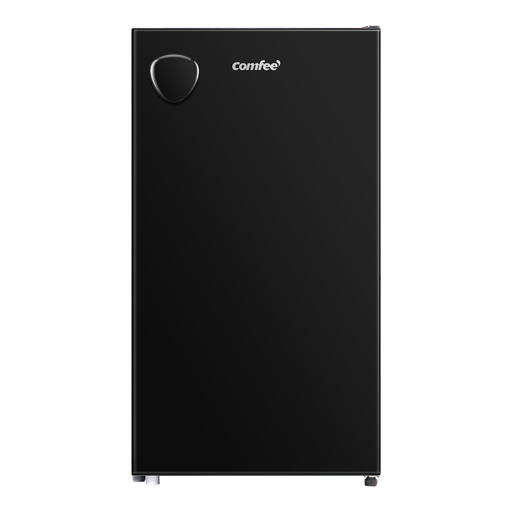
A compact fridge to consider if you want an adjustable thermostat and a vegetable drawer.
88 l capacity, adjustable thermostat, reversible door and removable glass shelves; energy class E.
The product information says the separate cooling zone is for short-term chilling only: don’t store products in it for more than 2 hours.
 No image available
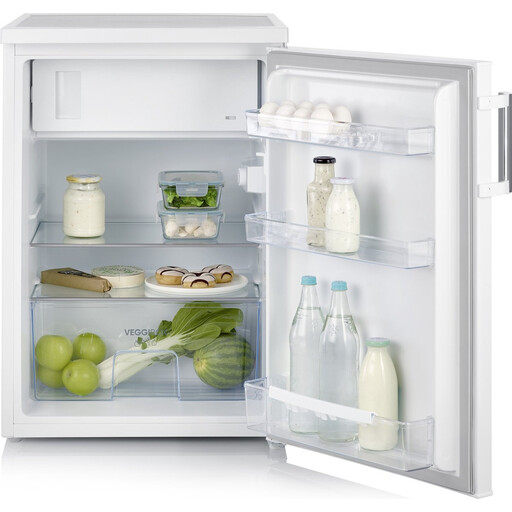
A table-top model to consider if you need a freezer compartment as well as fridge space.
107 l of fridge space and 13 l of freezer space; energy class C.
The fridge and freezer are separate parts of the total capacity.
 No image available
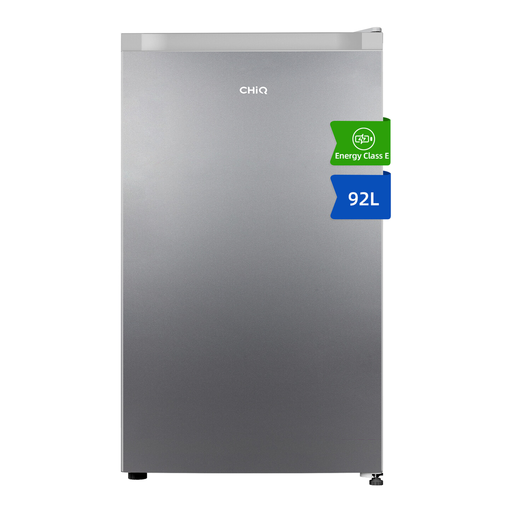
A compact fridge to consider if the available width is an important factor.
92 l capacity, 47 cm wide and seven temperature settings; energy class E.
The product information lists adjustable glass shelves and a vegetable drawer.
Store them in a sealed container in the fridge. The Netherlands Nutrition Centre recommends keeping cut raw vegetables for no more than 2 days; don’t use the longer storage time for whole raw carrots.
The Netherlands Nutrition Centre recommends 4 °C. Place a fridge thermometer in the middle of the bottom shelf and leave it there for half a day or overnight. Adjust the fridge if the reading is higher.
Compare the stated energy use in kWh per year on the EU energy label for models of a suitable size with the features you need. To estimate your own costs, multiply the annual energy use by your electricity price per kWh. Actual energy use may vary.
According to the Government of the Netherlands, you’re entitled to a product that works properly, and there’s no fixed statutory warranty period in the Netherlands. If a product is faulty, the seller must provide a solution; the manufacturer’s warranty is in addition to your statutory rights.
When you buy a similar new appliance, the seller must, under the Dutch one-for-one take-back scheme, take your old fridge from you free of charge, including when you buy online.