
Vandaag of morgen in huis

Kwaliteit gegarandeerd

Welkomstaanbiedingen ontgrendelen: GRATIS bezorging | Tot 80% korting | Gratis 30 dagen JoyPlus-proefperiode
Download de app
A storage cabinet can quickly bring extra order to your hallway, living room, bedroom or home office. However, a cabinet can look more spacious and sturdy in a product photo than it is in real life. Every centimetre counts, especially in smaller homes. So check more than just the style: look at the dimensions, layout, materials and safety features too.
A cabinet that is 30 centimetres deep may seem compact, but the usable interior space can be much smaller because of back panels, drawers and hinges. So measure the items you want to store as well. When it comes to shoes, height isn’t the only thing that matters: check the depth and how far the door opens too.
A product description that mentions adjustable shelves sounds practical, but check how many shelves can actually be adjusted or removed. A shoe cabinet with several levels isn’t automatically suitable for tall boots, boxes or large accessories either.
A narrow storage cabinet or mobile storage trolley has a small footprint. That’s handy in a hallway or office, but it makes correct assembly especially important. Look for an anti-tip feature, sturdy fixing points and a level surface. For a cabinet with drawers or wheels, also consider how heavy it will be when every compartment is full.
Measure the space in three places:
A compact storage cabinet is often a good choice for a student room, small hallway or home-working space. A hallway storage cabinet should also have enough room for everyday shoes and small items without restricting the walkway.
Choose a layout based on what you want to store:
Chipboard, MDF, plastic and paulownia wood all have different properties. Check the stated maximum load capacity and spread heavy items across several compartments. For example, the 5five products below have a stated maximum load capacity of 25 kg. This is a product specification, not a recommendation to load every compartment to its maximum.
Check the assembly instructions too. The cabinet must be fully assembled before you use it. If you have a mobile trolley, it’s a good idea to lock the wheels when possible and not let children hang on to it. The relevant product listings include these safety warnings.
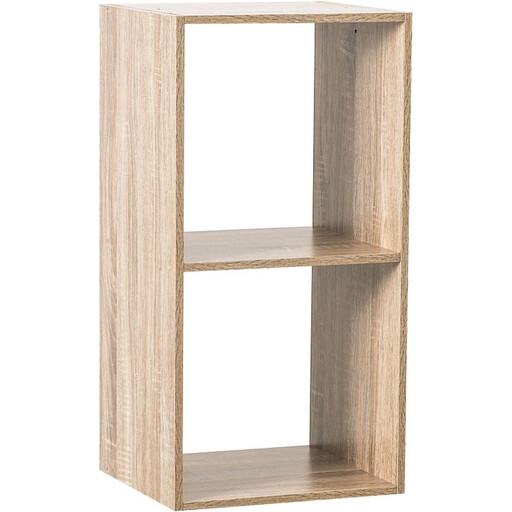
Why it suits this profile: A compact cabinet with open compartments and two drawers for a student room, home office or small living room. Its dimensions are modest, and the layout works well for books, baskets and loose items.
The fixed external dimensions and simple, open layout make it easy to see how much space is available. There are no complicated flaps or pull-out mechanisms that need extra clearance.
Open cabinet with shelves, two drawers, an FSC claim and a stated maximum load capacity of 25 kg.
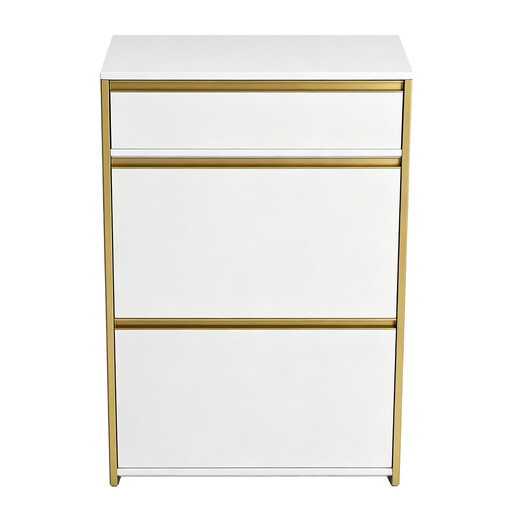
Why it suits this profile: A good choice if you’re looking for a smart shoe cabinet for the hallway that could also work in a living room or entrance hall. The combination of doors, drawers and a top surface gives you several storage options.
According to the product description, the shelves are adjustable and removable. This lets you adapt the layout for shoes, boxes or decorative items rather than relying on a single fixed arrangement.
60 cm wide and 24 cm deep, with space for up to 12 pairs of shoes according to the product information, plus an anti-tip feature.
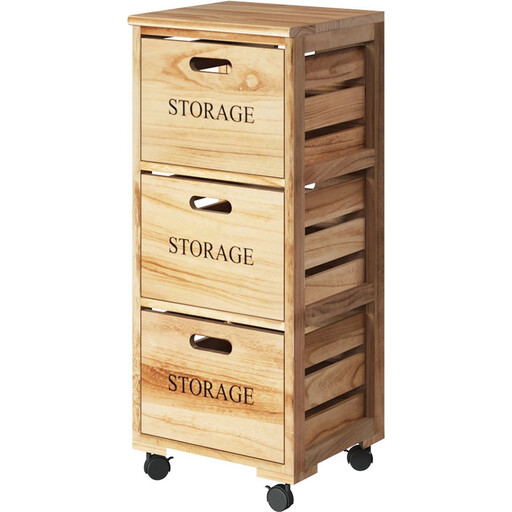
Why it suits this profile: A mobile storage trolley for the kitchen, office or utility room. Its four wheels make it easy to move when you need your belongings somewhere else temporarily.
The product information mentions not only the wheels but also warns against overloading and tipping. Place the trolley on a level surface and follow the assembly instructions.
Three pull-out drawers, dimensions of 31.4 x 34 x 82.2 cm and a stated maximum load capacity of 25 kg.
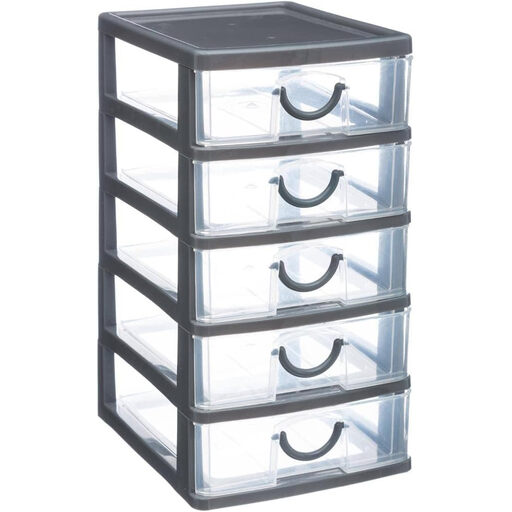
Why it suits this profile: This compact drawer unit can sit on or beside a desk. It’s designed for small items in a home office or bedroom.
The five separate drawers help keep small items from getting mixed up. Use labels to sort cables, stationery or accessories by category.
Five drawers, a capacity of 740 ml per drawer and a total capacity of 3.7 litres according to the product details.
We’ve put together a complete, up-to-date list of products that meet these strict selection criteria and the applicable European safety regulations.
Measure the width, depth and height of the available space. Allow for skirting boards, doors, sockets and the clearance needed for drawers or cabinet doors. Also check that the cabinet will fit through your front door, stairwell or lift.
Its lifespan depends on the material, assembly, load and how it’s used. A cabinet that isn’t overloaded and is kept in a dry, level spot will generally stay stable for longer. Check the screws, wheels and fixing points regularly. Always follow the maximum load stated in the product information.
An open cabinet is handy for books, baskets and items you reach for often. A cabinet with doors is better if you want to keep loose items out of sight, for example in the hallway. For small accessories, a chest of drawers often offers more organisation than a single open compartment.
