
Vandaag of morgen in huis

Kwaliteit gegarandeerd

Welkomstaanbiedingen ontgrendelen: GRATIS bezorging | Tot 80% korting | Gratis 30 dagen JoyPlus-proefperiode
Download de app
A storage cabinet may seem simple to choose, until you discover how much difference dimensions, load capacity, material and assembly can make. A cabinet that looks spacious in the product photo may be too deep for a British living room. A narrow bookcase may fit neatly beside a desk, but be less suitable for heavy files. And a low price means little if the cabinet is unstable or does not meet your storage needs.
With this buying guide, you can compare a storage unit, bookcase, wall cabinet, cube storage unit and shelving unit based on measurable features.
Six tiers may sound spacious, but usable capacity also depends on the width, depth and distance between the shelves. So first measure the items you want to store. Books, folders and storage boxes each require a different layout.
Also pay attention to the difference between total load capacity and load capacity per shelf. For a narrow bookcase, 5 kg per shelf may be enough for books and ornaments, but not for heavy tools or full archive files.
A tall cabinet makes good use of vertical space, but can make a room look visually fuller. As well as the width and height, check:
A space-saving storage cabinet is not automatically suitable for every narrow area. A cabinet measuring 30 cm deep may work well in a hallway or home office, but offers less room for large boxes.
Open cabinets and tall shelving units have a relatively high centre of gravity. Place heavy items at the bottom and use the supplied anti-tip kit when this is stated in the product information. Do not allow children to hang from shelves or climb on the cabinet.
A wall cabinet must also be suitable for the type of wall. Check beforehand whether the plugs and screws are suitable for concrete, brick or plasterboard. If in doubt, professional installation is a practical choice.
For a living room storage cabinet, open compartments are useful for books, plants and ornaments. A cabinet with closed doors keeps dust off your belongings and creates a calmer appearance. A bedroom cabinet works well with fabric storage boxes for clothes and bedding, while plastic storage boxes are more suitable for damp-prone areas, garages or storage rooms.
Adjustable shelves offer extra flexibility. However, check how many shelves are adjustable and whether there is a fixed centre shelf. With a cube storage unit, the compartment size is important: many cube boxes require approximately 30 x 30 cm, but always check the internal dimensions.
Chipboard is a widely used material for affordable bookcases and wall cabinets. The edge finishing and construction also affect how well the cabinet stands up to everyday use. A combination of chipboard and steel can create an industrial look and provide additional support.
For a kitchen or storage room, ease of maintenance is particularly important. A smooth surface is easy to wipe clean, but check the product information before exposing a cabinet to moisture. Do not use abrasive cleaners on plastic boxes, and avoid prolonged exposure to heat or direct sunlight when this is advised against.
An office cabinet must be able to support files, paper and equipment. For a garage or shed, adjustable metal shelves and a higher load capacity are more logical choices. With shelving units, pay attention to the difference between the load capacity per tier and the total maximum weight.
Distribute the weight evenly. A tall cabinet with light ornaments at the top and heavier items at the bottom is generally more sensible than a cabinet with all the heavy items at eye level.
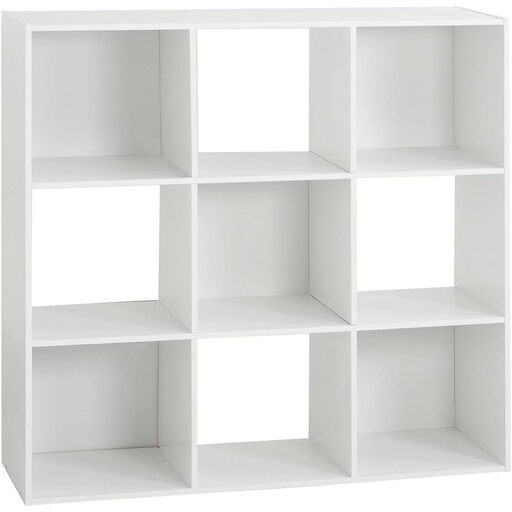
Why it suits this profile: Measuring 100.5 x 32 x 100.5 cm, this cube storage unit provides nine open compartments for books, toys, baskets or accessories. It can be freestanding or mounted on the wall.
The dimensions and maximum load of 65 kg are clearly stated, helping you assess whether the cabinet is suitable for your available wall and floor space.
Nine compartments, an MDF back panel, FSC certification and a minimum two-year statutory guarantee according to the product information.
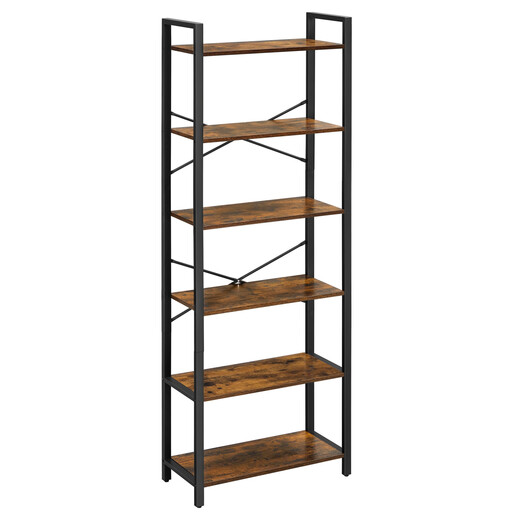
Why it suits this profile: This 6-tier bookcase combines steel components with chipboard and measures 30 x 66 x 186 cm. It is well suited to a living room, bedroom or study where vertical storage is needed.
The stated total static load capacity is 60 kg. The X-brace, adjustable feet and anti-tip kit provide additional stability.
A slim depth of 30 cm, six tiers and a combination of steel and chipboard.
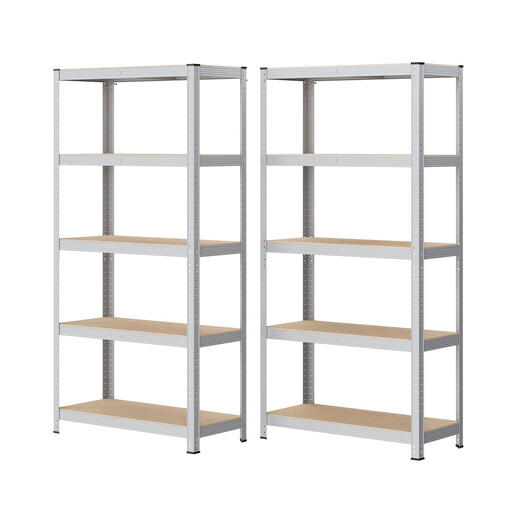
Why it suits this profile: This set is designed for garages, sheds or storage rooms. The two shelving units can be used separately and have adjustable tiers for tools, boxes and supplies.
The load capacity is specified as 175 kg per tier and 875 kg in total. However, check the flooring and secure the units using the supplied anti-tip kits.
Set of two, adjustable shelves, steel frame and dimensions of 40 x 90 x 180 cm per unit.
Not everything needs to go in a large cabinet. Plastic storage boxes are useful for seasonal clothing, toys, paperwork or items in the storage room. Transparent models let you see the contents without labels. The Curver Handy set contains three 65-litre boxes with clip-on lids and a stated maximum load of 15 kg per box.
For smaller items, 14-litre Curver KIS T-Box boxes are suitable for craft supplies, office essentials and kitchen accessories. Fabric storage boxes measuring 30 x 30 x 30 cm fit in many cube storage units. The JOYFURNOS set of six boxes has handles and a stated static load capacity of 5 kg per box.
When stacking, always check the recommended height and place boxes on a flat surface. Modular storage only works efficiently when the boxes fit the compartment dimensions properly.
We have put together a complete, up-to-date list of products that fully meet these strict selection criteria and the applicable European safety regulations.
First, level the cabinet and follow the assembly instructions. Use the supplied anti-tip kit if one is included, and choose wall plugs suitable for your type of wall. Place heavy items at the bottom and do not allow children to climb on or hang from the cabinet.
Its lifespan depends on the material, assembly, load and maintenance. Do not exceed the stated load capacity, distribute the weight evenly and avoid moisture when the material is not designed to withstand it. Check the screws and joints from time to time.
A cabinet with shelves is more flexible for items of different heights. A cube storage unit offers a tidier solution for baskets, books and boxes in standard sizes. Choose based on what you want to store and whether you need open or closed storage.
