
Vandaag of morgen in huis

Kwaliteit gegarandeerd

Welkomstaanbiedingen ontgrendelen: GRATIS bezorging | Tot 80% korting | Gratis 30 dagen JoyPlus-proefperiode
Download de app
Loose documents on the dining table, tools without a proper place or kitchen items piling up: storage organisers for the office and home are only really useful when they suit your space and how you use them. An organiser that looks spacious in a photo may turn out to be too small, unstable or difficult to assemble.
So don’t focus only on colour and design. Above all, check the dimensions, material, assembly requirements and how you’ll use the organiser day to day.
A cabinet or desk organiser may look compact, but the internal space is what matters. For documents, check whether it can hold standard A4-sized sheets. Depth is also important for an A4 wall file holder: thick folders won’t necessarily fit in narrow compartments.
Before you buy, measure:
A wall organiser saves floor and desk space, but only if its fixings are suitable for the wall. Brick, plasterboard and wooden panels may require different plugs or anchors.
Metal wall holders often come with mounting hardware. That doesn’t mean every screw is suitable for every surface. Check the product’s weight and the expected load, too. A metal file holder with several full compartments can be considerably heavier than an empty one.
Terms such as ‘durable’, ‘rust-resistant’ or ‘high capacity’ are only meaningful when supported by the product specifications. According to the product descriptions of various metal holders, a powder-coated finish helps protect against oxidation and rust. This is a claim made in the manufacturer’s product information, not a general guarantee for every environment.
Also look out for missing details. For example, hooks aren’t always included with a pegboard organiser. A desk organiser may need assembly, while a wall holder may arrive ready to use.
For documents, A4 compatibility is a practical minimum. A single compartment is handy for incoming post or a current project. Multiple compartments work better if you want to keep invoices, paperwork, school documents and return paperwork separate.
A 10-tier document organiser measuring 32.5 cm wide, 10.5 cm deep and 81.5 cm high makes good use of vertical space. It may suit a home office with limited floor space, but check that the wall is high enough and can support the weight.
A wall-mounted organiser must be securely fitted using suitable plugs and screws. After assembly, check regularly that the fixings are still secure. Put heavy items at the bottom of a cabinet or on the lowest shelf to reduce the risk of it tipping over.
A pegboard organiser offers flexibility, but the exact layout depends on the accessories supplied. For a vinyl record rack, you should also check that the surface is level, the compartments are wide enough and the shelves can support the load.
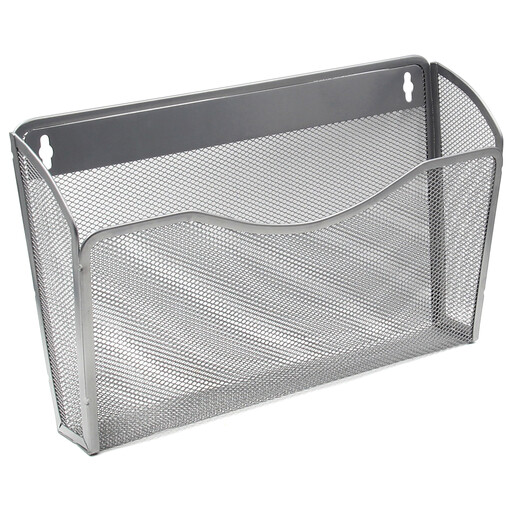
Why it suits this need: A single A4 compartment keeps post, current documents or paperwork for a small home workspace organised. The holder doesn’t take up any desk space.
The dimensions of 35 × 9 × 21.5 cm and its suitability for A4 documents are clearly stated. This means you can check in advance whether the compartment will fit your documents.
Metal construction, one easy-to-access compartment and mounting screws included.
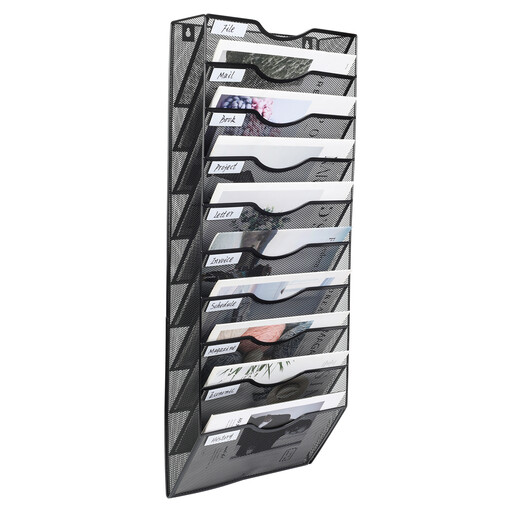
Why it suits this need: For a home office, paperwork area or small business with a steady flow of documents, the vertical layout provides space for ten categories.
The number of compartments, internal width of 31.5 cm and total height of 81.5 cm are specified. This makes it easy to compare capacity with the wall space available.
Ten A4 compartments, label plates and a powder-coated metal construction, according to the product description.
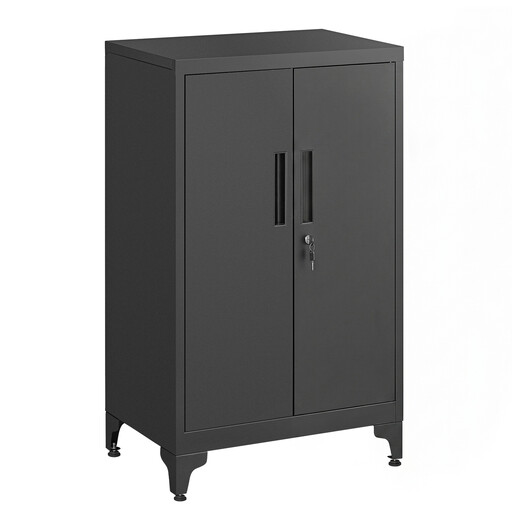
Why it suits this need: This cabinet is designed for tools, documents or household items that you want to keep locked away and out of sight in a garage, office or utility room.
The cabinet has adjustable shelves, stated dimensions of 40 × 60 × 90 cm and an anti-tip kit. Wall anchoring is still important for safe use.
Steel cabinet, lockable doors and a specified static load capacity of 30 kg on top and 25 kg per adjustable shelf.
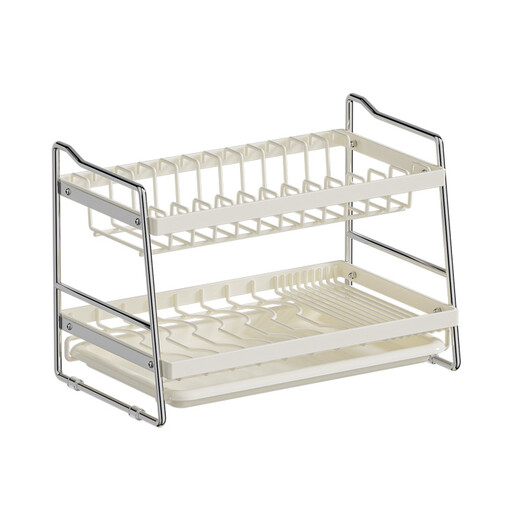
Why it suits this need: A two-tier dish-drying rack makes use of the space above the worktop and can stand beside the sink.
Its dimensions of approximately 40 × 23.6 × 28.7 cm and integrated drainage system are listed. Measure the distance to the sink beforehand.
Two tiers, freestanding placement and a drainage tray; assembly is required.
We’ve put together a complete, up-to-date list of products that meet these strict selection criteria and the applicable European safety regulations.
A wall organiser makes use of vertical space and keeps your desk clear. One A4 compartment may be enough for a small amount of paperwork. If you’re working on several projects, six or ten compartments are more practical, especially if they can be labelled.
Its lifespan depends on the material, load, assembly and exposure to moisture. According to the product descriptions, some metal models have a powder-coated finish that helps protect against oxidation and rust. This is information from the manufacturer; check the fixings regularly and clean the surface with a dry or slightly damp cloth.
Most organisers don’t use electricity. The main additional costs are assembly parts, any extra hooks or wall plugs, and maintenance. Measure carefully beforehand and choose a capacity that suits your everyday needs. This will help you avoid having to buy a second organiser soon after.
