
Vandaag of morgen in huis

Kwaliteit gegarandeerd

Welkomstaanbiedingen ontgrendelen: GRATIS bezorging | Tot 80% korting | Gratis 30 dagen JoyPlus-proefperiode
Download de app
A full wardrobe, shoes left lying around and loose accessories can quickly make rooms feel cluttered. The right storage for clothes and shoes can free up space, but not every organiser suits every home or amount of belongings. A good-looking photo also tells you little about load capacity, dimensions or everyday use.
Pay particular attention to these common pitfalls:
Measure not only the place where the organiser will stand, but also doors, skirting boards and walking space. With a wardrobe with a cover, allow for the full height and width. A model measuring 150 x 45 x 175 cm, for example, takes up a substantial amount of vertical space and will not fit beneath every low attic roof.
For shoes, the internal dimensions are particularly important. Measure your longest and widest shoes before buying stackable shoe boxes. Tall ankle boots may not fit in a low box, while trainers can be extra wide.
Check whether the manufacturer specifies a maximum static load. This generally means the weight the organiser can support while stationary. Do not move a full wardrobe or box without first removing its contents, unless the product information explicitly allows this.
A metal shoe rack is suitable for regularly worn pairs and usually offers an open layout. Fabric storage boxes and cube storage boxes are practical for clothes, scarves, towels and toys. Look for a sturdy base and side walls if you frequently pull the box out of a wardrobe.
A fabric cover helps protect clothes from dust. However, ventilation is still important with an enclosed clothes organiser: only store dry clothes and allow freshly washed items to cool and dry completely.
Transparent shoe boxes make it easier to find a pair without opening every box. For small parts, a tool organiser with separate compartments is more practical than a large storage box. Also check that the fastening closes securely and that the organiser is stackable as stated in the product description.
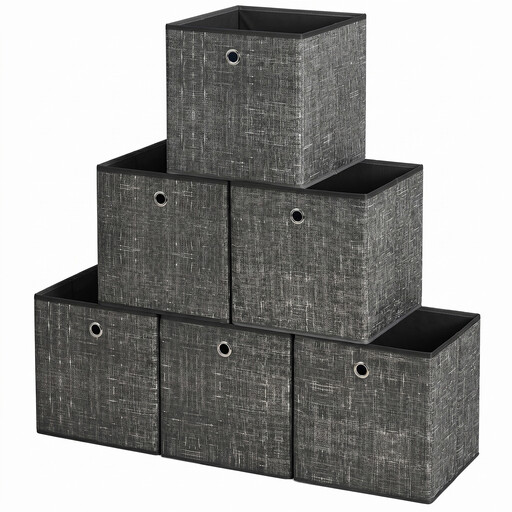
Why it suits this profile: This set of six fits many cube compartments and is suitable for clothes, books and household items. The boxes fold flat when not in use.
The stated dimensions are 30 x 30 x 30 cm and the maximum static load is 5 kg per box. However, check that your wardrobe compartment is large enough.
Front handles, a 1.9 mm cardboard base and a foldable design.
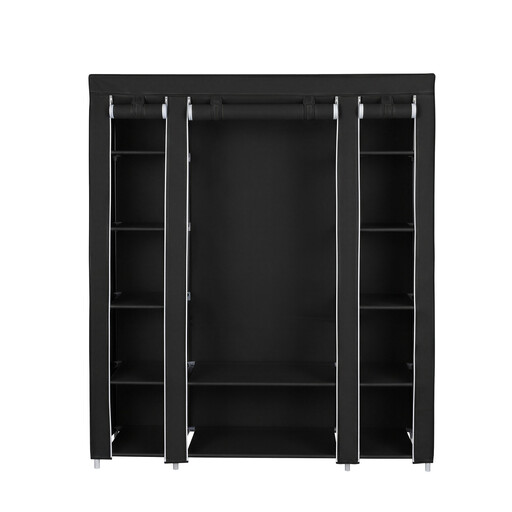
Why it suits this profile: This spacious wardrobe with cover combines hanging space and shelves for coats, dresses, bed linen and accessories.
The product information lists 12 shelves, a movable clothes rail and a zip fastening to keep out dust. Secure the wardrobe with the included anti-tip kit.
Dimensions of 150 x 45 x 175 cm; the rail is rated for up to 15 kg and each shelf for up to 5 kg.
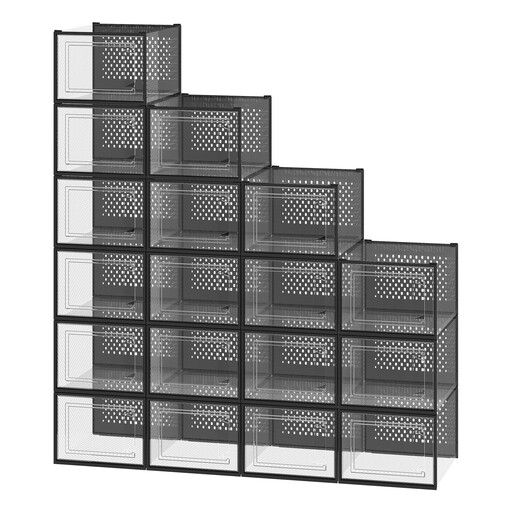
Why it suits this profile: If you own lots of trainers, 18 individual boxes let you create a consistent layout and keep your shoes visible.
The transparent front means you do not have to open every box. Measure your shoes beforehand; each box measures 25.2 x 35 x 19 cm.
Stackable design, ventilation openings and a PP plastic housing with transparent door.
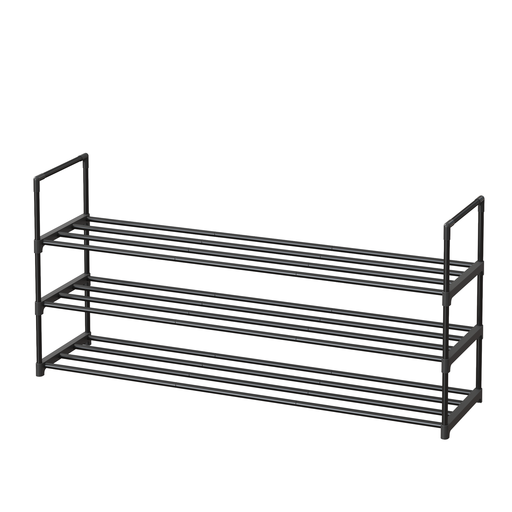
Why it suits this profile: This open, narrow shoe rack is practical for a hallway, student room or small bedroom where shoes need to remain easily accessible.
The three tiers make the capacity clear: according to the product specifications, the maximum static load is 10 kg per tier and 30 kg in total.
Dimensions of 117 x 30 x 55 cm, metal tubes and tool-free assembly.
Start by room and type of use. Hang coats, dresses and shirts on a rail. Use a clothes organiser with compartments for folded clothes, scarves or bags. Store seasonal clothing in fabric storage boxes and label the front, so you do not have to open several boxes.
For an open wardrobe, black storage organisers are a calm, understated choice that brings different materials together visually. In a cube unit, cube storage boxes measuring around 30 to 33 cm often work well, but measure each compartment individually. For shoes, choose an open shoe rack if easy everyday access is important. Stackable shoe boxes are more convenient when you want to reduce dust and make the most of the available height.
Small screws, cables, craft materials and household components do not belong among your clothes. A tool organiser with separate compartments is a more logical choice. A model with a fastening and carry handle prevents small parts from getting mixed up during transport. Storage boxes with handles are also useful for items you regularly take out of a wardrobe or shelving unit.
We have compiled a complete, up-to-date list of products that fully meet these strict selection criteria and the applicable European safety regulations.
Place the wardrobe on a level surface, keep heavy items as low as possible and do not exceed the stated load capacity. Use the included anti-tip kit if one is provided. Remove clothes before lifting or moving a lightweight, portable wardrobe.
That depends on the base, side walls and stated maximum load. They are generally practical for clothes, bedding and lightweight accessories. For tools, books or metal components, plastic boxes or a tool organiser are often more suitable. Always check the maximum static load for each box.
Their lifespan depends on the material, load, moisture, sunlight and how often you move the organiser. Keep fabric boxes dry, clean them with a slightly damp cloth if this is stated in the product information, and do not place plastic boxes in direct sunlight unnecessarily. Choosing the correct size and distributing the load evenly can help reduce wear.
