
Vandaag of morgen in huis

Kwaliteit gegarandeerd

Welkomstaanbiedingen ontgrendelen: GRATIS bezorging | Tot 80% korting | Gratis 30 dagen JoyPlus-proefperiode
Download de app
A storage cupboard needs to do more than look tidy. In a small bathroom, hallway or bedroom, its dimensions, stability and layout all affect how easy it is to use every day. Yet many people buy based on a photo or a vague description. The cupboard may turn out to be too deep for the space, too lightweight for heavy items or less suitable for a damp room than expected.
When comparing cupboards, look out for these three common pitfalls:
Read on to find out which specifications to check and which layouts suit different households.
Don’t just measure the available wall space. Also check:
A tall, narrow cupboard makes good use of vertical space while taking up little floor space. That’s handy in a small bathroom or hallway, but tall cupboards often have a higher centre of gravity. Check whether you can secure it to the wall. With a bathroom rack or open shelving unit, it’s also important to make sure items won’t easily fall off the shelves.
Bamboo is often chosen for its warm appearance. However, check which parts are actually made of bamboo. With furniture made from a combination of materials, the vertical supports, back panel or shelves may be made from chipboard or MDF. That’s not necessarily a problem, but it does affect how suitable the cupboard is for a damp room.
According to 5Five’s product description, the Bamboo Bathroom Rack is designed for use in a bathroom or utility room and is highly resistant to moisture and water. Treat this as product information, not a guarantee that it will suit every situation: prolonged contact with water, poor ventilation and wet edges can still put a strain on materials. Wipe up spills and don’t place the cupboard directly in a puddle or against a wall that’s constantly damp.
In a living room, bedroom or storage room, a wooden shelving unit is usually exposed to less moisture. A cupboard with doors keeps loose items out of sight, while open shelving makes it easier to reach towels, baskets or toiletries.
A stated maximum load is only useful if you know how the weight should be distributed. Put heavier items on lower shelves and spread the weight across them. A cupboard with a maximum total load of 60 kg isn’t automatically designed to hold 60 kg on a single shelf.
Also check:
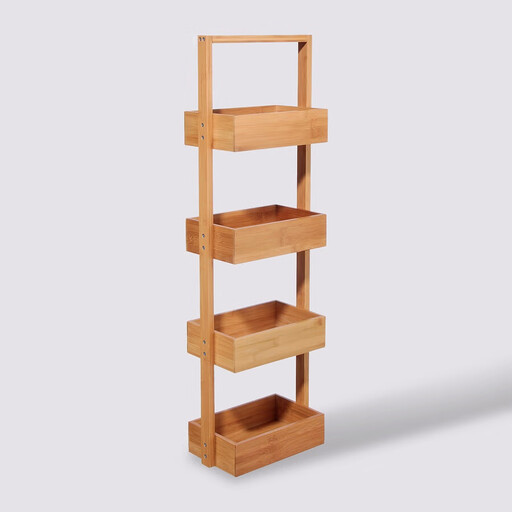
Why it suits this profile: This compact open unit fits into a narrow alcove and offers four tiers for shampoo, soap, towels or small supplies.
Its dimensions of 25 x 16 x 88 cm make it easy to check whether it will fit before you buy. The stated maximum load is 4 kg, so it’s clear that this model is designed for lightweight items.
Four shelves, a bamboo frame, a light brown design and self-assembly.
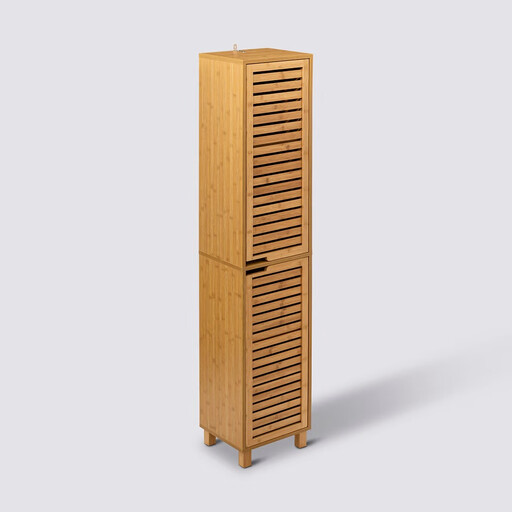
Why it suits this profile: If you need plenty of bathroom storage but don’t want a wide cupboard, this tall cabinet offers six shelves and two doors.
The product information gives its dimensions as 34 x 24 x 170 cm and its maximum load as 30 kg. Its tall, narrow design does need to be permanently secured to the wall, with weight distributed evenly.
Six shelves, two doors, bamboo door panels and assembly by two people.
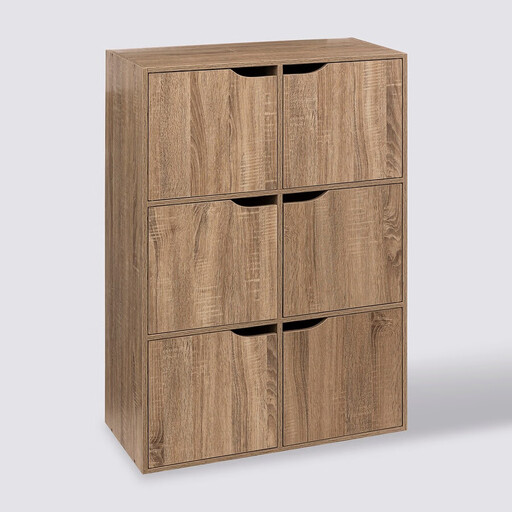
Why it suits this profile: This shelving unit is a good choice if you need wide, enclosed storage for supplies, documents, toys or household items in a dry indoor space.
The description specifies indoor use, six compartments and a maximum load of 90 kg. That gives you a clearer idea of the layout than a vague claim of “plenty of storage space”.
Dimensions of 67.5 x 32 x 100.5 cm, six doors/compartments and an FSC statement in the product information.
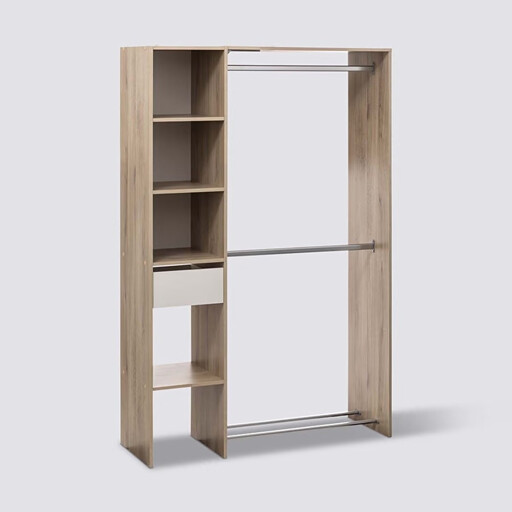
Why it suits this profile: The combination of two clothes rails and shelves works well in a bedroom, utility room or open wardrobe, giving you space to hang and fold clothes.
Its dimensions of 118 x 39.5 x 180 cm make it clear that this isn’t a small bathroom cupboard. The anti-tip straps supplied and even weight distribution are essential for safe use.
Two clothes rails, several shelves, steel support bars and an FSC statement in the product details.
We’ve put together a full, up-to-date list of products that meet these strict selection criteria and the applicable European safety regulations.
A tall, narrow cupboard or compact bathroom cupboard takes up little floor space. Measure the depth first, allowing for doors, skirting boards and ventilation. Choose an open bathroom rack if you want to reach your things quickly. For a tidier look, a cupboard with doors is more practical, but check that the doors can open fully.
Place the cupboard on a level surface, spread heavier items across the lower shelves and always use the anti-tip fittings supplied. Securing a tall or narrow cupboard to the wall is especially important for models measuring 170 or 180 cm. Use fixings that are suitable for your type of wall.
Its lifespan depends on assembly, load, ventilation and care. Don’t leave a wooden or bamboo cupboard standing in water for long, and dry wet surfaces straight away. Check the screws and joints regularly. According to the product information, the models mentioned come with a minimum two-year statutory guarantee; this is not the same as a guaranteed lifespan.
