
Vandaag of morgen in huis

Kwaliteit gegarandeerd

Welkomstaanbiedingen ontgrendelen: GRATIS bezorging | Tot 80% korting | Gratis 30 dagen JoyPlus-proefperiode
Download de app
Extra belongings can soon pile up on the dining table, in the hallway or next to the sink. A storage cupboard can solve the problem, but only if its size, layout and construction suit the space. A cupboard that seems versatile on paper may turn out to be too deep, unable to hold much or difficult to clean in practice.
This guide helps households, flat-dwellers and interiors enthusiasts choose a suitable storage cupboard for the hallway, living room, bathroom, kitchen or home office.
A white cupboard with gold details or a minimalist metal design may suit your interior. Its appearance alone, though, says little about how practical it is. Check the internal dimensions, the number of shelves and how the doors open. In a narrow hallway, for example, a shallow shoe cupboard may be more practical than one with hinged doors.
According to some brands’ product descriptions, certain MDF, chipboard or metal components are suitable for a humid environment. That does not mean the cupboard will withstand standing water, leaking pipes or direct splashes from the shower over a prolonged period. So don’t place a bathroom cupboard against a wet wall, and dry up any spills promptly.
A tall storage cupboard, shoe cupboard or bathroom cabinet can tip over if several doors are opened at once or heavy items are stored at the top. A supplied anti-tip device is a useful safety feature, but it must be secured correctly to a suitable wall. Also check that the wall can support the wall plugs and screws.
Measure not only the spot where the cupboard will stand, but also the space in front of it. Bear in mind:
A narrow storage cupboard around 24 cm deep may suit a hallway where every centimetre counts. For towels, provisions or larger storage boxes, a greater depth is often more practical. A cupboard designed to fit beneath a sink must also leave room for the trap and waste pipe.
A cupboard with adjustable shelves offers more flexibility than one with fixed compartments. You can organise tall bottles, shoes, towels or provisions more easily. Check how many height settings are available and whether the shelves can be removed.
A storage cupboard with doors keeps belongings out of sight and helps limit dust. Open compartments are handy for everyday essentials or decorative items. A storage cupboard with drawers is useful for smaller items such as keys, toiletries, cables or office supplies.
Many models combine MDF, chipboard and metal. Check the materials used throughout, rather than relying on claims such as “sturdy” or “durable”. Where possible, check:
A metal storage cupboard is generally easy to wipe clean and can work well in an office, kitchen or living room. A wooden or MDF model may have a warmer look, but needs more care around moisture and prolonged exposure to water.
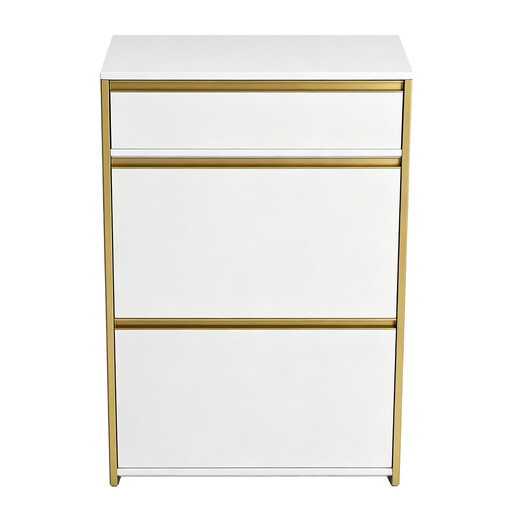
Why it suits this profile: This model combines shoe storage with a drawer and a top surface. That makes it useful in a hallway, entrance or living room without taking up space like a large piece of furniture.
The stated dimensions are 60 x 24 x 104,5 cm. The product description says the four shelves are adjustable or removable. Before buying, check that the depth and door clearance will work in your hallway.
Space for up to 12 pairs of shoes according to the product information, an adjustable interior layout, a drawer and an anti-tip feature.
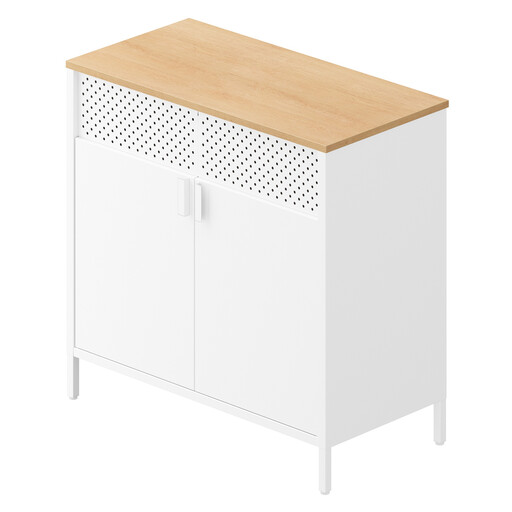
Why it suits this profile: The steel construction and adjustable shelf make this a good choice for anyone looking for an easy-care cupboard for the living room, dining room, office or kitchen.
According to the product description, the steel casing is moisture-resistant and easy to clean. Even so, don’t use the cupboard as a substitute for a waterproof storage box.
Dimensions of 80 x 40 x 76 cm, an adjustable shelf, magnetic door closure and a stated maximum load capacity of 50 kg for the top.
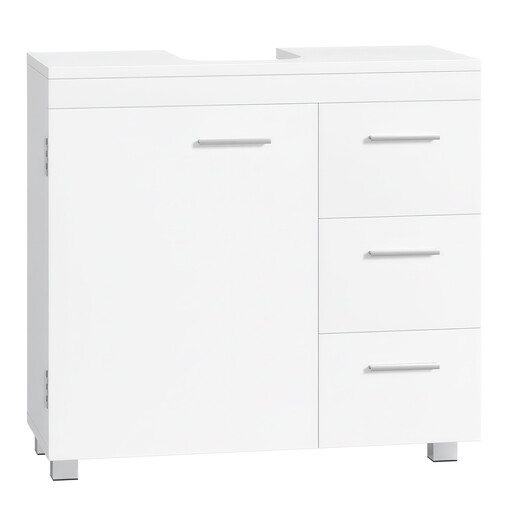
Why it suits this profile: This bathroom cabinet is designed for households that need storage beneath the sink, with separate spaces for towels, toiletries and smaller items.
Check the space around the waste pipe and sink before ordering. The product information states a maximum static load of 36,2 kg and recommends fixing the cupboard to the wall.
Three drawers, two compartments behind a door and an adjustable shelf. The dimensions are 30 x 70 x 64 cm.
If you’re looking for a wider cupboard, you could also consider the HaluPeit bathroom cabinet with two doors, open compartments and adjustable shelves. Its stated dimensions are approximately 35,5 x 100,5 x 75,5 cm. The raised base, at 12,5 cm, can make it easier to clean the bathroom floor. The product description says the materials used are moisture-resistant; however, avoid direct contact with water.
A sideboard or cupboard for the hallway and living room should be suited to your everyday needs. Use closed compartments for paperwork, household items or cables, and open shelves for books and decorative items. Store heavy objects low down and secure a tall cupboard to the wall.
We’ve put together a complete, up-to-date list of products that meet these strict selection criteria and the applicable European safety regulations.
Measure the available width, height and depth at several points. Then check for skirting boards, pipes and doors. If you’re choosing a model with hinged doors, leave enough clearance in front. For a cupboard beneath the sink, the trap, waste pipe and position of the sink are also important.
Its lifespan depends on the material, load, assembly and surroundings. A cupboard will generally stay in good condition for longer if you respect its maximum load capacity, wipe away moisture promptly and check the wall fixings. In a bathroom, good ventilation matters more than a “moisture-resistant” claim alone.
It can be, if the manufacturer describes the material as suitable for a humid room and the cupboard isn’t exposed to constant splashing. Check the metal finish, ventilation and stability too. It’s still a good idea to dry a bathroom cupboard regularly.
