
Vandaag of morgen in huis

Kwaliteit gegarandeerd

Welkomstaanbiedingen ontgrendelen: GRATIS bezorging | Tot 80% korting | Gratis 30 dagen JoyPlus-proefperiode
Download de app
Extra belongings can quickly pile up in a hallway, kitchen, bathroom or living room. A storage cabinet can help, but only if its size, layout and material suit the space. A cabinet that looks spacious in a photo may actually be too deep. An attractive open design can also start to look untidy quickly.
The most common buying pitfalls are:
Do not just measure the spot where the storage cabinet will stand; measure the route to it as well. Check doorways, skirting boards and the space needed for cabinet doors or drawers. A slim storage cabinet measuring 24 to 32 cm deep may be suitable for a hallway, while a deeper model offers more room for provisions or household items.
Also pay attention to the height. A tall kitchen cabinet or bathroom cabinet can provide plenty of storage space, but it must be securely attached to the wall when instructed by the manufacturer. Leave enough room above the cabinet for assembly and cleaning.
Decide in advance what will go inside the cabinet:
For adjustable shelves, check how many height settings are available and whether the shelves can be removed. This determines whether the cabinet can adapt to your changing storage needs over time.
Chipboard and MDF are widely used materials for storage furniture. They are suitable for normal indoor use, but load capacity varies from one model to another. Always check the maximum load capacity and, where possible, distribute heavy items across the lower compartments.
A metal cabinet is generally easy to wipe clean and can be practical for an office, utility room or an area that is cleaned regularly. For a bathroom cabinet, the combination of material, ventilation and distance from the floor is particularly important. Some models are described as moisture-resistant; treat this as the supplier’s product specification and avoid prolonged contact with water.
A flat-pack cabinet should come with clear instructions, labelled parts and suitable assembly materials. Check whether assembly by one or two people is recommended. For example, a cabinet measuring 100 cm wide and 100 cm high may be more difficult to assemble alone than a compact model.
Use the included anti-tip kit if one is provided. Place heavy items at the bottom and do not allow children to hang from shelves, doors or drawers. An FSC statement says something about the source of the wood material, but it does not replace checking the load capacity or construction.
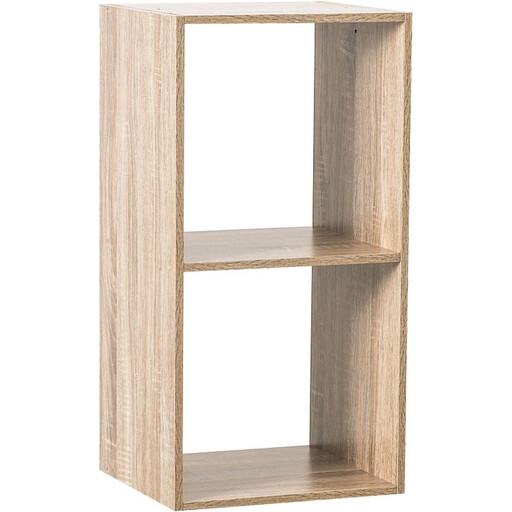
Why it suits this profile: Measuring 34.5 x 32 x 67.6 cm, this compact storage unit fits in a bedroom, home office or small hallway. The open compartments keep everyday items within easy reach.
The dimensions and weight of 6.3 kg are clearly stated. This makes it easier to judge in advance whether the model will fit in the intended space and whether you can assemble it yourself.
Open compartments, a stated maximum load of 25 kg, an FSC statement and an estimated assembly time of 30 minutes.
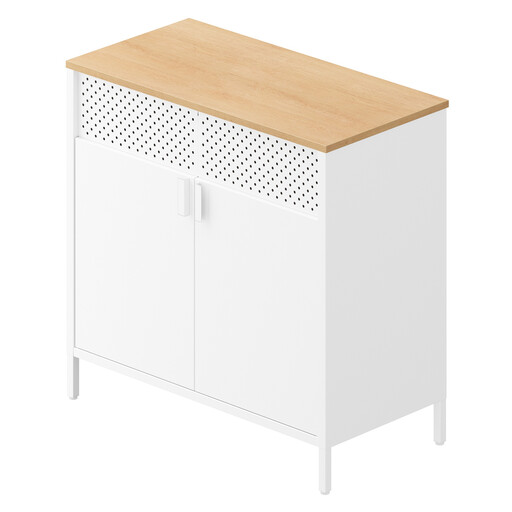
Why it suits this profile: The combination of steel and chipboard is ideal for people looking for a wipe-clean cabinet for an office, living room, dining room or utility room.
The adjustable shelf means you are not restricted to a single layout. The product information also mentions an anti-tip kit; use it according to the assembly instructions.
Steel cabinet, adjustable shelf, magnetic closure and a stated load capacity of 50 kg for the top.
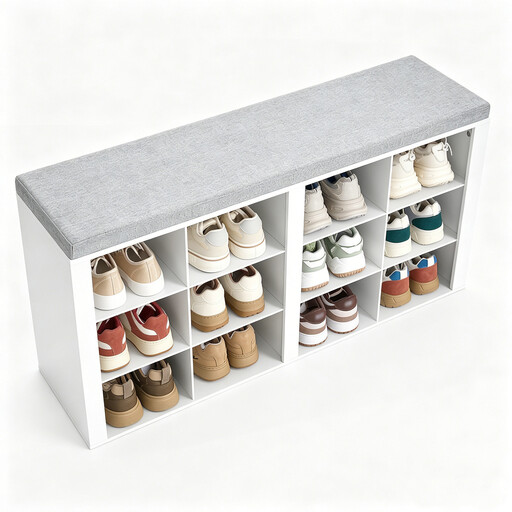
Why it suits this profile: This shoe cabinet with bench is designed for households that use the hallway every day. It measures 30.5 x 104.5 x 49.5 cm and the shelves are adjustable.
The adjustable compartments accommodate different types of footwear. The removable seat cover can be cleaned separately.
12 compartments, adjustable shelves, a bench and a stated load capacity of 150 kg.
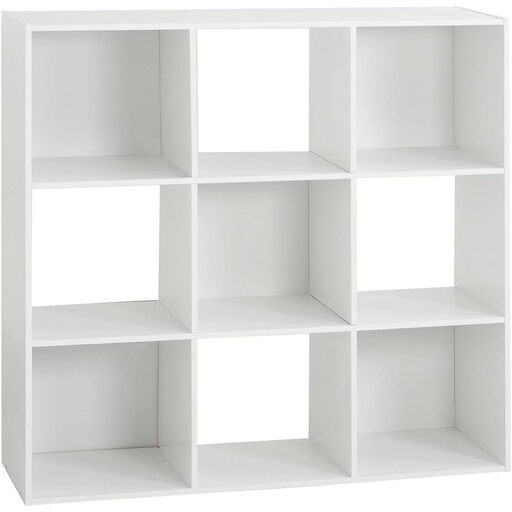
Why it suits this profile: Measuring 100.5 x 32 x 100.5 cm, this cube storage unit offers nine open compartments for baskets, books, toys or decorations.
The layout is clear from the outset, and according to the product information, the cabinet can be placed on the wall or floor. Check the surface before wall mounting.
Nine compartments, an MDF back panel, an FSC statement and a stated maximum load of 65 kg.
For the kitchen, a tall kitchen cabinet with doors and adjustable shelves is practical for provisions and crockery. A model with a worktop can provide extra surface space, but check that its load capacity is suitable for appliances. In the bathroom, a bathroom cabinet with a raised base and enclosed storage is useful, but do not place the unit where water regularly splashes onto the base.
For the hallway, a hallway cabinet with a shallow depth often works better than a wide sideboard. If you mainly need to store shoes, choose a shoe cabinet with ventilation and compartments that are tall enough. In the living room, a sideboard or open cabinet can meet different storage needs: closed doors hide loose items, while open compartments keep books and accessories on display.
A flat-pack cabinet may be more economical to transport, but assembly takes time. Check the number of packages, the tools required and the space needed to lay out the parts beforehand. Keep the assembly instructions and secure tall or narrow furniture according to the safety instructions.
We have put together a complete, up-to-date list of products that fully meet these strict selection criteria and the applicable European safety regulations.
That depends on the space and the items you want to store. Measure the available width, height and depth, allowing extra room for doors, drawers and skirting boards. If in doubt, mark out a simple floor plan with masking tape.
Its lifespan depends on the material, load, assembly and maintenance. Use the cabinet within its stated load capacity, put heavy items at the bottom and avoid prolonged exposure to moisture. Check the screws and fixing points from time to time.
An open cabinet gives you an immediate view of its contents and works well for books and baskets. A cabinet with doors keeps belongings more out of sight and limits dust. For a hallway, kitchen or living room, the choice mainly depends on how often you use the contents and how tidy you want the room to look.
