
Vandaag of morgen in huis

Kwaliteit gegarandeerd

Welkomstaanbiedingen ontgrendelen: GRATIS bezorging | Tot 80% korting | Gratis 30 dagen JoyPlus-proefperiode
Download de app
A storage cabinet might seem easy to choose, until you realise that not every model suits your space or your belongings. A cabinet that looks spacious in a product photo may be too deep for a narrow bathroom. A storage rack with a high load capacity may be less stable without wall fixings. And while a foldable storage cabinet is handy for temporary storage, it may not be suitable for heavy boxes.
With this buying guide, you can compare options based on dimensions, material, load capacity and ease of use. That way, you can avoid paying for features you don’t need or buying a cabinet that turns out to be impractical after a short time.
A tall storage cabinet makes good use of vertical space, but its width and depth determine whether it will actually fit. So, measure more than just the available wall space. Check:
For example, a slim storage rack may suit a bathroom or utility room, while a wider cabinet may work better in a living room or office.
A claim such as “up to 130 kg per shelf” usually refers to a static load: the weight evenly distributed across a stationary shelf. That’s not the same as a cabinet being suitable for heavy items that are moved frequently.
Also check whether the load capacity applies to each shelf or to the whole unit. With a metal storage cabinet with MDF shelves, the shelves may also respond differently to moisture than the metal frame.
A plastic storage cabinet is lightweight and easy to clean, but it may not be as stable as a metal cabinet. MDF is practical in dry rooms, but needs extra care in a damp cellar, garage or bathroom. A fabric storage box is mainly designed for clothes, bedding and other lightweight items.
Also consider ventilation. A closed cabinet offers better protection from dust, while an open storage rack is easier to access and allows air to circulate.
Make a note of what you want to store before you buy. Shallow compartments are often enough for shoes, towels and toiletries. Tools, supplies and moving boxes need more depth and load capacity.
A cabinet with adjustable shelves is flexible if the items you store change over time. A fixed layout is often simpler, but offers less room for tall boxes or appliances.
A model that doesn’t require tools can be handy in a rented home or student room. However, the cabinet should always stand on a flat, stable surface. Anti-tip protection is important for tall or heavy models. Use the fixings provided if the product information specifies them.
Before buying, also check how to clean the unit. Plastic and metal can usually be wiped with a slightly damp cloth. MDF and fabric boxes need more care.
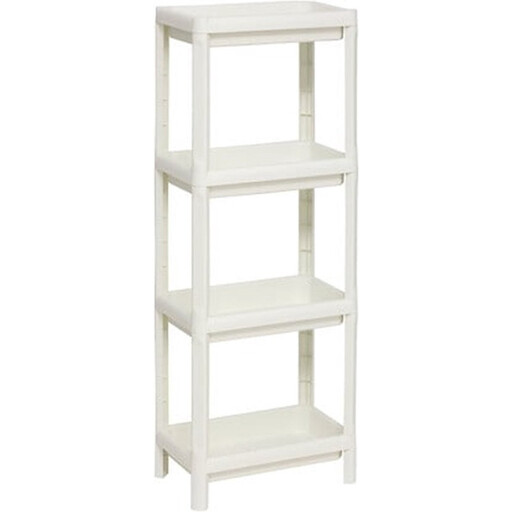
Why it suits this type of user: This slim plastic storage rack is a practical choice for bathroom essentials, cleaning products or a small amount of stock in a utility room. It measures 37 cm long, 22 cm wide and 100 cm high.
The dimensions and maximum weight of 20 kg per shelf are clearly stated. This means you can check in advance whether it will fit and suit the items you want to store.
Four open shelves, tool-free assembly and a polypropylene frame. The manufacturer says it takes around five minutes to assemble.

Why it suits this type of user: This cabinet combines concealed storage with an adjustable shelf. It’s a good fit for a living room, dining room or office where you want to keep belongings out of sight.
The cabinet has clearly stated dimensions of 40 × 80 × 76 cm and comes with anti-tip protection. It still needs to be fixed to the wall for safe use.
Steel casing, an adjustable shelf, doors and a maximum static load of 50 kg on the top.
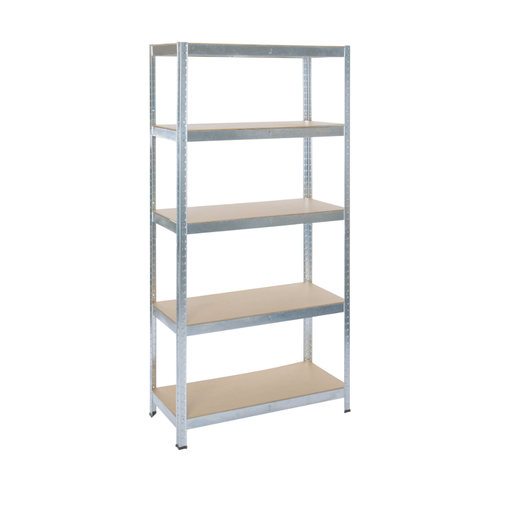
Why it suits this type of user: For a garage, workshop, loft or utility room storing tools and supplies, this metal storage rack offers plenty of shelf space and flexibility.
The product lists a capacity of 175 kg per shelf and 875 kg in total. Treat these figures as static-load guidelines and distribute heavy items evenly.
Five adjustable MDF shelves, a galvanised steel frame and screwless click-fit assembly. Wall fixing is recommended.
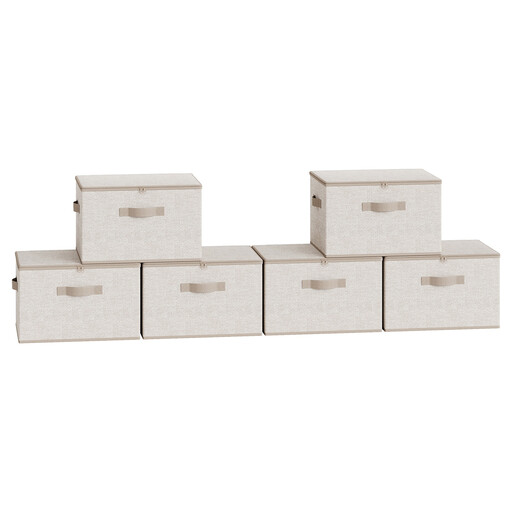
Why it suits this type of user: These storage boxes are suitable for clothes, toys and seasonal items. You can fold them away when they’re not in use, and the handles make them easy to move.
The contents, dimensions and load capacity are clearly specified: six boxes measuring 40 × 30 × 25 cm, each with a maximum static load of 3 kg.
Zip closures to help keep dust out, handles on the front and sides, and a foldable design. There may be a new-product smell when you open the box; airing it out is recommended.
We’ve put together a complete, up-to-date list of products that meet these strict selection criteria and the applicable European safety regulations.
Choose a model that makes use of height without taking up too much floor space. A slim cabinet, wall-mounted rack or foldable storage cabinet can help save space. Check the depth beforehand to keep doors and walkways clear. If you’d rather keep your belongings out of sight, a cabinet with doors is more practical than an open rack.
Polypropylene is lightweight and easy to clean, making it a practical choice for a bathroom. However, check that it’s stable on a slippery floor and don’t place it somewhere that’s exposed to splashing water for long periods. An open rack is often enough for towels and toiletries, while lidded storage boxes can be more convenient for small accessories.
Its lifespan depends on the material, load, humidity and how it’s used. Distribute heavy items across several shelves, don’t exceed the stated load capacity, and secure a tall cabinet if recommended. A metal storage rack may be suitable for more intensive use, while a fabric box is mainly intended for lightweight, dry items.
