
Vandaag of morgen in huis

Kwaliteit gegarandeerd

Welkomstaanbiedingen ontgrendelen: GRATIS bezorging | Tot 80% korting | Gratis 30 dagen JoyPlus-proefperiode
Download de app
A storage cabinet needs to do more than keep your belongings out of sight. In the hallway, it should hold shoes and everyday accessories; in the bathroom, its materials need to withstand moisture; and in the living room, it should complement your décor. Yet product descriptions don’t always make it clear whether a cabinet is right for your space.
So look out for these three common pitfalls:
Measure the available width, depth and height. If the cabinet has doors, allow for their swing. In a narrow hallway, a slim shoe cabinet around 24 cm deep may be more practical than a deeper model with wide doors.
Also check:
A hallway cabinet also needs to be sturdy. If you choose a tall or shallow model, look for an anti-tip kit included with the cabinet and secure it to the wall according to the instructions.
A cabinet with adjustable shelves may stay useful for longer than a model with fixed compartments. Tall boots, trainers, storage boxes and books all need different heights. An open cube storage unit works well for baskets and decorations, while a cabinet with doors keeps belongings out of sight and helps protect them from dust.
Look for a combination of:
For shoes, the stated capacity is only a guide. Different shoe sizes, tall footwear and boxes take up more space than low-top trainers.
Many models are made from particleboard, MDF, metal or a combination of these materials. Particleboard and MDF are common choices for a sideboard, living room cabinet, bedroom cabinet or shoe cabinet. Metal is easy to clean and is often used for kitchen cabinets and multi-purpose storage cabinets.
For a bathroom or vanity cabinet, check specifically:
Treat a manufacturer’s claim of moisture resistance as a product specification, not a guarantee against water damage. Ventilate the room and wipe up any spills promptly.
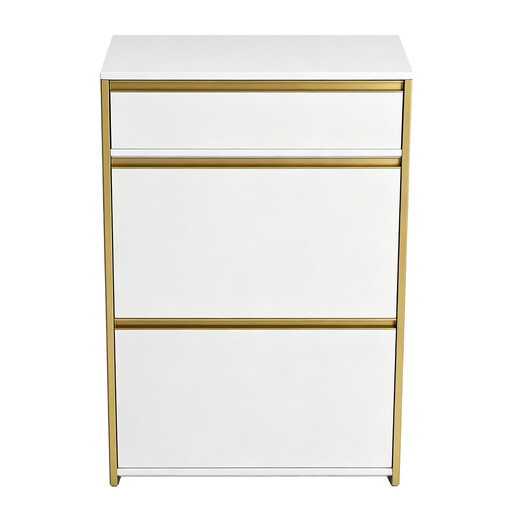
Why it suits this profile: At 60 × 24 × 104.5 cm, this model is designed for compact hallways and passageways. The combination of shoe storage, a drawer and a top surface makes it handy for keys, small items or decorations.
The stated dimensions make it clear in advance how much depth you’ll need. The product description lists four adjustable, removable shelves, so you can adapt the layout.
Compact size, adjustable shelves, a drawer, a top surface and an anti-tip kit, according to the product description.
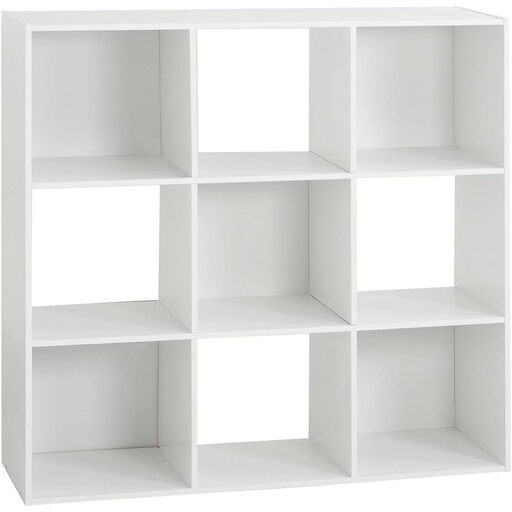
Why it suits this profile: This open cube storage unit measures 100.5 × 32 × 100.5 cm and has nine compartments for books, baskets and accessories. According to the product information, it can be mounted on the wall or placed on the floor.
The layout is clear from the outset: nine open compartments, rather than a vague claim about total storage capacity. The stated maximum load is 65 kg; distribute heavier items across the lower compartments.
Nine compartments, an FSC mention in the product information, wall or floor mounting, and a stated minimum two-year guarantee under EU consumer rules.
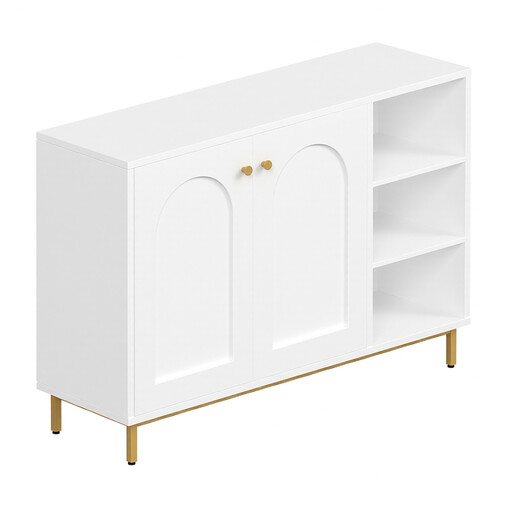
Why it suits this profile: Designed for bathroom use, this model combines closed storage with three open shelves. At around 35.5 × 100.5 × 75.5 cm, it has room for towels, toiletries and supplies.
The product description lists moisture-resistant materials, a raised base measuring 12.5 cm and adjustable shelves. Even so, check the ventilation and avoid direct contact with water.
Two doors, three adjustable shelf heights, open compartments, metal components and an anti-tip kit, according to the product specifications.
We’ve put together a complete, up-to-date list of products that meet these strict selection criteria and the applicable European safety requirements.
Place the cabinet on a level surface and follow the instructions provided. Wall fixing is important for tall, narrow or shallow models to help prevent them from tipping over. Put heavier items at the bottom, and don’t let children hang from the doors, shelves or drawers.
Its lifespan depends on the material, assembly, load and environment. A cabinet in a dry living room will generally experience less wear than a bathroom cabinet. Check the hinges, joints and wall fixings regularly. Use a damp cloth rather than lots of water, then dry the surface.
The price is mainly affected by the size, material, doors, drawers, adjustable shelves and assembly. A simple shoe rack is often cheaper than a large sideboard or a multi-purpose kitchen cabinet. So compare more than just the purchase price: consider the space available, the layout and how long you expect to use it.
