
Vandaag of morgen in huis

Kwaliteit gegarandeerd

Welkomstaanbiedingen ontgrendelen: GRATIS bezorging | Tot 80% korting | Gratis 30 dagen JoyPlus-proefperiode
Download de app
A storage cabinet may seem like a simple purchase, until you find that it will not fit through the bedroom door, shelves start to sag or clothes quickly become dusty. For Dutch homes, flats and student rooms, price is not the only important factor. The available space, material and maximum load determine whether a storage solution remains convenient in everyday use.
Pay particular attention to these three common pitfalls:
Do not just measure the space where the storage cabinet will stand. Also check:
For clothes, you will usually need a combination of hanging space and shelves. A wardrobe or fabric wardrobe with shelves only is less practical for coats, dresses and shirts. A cabinet with a clothes rail and compartments offers more flexible storage options.
Check the product specifications for the load capacity of:
A clothes rail with a maximum static load of 15 kg is suitable for a limited to average amount of clothing, but heavy winter coats can quickly use up a large share of that capacity. With a clothes rail on wheels, stability is also important. Lockable wheels help keep it in position, but only move a loaded rail if the structure is designed for this.
Plastic is easy to wipe clean and works well in a bathroom, kitchen or student room. A plastic storage box with a lid protects belongings from dust and is often stackable. Polypropylene, often referred to as PP, is lightweight and easy to maintain, but the maximum load and stacking height remain decisive factors.
Fabric and non-woven materials are lightweight and foldable. A zipped or roll-up cover keeps dust out more effectively, but does not automatically protect against moisture. Place these cabinets in a dry room and follow the assembly instructions. An anti-tip device is important for tall or narrow cabinets.
For small items, storage boxes, storage boxes with lids, a drawer organiser or drawer dividers are often more practical than an extra-large cabinet. For wood-based materials such as MDF or bamboo, check the care instructions. A slightly damp cloth is generally sufficient; prolonged contact with water may cause the material to swell.
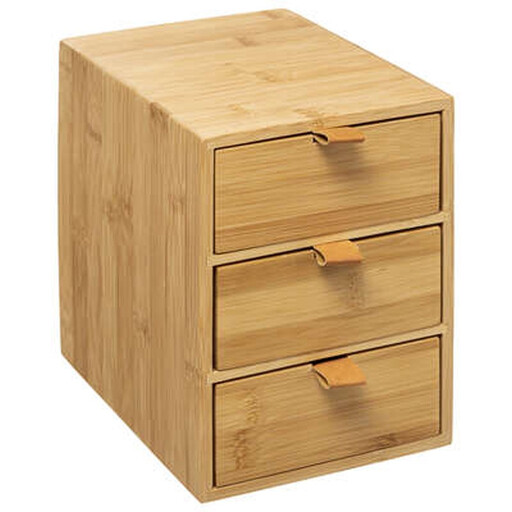
Why it suits this profile: This compact drawer unit takes up very little space and is suitable for a bedroom, desk or home office. Its three drawers let you separate accessories, stationery or small household items.
The dimensions and capacity are clearly stated: 20 x 15 x 21 cm and 6.3 litres. This makes it easy to assess in advance what the unit is suitable for, without treating it like a large wardrobe.
Three separate drawers, FSC certification according to the product information and care with a slightly damp cloth.

Why it suits this profile: If you want to store belongings neatly, visibly and stackably, you get three transparent boxes with clip-on lids. Ideal for craft supplies, stationery or smaller clothing accessories.
The contents are immediately visible, so you are less likely to have to open several boxes to find something. The product information states a maximum load of 5 kg per box.
Set of three, 14 litres per box, stackable with lids and nestable without lids.

Why it suits this profile: This clothes rail on wheels is designed for a large amount of hanging clothing, a temporary wardrobe or use in a utility room. Its width is adjustable from 92 to 132 cm.
The product specification states a total static load of 100 kg and two lockable wheels. Distribute the weight evenly and use the extendable rail according to the instructions.
Steel tubes, four swivel castors, two lower rails for boxes and tool-free assembly.
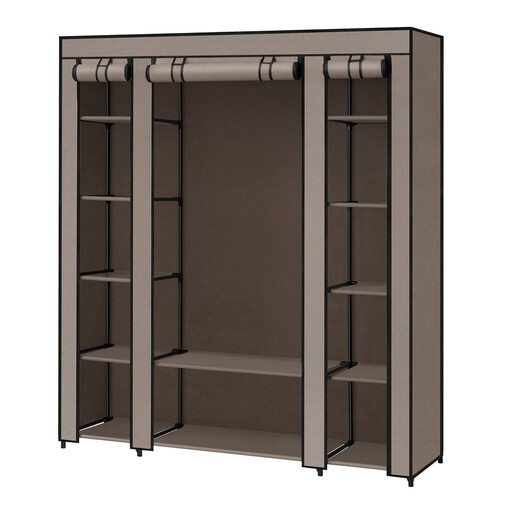
Why it suits this profile: This portable wardrobe provides hanging space and twelve shelves in a unit measuring 150 x 45 x 175 cm. The fabric cover can be closed with a zip or rolled up.
The manufacturer states clear limits: a maximum of 15 kg on the clothes rail and 5 kg per shelf. For safety, the supplied anti-tip kit must be secured to the wall.
Tool-free assembly, twelve compartments, a protective fabric cover and a metal-tube frame.
We have put together a complete, up-to-date list of products that fully meet these strict selection criteria and the applicable European safety regulations.
Start with the items you use every day. Keep them at eye level or in an easily accessible drawer. Store seasonal clothing higher up or behind a closed cover. Use labels on drawers and boxes, especially when using several storage boxes with lids or a stackable storage cabinet.
A practical layout could look like this:
With a fabric cabinet, do not completely block ventilation and do not place damp items in a sealed box. After assembly, check that all connections are secure and that the cabinet is stable.
That depends on how much clothing you need to hang and fold. First measure the available wall space and leave room for doors or drawers. For a small bedroom, a portable wardrobe approximately 45 cm deep may be sufficient. Also check the height of the clothes rail and the maximum load.
A fabric wardrobe can remain useful for a long time when placed on a level surface, not overloaded and correctly secured to the wall when required. The cover protects against dust, but it is not the same as a fully enclosed hard cabinet and is less suitable for damp rooms.
A storage cabinet is useful when you want to organise lots of belongings in one fixed place. Separate storage boxes are more flexible, easier to move and often stackable. For small accessories, a drawer organiser or drawer dividers may provide more organisation than an additional piece of furniture. So first consider the type of items you need to store, and only then choose the form of storage space.
