
Vandaag of morgen in huis

Kwaliteit gegarandeerd

Welkomstaanbiedingen ontgrendelen: GRATIS bezorging | Tot 80% korting | Gratis 30 dagen JoyPlus-proefperiode
Download de app
An extra storage cabinet may seem like a straightforward purchase, until you find that it won’t fit in the alcove, the shelves bow under the weight or loose items still end up everywhere. Product photos for cheaper models don’t always make the dimensions, load capacity and assembly requirements clear.
Look out for these common pitfalls:
First, measure the space available: height, width and depth. Remember to allow room for skirting boards, doors and opening drawers. A slim storage unit around 32 cm deep can work well in a home office or bedroom, while a wider cabinet with compartments offers more space for toys, books or storage boxes.
Next, think about the shape of the items you want to store:
Chipboard, MDF, metal, plastic and bamboo each have different uses. MDF and chipboard are widely used for fixed cabinets, while steel can be a good choice for a lightweight storage rack with bins. Bamboo often works well in a bathroom or small space, but always check the stated maximum weight.
Be aware of the difference between:
A product description that clearly states the load capacity gives you more to go on than a general claim such as ‘strong’ or ‘sturdy’. On their own, these terms don’t tell you much without a technical specification.
Check whether the cabinet needs to be assembled and how many people are needed. A multi-level model may take longer to put together than a simple foldable storage cabinet. Wall anchoring is important for tall or lightweight furniture to help prevent it from tipping over. Place heavy items at the bottom, and don’t let children climb on shelves, drawers or cabinets.
A cabinet for the living room, playroom or child’s bedroom isn’t a toy. Follow the instructions provided and check that all the fixings are secure once assembly is complete.
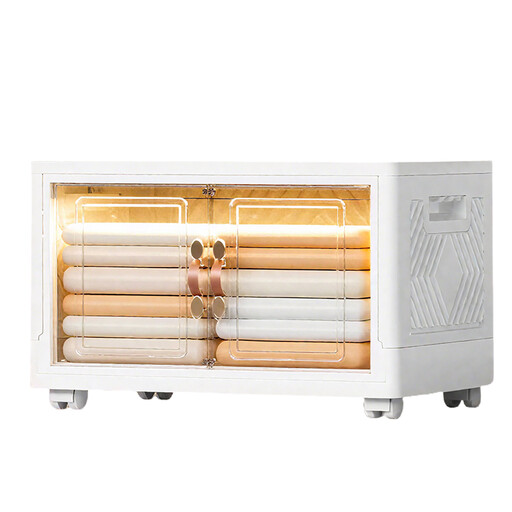
Why it suits this profile: This storage cabinet is aimed at households, students and flat-dwellers who need extra space quickly for clothes, toys, snacks or books.
The 67-litre capacity is stated, with an indicated load of around 15 to 25 kg per layer. Check that this is suitable for the items you plan to store and the surface you’ll place it on.
A 67-litre capacity and foldable design, according to the product description; handy when you want to create extra space temporarily.
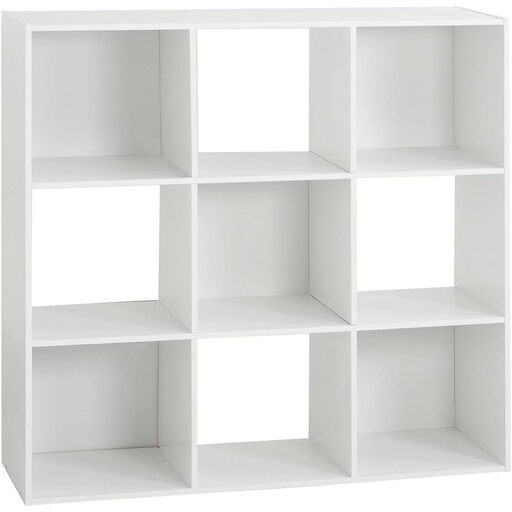
Why it suits this profile: With nine compartments and a width and height of 100.5 cm, this storage unit is a good fit if you’re looking for a set layout for your living room, bedroom or home office.
The maximum load capacity of 65 kg is specified. The cabinet does need to be assembled; the description says this takes around 30 minutes and requires two people.
Nine compartments, an MDF back panel, and the option to place it on the floor or mount it on the wall. FSC is mentioned in the product information.

Why it suits this profile: The combination of a steel frame and six boxes is practical for toys, clothing accessories, towels or groceries in a playroom, bedroom or utility room.
The product information lists six baskets, three shelves and a maximum load capacity of 30 kg. Check how the weight is distributed before storing heavy items.
A steel frame, six storage boxes and dimensions of 68 x 34 x 98 cm. This model is designed for indoor use and requires assembly.
The 5five bamboo version is a compact option for a bathroom rack: 25 x 16 x 88 cm, with four levels and a stated maximum load of 4 kg. Use it mainly for lighter bathroom essentials. A slim bedroom cabinet with four shelves can be a handy choice if you want to make use of vertical space; check its maximum weight of 40 kg and the assembly requirements.
If you’re looking for a storage solution on wheels, consider a wooden storage tower with three drawers. This model measures 31.4 x 34 x 82.2 cm, has four wheels and a maximum load capacity of 25 kg. Place a mobile cabinet on a level surface and avoid overloading it.
We’ve put together a complete, up-to-date list of products that meet these strict selection criteria and the applicable European safety regulations.
Place heavy items at the bottom, distribute the weight evenly and use a wall fixing if one is provided. Tall, narrow cabinets and lightweight racks should be anchored in line with the product instructions. Don’t let children hang from shelves or drawers.
Its lifespan depends on the material, assembly, moisture, load and how it’s used. A cabinet used within its stated load capacity and looked after properly is less likely to be damaged. Check the screws, joints, wheels and shelves regularly. According to the product information, some of the models mentioned come with a statutory minimum guarantee of two years.
A standard storage cabinet doesn’t use electricity. The main ongoing costs are therefore usually assembly parts, replacement boxes or maintenance. If you’re buying a cabinet with storage boxes, it’s worth checking first whether the supplied boxes are available separately or can be replaced.
