
Vandaag of morgen in huis

Kwaliteit gegarandeerd

Welkomstaanbiedingen ontgrendelen: GRATIS bezorging | Tot 80% korting | Gratis 30 dagen JoyPlus-proefperiode
Download de app
A storage cabinet may seem like a simple purchase, but the wrong dimensions, unsuitable materials or an awkward layout can quickly become frustrating. Every centimetre counts, especially in a flat, student room or small bathroom. A cabinet that looks spacious in the product photo may be too deep in practice, fail to fit under the basin or feel unstable.
So don’t just look at the colour and price. Check the measurements, material, assembly method and maximum load in particular. Below, you’ll find the main things to consider, along with some popular options for different living situations.
A cabinet that’s 80 cm wide won’t necessarily fit the available space. Skirting boards, doors, handles and clearance for opening them can all take up extra room. So measure:
For a bathroom cabinet, vanity unit or under-sink cabinet, it’s especially important to allow space for the trap and waste pipe. Always check the specified cut-out. One of the models below lists a cut-out of 20 × 15 cm; make sure this matches your basin and pipework.
A moisture-resistant board isn’t the same as a cabinet that can stay wet for long periods. MDF, chipboard, metal and plastic all react differently to moisture. Don’t leave a wooden bathroom unit standing in a puddle, and dry up any spills promptly.
According to the product description, the HaluPeit model is made from moisture-resistant MDF with metal components. The description also states that the cabinet stands 12.5 cm off the floor. This may help limit splashes and dirt around the base, but it doesn’t make the cabinet suitable for immersion in water.
A storage cabinet with an adjustable shelf gives you more flexibility, but check how many height settings are available and whether the shelf is well supported. A tall bottle will only fit if you can move the shelf far enough. Check the maximum load too, as this isn’t listed for every model.
With a lightweight plastic cabinet on wheels, it’s best to avoid storing heavy books, tools or full packs of supplies if the manufacturer doesn’t specify a high load capacity.
A narrow cabinet may suit an alcove, while a wider one offers more storage but can be harder to position. These layouts are practical for smaller spaces:
A living room storage cabinet can also serve as a sideboard or TV unit. If so, check that the top is suitable for the weight of your equipment. According to the product information, the metal model below has a maximum static load of 50 kg on its top.
MDF and chipboard often have a smooth surface and work well for bathroom furniture, bedroom cabinets and kitchen cupboards. Protect the edges from prolonged exposure to moisture. According to the metal model’s product description, steel is moisture-resistant and easy to clean. PP plastic is lightweight and suitable for a plastic storage cabinet, but the supplied safety information states that it may deform when exposed to direct heat or extreme temperatures.
Use a soft, damp cloth and mild soap on plastic. Abrasive cleaners, bleach and strong chemicals can damage the surface.
A tall or deep cabinet should stand on a level surface. Use the supplied anti-tip kit if recommended. This is particularly important in households with children or pets.
Be aware of the difference between:
A cabinet that unfolds quickly saves assembly time, but may have a different load capacity from a permanently assembled unit.
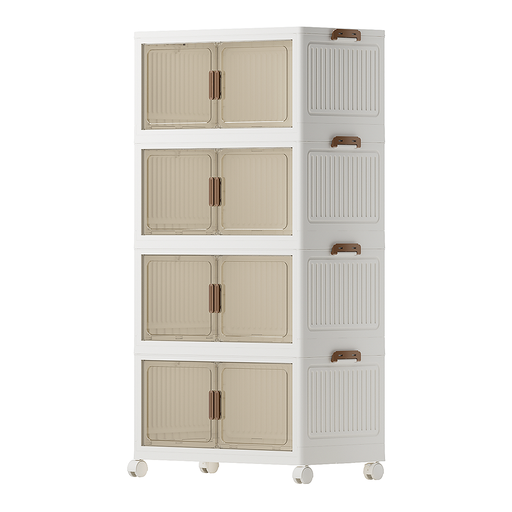
Why it suits this need: This cabinet is designed for anyone who wants extra storage in a bedroom, living room, kitchen or student room without needing tools.
The cabinet has four compartments, is 55 cm wide and, according to the product information, requires no tools. Its layout is clear from the outset, and assembly is limited to unfolding it.
PP plastic, four compartments, magnetic closures and nylon wheels. Folds away when you’re not using it.
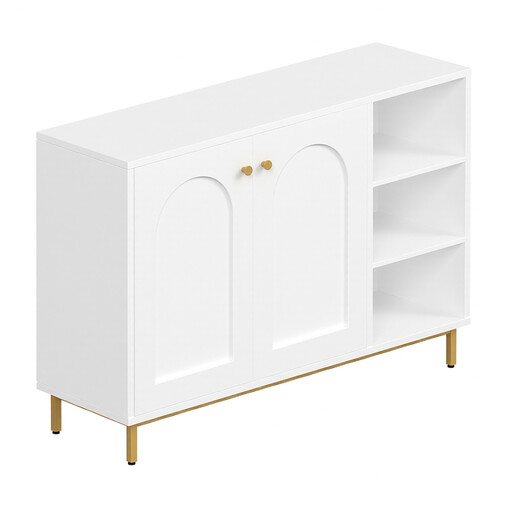
Why it suits this need: The combination of concealed storage and open shelves suits households that want to keep toiletries out of sight while keeping everyday essentials within easy reach.
The product description lists three adjustable shelf heights, a clearance of 12.5 cm and an anti-tip feature. Be sure to check the exact dimensions: the specifications give approximately 35.5 × 100.5 × 75.5 cm.
MDF described as moisture-resistant, metal components, two doors and three open shelves.
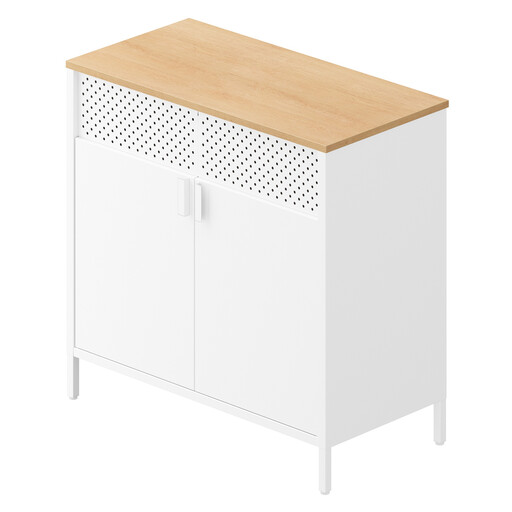
Why it suits this need: This cabinet is a good choice if you’re looking for a sturdy-looking unit for the living room, dining room, home office or storage of larger items.
The cabinet has an adjustable shelf, magnetic closure and a supplied anti-tip kit. The product information also gives a maximum top load of 50 kg; distribute the weight evenly.
Steel cabinet body, dimensions of 40 × 80 × 76 cm, adjustable shelf and perforated panel for ventilation.
A bathroom vanity unit with a cut-out for the basin makes sense if you want to conceal pipework. A sideboard works better in the living or dining room, where concealed storage and a wide top are important. A lightweight bedroom cabinet or plastic cabinet may be enough for a bedroom. If you clean often, a storage cabinet on wheels could be the better choice.
For every option, check whether the cabinet is intended for indoor use only. Follow the assembly instructions and don’t exceed the stated load capacity. European safety information and an anti-tip kit are useful, but safe positioning also depends on the surface and the fixings.
We’ve put together a complete, up-to-date list of products that meet these strict selection criteria and the applicable European safety regulations.
Choose a model whose depth, door width and height are an exact fit. A narrow bathroom cabinet with doors keeps items out of sight. For a vanity unit, you’ll also need to measure the waste pipe, trap and available cut-out.
Its lifespan depends on the material, assembly, load and care. Keep MDF and chipboard as dry as possible, avoid overloading the cabinet and use an anti-tip feature if one is supplied. Keep a plastic cabinet away from direct heat.
Not necessarily, but check occasionally that the wheels can turn freely and that the cabinet remains stable. Use the wheels mainly on a level floor, and lift or move the cabinet carefully when it’s heavily loaded.
