
Vandaag of morgen in huis

Kwaliteit gegarandeerd

Welkomstaanbiedingen ontgrendelen: GRATIS bezorging | Tot 80% korting | Gratis 30 dagen JoyPlus-proefperiode
Download de app
A storage cabinet may seem like a straightforward purchase, until you find that the doors hit the wall, the shelves are too low for bottles or the cabinet wobbles on an uneven floor. In a Dutch hallway, bathroom or rented home, every centimetre counts too. If you only consider colour and price beforehand, you could end up buying a cabinet that is of little practical use.
This buying guide helps you compare your options effectively. You’ll learn which dimensions, materials and safety features matter, and which type of cabinet suits your situation.
A cabinet that is 30 cm deep may seem suitable for a narrow hallway, but the usable interior space is reduced by doors, back panels and shelves. So don’t just measure the available space – also check:
A slim shoe cabinet is practical for footwear, while towels, provisions and cleaning products often require more depth.
A product description may use terms such as moisture-resistant, water-repellent or suitable for bathrooms. This does not automatically mean that the cabinet can withstand standing water or constant condensation. According to the product information provided by some brands, certain MDF, chipboard or steel components are suitable for damp areas, but always check the exact specifications and care instructions.
Do not place a bathroom cabinet directly in a puddle of water, and look for a raised base. Good ventilation and keeping the cabinet a sufficient distance from the shower reduce the risk of board materials swelling.
Tall, narrow cabinets and models with heavy items stored at the top can tip over. An anti-tip device supplied with the cabinet is therefore an important feature to check. Put heavy items at the bottom, distribute the weight evenly and secure the cabinet to a suitable wall according to the instructions. If you live in rented accommodation, it is sensible to check in advance which type of fixing is permitted.
First, make a quick inventory of what you want to store. Flaps or open compartments are useful for shoes, while toiletries require adjustable shelves. A cabinet with adjustable shelves remains useful if you want to store different items in the future.
Pay attention to the relationship between width, depth and height:
For a shoe rack or shoe cabinet, capacity is not the only criterion. Check whether tall footwear, slippers and shoeboxes will fit. For example, the HaluPeit shoe cabinet specifies an adjustable, removable layout with space for up to 12 pairs of shoes. Treat this as the supplier’s stated product specification; the actual capacity depends on shoe size and the chosen layout.
Chipboard and MDF are widely used furniture materials. The quality of the finish, the thickness of the panels and the protection provided to the edges all affect how well a cabinet copes with everyday use. A dry living room or hallway has different requirements from a damp bathroom.
When choosing a white storage cabinet, also check the cleaning instructions. A smooth surface is generally easy to wipe clean, but harsh cleaning products can damage lacquer, foil or metal. For a metal cabinet, rust-resistant components and a well-finished coating are important considerations.
Check the stated maximum load capacity and compare it with the items you plan to store. A cabinet for books will need to support a different load from one used for lightweight towels. It is best to place heavy objects on the bottom shelf.
Also check:
A multi-purpose cabinet is appealing if you may want to change the layout later, but only if its construction and assembly method are suitable for the chosen location.
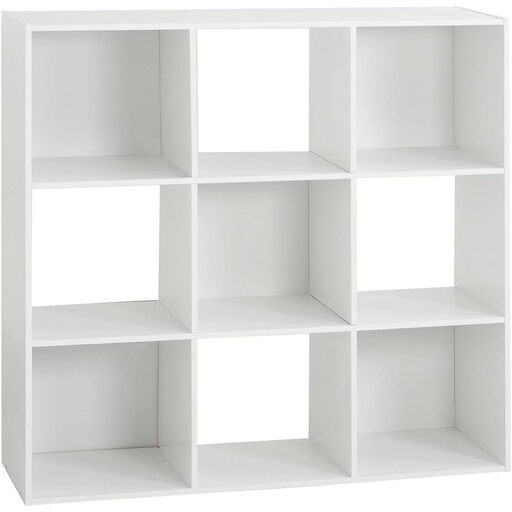
Why it suits this profile: The open layout makes it easy to organise books, baskets, toys or decorations.
The product information states the exact dimensions, a weight of 22,6 kg and a specified maximum load of 65 kg. This allows you to assess the available space and load capacity in advance.
9 compartments, floor or wall mounting according to the product information, FSC certification and a statutory EU guarantee of at least two years.
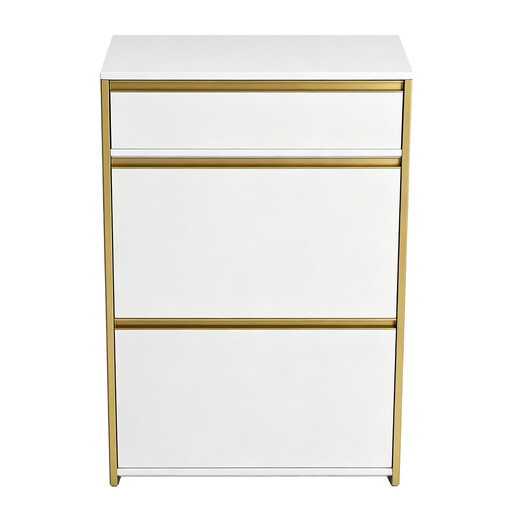
Why it suits this profile: This cabinet combines shoe storage with a drawer and top surface, so it can also be used as a hallway cabinet or a small multi-purpose cabinet.
Measuring 60 x 24 x 104,5 cm, it is suitable for a narrow space, while the adjustable, removable shelves provide room for different items. The supplier also specifies an anti-tip device.
Two doors, one drawer, adjustable shelves and a top surface. According to the product description, the cabinet is designed to hold up to 12 pairs of shoes.
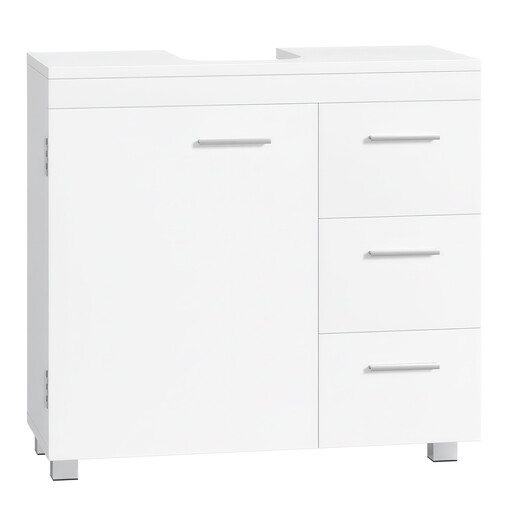
Why it suits this profile: The combination of three drawers, two compartments behind a door and an adjustable shelf is designed for everyday use in the bathroom.
The product information specifies an anti-tip kit, a maximum static load of 36,2 kg and an adjustable shelf. Before buying, make sure the cut-out and pipework around your sink are compatible.
Compact dimensions, three drawers, two storage compartments and adjustable interior space. The cabinet stands on legs, which can make cleaning underneath the unit easier.
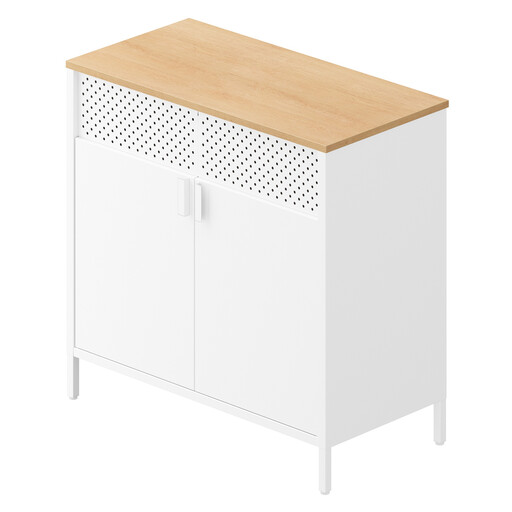
Why it suits this profile: According to the product information, this cabinet can be used as a sideboard, TV unit or storage cabinet in an office, living room or dining area.
The cabinet has an adjustable shelf, steel components and a specified maximum load of 50 kg for the top surface. According to the product information, the anti-tip kit should be secured to the wall.
Dimensions of 40 x 80 x 76 cm, double doors with magnetic closure, an adjustable shelf and a metal body that the supplier says is easy to clean.
We’ve put together a complete, up-to-date list of products that fully meet these strict selection criteria and the applicable European safety regulations.
A cabinet that is easy to assemble saves time, but always follow the assembly instructions. “Quick to assemble” is a description provided by the supplier, not a guarantee that every situation will be the same.
A slim storage cabinet or shoe cabinet with limited depth will often fit better in a small hallway. As well as measuring the cabinet itself, measure the passageway and check that doors or flaps can open sufficiently. A shoe rack is an alternative if you prioritise an open layout and quick access over keeping dust out.
No. Check whether the manufacturer states that the material is suitable for a damp environment and consider where the cabinet will be positioned. A moisture-resistant bathroom cabinet should not be exposed to direct water for prolonged periods. Also check whether the base is raised and whether there is enough room for the pipework, sink and ventilation.
Its lifespan depends on the material, load, assembly, moisture and everyday use. A cabinet will generally remain usable for longer if you do not exceed its load capacity, remove moisture straight away and regularly check the wall fixings. When buying, look at the product specifications and warranty terms rather than judging the cabinet solely by its appearance.
