
Vandaag of morgen in huis

Kwaliteit gegarandeerd

Welkomstaanbiedingen ontgrendelen: GRATIS bezorging | Tot 80% korting | Gratis 30 dagen JoyPlus-proefperiode
Download de app
A storage cabinet might seem straightforward to choose, but the wrong size, unclear weight capacity or tricky assembly can quickly cause problems. A cabinet that looks spacious in the product photo may still be too deep for a hallway or student room. Terms such as ‘large capacity’ and ‘sturdy material’ are not always backed up by clear specifications either.
So, keep an eye out for these three common pitfalls:
Start by measuring the available width, height and depth. For a slim storage cabinet in a hallway or bathroom, depth is especially important. A cabinet that’s just a few centimetres too deep can make a walkway awkward to use. Also check whether skirting boards or radiators will keep it away from the wall.
A storage cabinet for small spaces usually works well when you make use of vertical space. A multi-tier model gives you more practical storage without taking up much floor space. For a living room, a wider piece of furniture, such as a wooden sideboard, may be a better fit. Check the height of the top and where you’ll place cables, decorative items or a television.
A storage cabinet with doors keeps its contents out of sight. Check that the doors open forwards and that there’s enough room for them to do so. A cabinet with sliding doors needs less clearance at the front, making it a useful choice for a narrow hallway, dining area or compact living room.
The material affects not only the look of a cabinet, but also how you care for it and how you can use it.
An FSC label, certification or warranty can provide extra information, but always check exactly what is certified and which terms and conditions apply. The minimum two-year legal guarantee in the EU is separate from any additional manufacturer’s warranty.
An open shelving unit gives you quick access to books, baskets and everyday items. The downside is that everything remains on show and may collect dust more easily. A cabinet with doors is a better choice if you want a calmer look or prefer to keep things out of sight.
Modular designs are worth considering if you want a flexible layout. A storage cabinet on wheels, for example, can be moved between a bedroom, home office and living room. Check the quality of the wheels, the stability and the type of flooring. Wheels move differently on carpet than they do on laminate or tiles.
A foldable storage cabinet is useful if you need extra storage temporarily or have little room to store the cabinet when it’s not in use. Check that the fastenings are secure before putting anything inside. With magnetic or click-lock systems, make sure all the connections are fully closed.
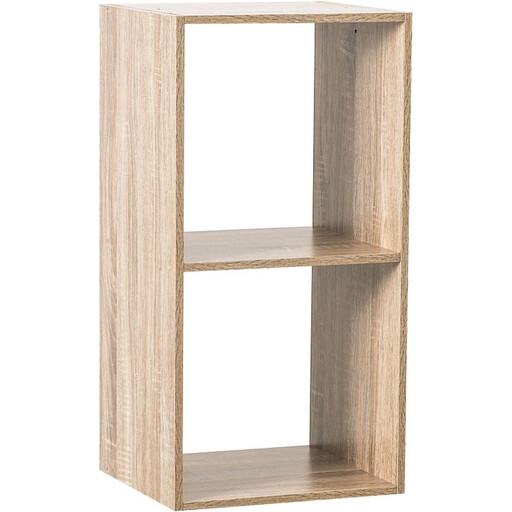
Why it suits this buyer: Its compact dimensions make it a good fit for a hallway, bedroom, student room or home office where floor space is limited.
The length of 34.5 cm, width of 32 cm and height of 67.6 cm are clearly stated. Estimated self-assembly time is also given as 30 minutes for one person.
Open shelves, two drawers, an FSC label and a stated maximum load of 25 kg.
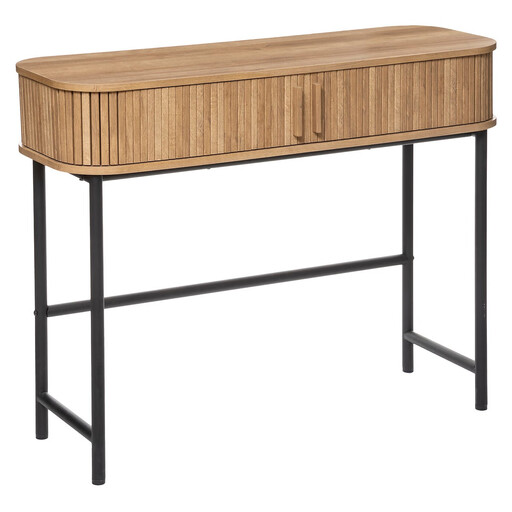
Why it suits this buyer: This sideboard with doors combines a wood-effect finish with sliding doors, making it a good fit for a living room, dining room or hallway.
The dimensions and shelf capacity are specific: 100 x 35 x 80.5 cm and a maximum of 10 kg per shelf. This makes it easier to plan where to put it and what to store in it.
MDF and steel construction, two sliding doors, a back panel, shelf or shelves, metal legs and an assembly guide included.
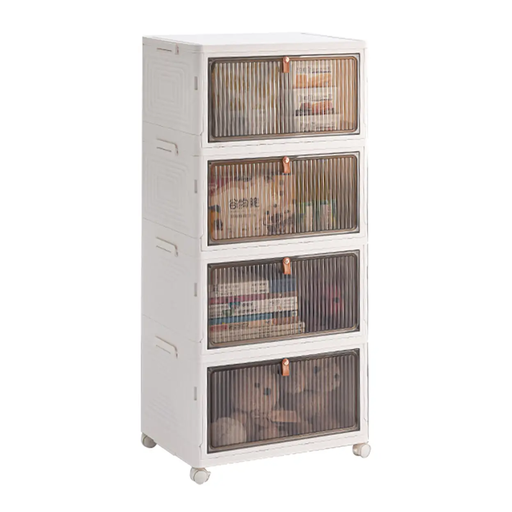
Why it suits this buyer: Its four tiers, transparent door and mobile design are practical for storing supplies, office essentials, books or everyday items in a flat.
The description specifies PP plastic, tool-free click assembly and the need for a flat, stable surface. Don’t exceed the stated shelf load.
Four storage tiers, a transparent door, a smooth surface that’s easy to wipe clean and tool-free assembly.
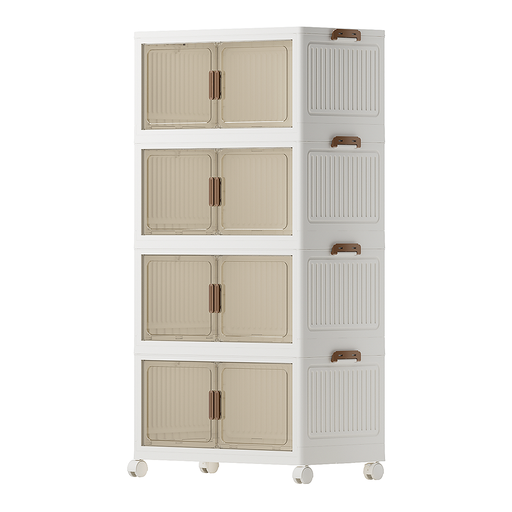
Why it suits this buyer: This model is designed for anyone who wants to set up a cabinet quickly and may want to move or store it later.
No tools are needed to assemble the cabinet. It folds away and has magnetic fastenings. Before use, check that all the fastenings are secure.
55 cm wide, four compartments, wheels, PP plastic and a foldable design.
We’ve put together a complete, up-to-date list of products that meet these strict selection criteria and the applicable European safety regulations.
Place the cabinet on a level surface and check that all the parts have been assembled according to the instructions. Spread heavy items across several shelves and, ideally, place them lower down in the cabinet. A tall cabinet may need additional wall fixings; follow the manufacturer’s instructions.
That depends on the material, ventilation and product information. PP plastic is easy to wipe clean, but that doesn’t automatically mean every model is suitable for prolonged exposure to water vapour. Don’t place the cabinet right next to a heat source, and wipe up any spilled liquids promptly.
A storage cabinet on wheels is practical if you regularly change your layout. A foldable storage cabinet also takes up less space when you’re not using it for a while. Check its stability and maximum weight capacity, and make sure the wheels are suitable for your floor.
