
Vandaag of morgen in huis

Kwaliteit gegarandeerd

Welkomstaanbiedingen ontgrendelen: GRATIS bezorging | Tot 80% korting | Gratis 30 dagen JoyPlus-proefperiode
Download de app
A storage cabinet can quickly bring order to a home, office, garage or hobby room. However, in practice, a cabinet may sometimes be less suitable than the product photo suggests. An awkward depth, low load capacity or castors without effective brakes can mean that you have to reorganise the room or buy a second storage unit after all.
With this guide, you can compare more than just appearance. Most importantly, you can assess the features that determine whether a storage cabinet suits the way you intend to use it.
A cabinet that is 80 cm wide does not automatically offer plenty of usable space. The walls, drawers, doors and gaps take up part of the internal dimensions. So check not only the length, width and height, but also:
For a small home, a narrow drawer unit, wall shelf or mobile storage cabinet may be more practical than a wide cabinet with doors.
A supplier may state a high total load capacity, while an individual shelf or drawer may be able to hold much less. This difference matters when storing tools, books, supplies or kitchen appliances.
Pay attention to the difference between:
Distribute heavy items evenly and position a tall shelving unit or office cabinet in accordance with the supplied safety instructions. For models with an anti-tip kit, securing the unit to the wall is generally an important safety measure.
MDF and chipboard are suitable for many dry indoor spaces, but prolonged exposure to moisture can affect the material. A plastic bathroom shelf is therefore a more logical choice for a damp bathroom than an untreated wooden drawer unit.
Metal is not automatically maintenance-free either. Check whether the frame has a coating and wipe up spilled liquids promptly. For a kitchen trolley or pantry cabinet, smooth, wipe-clean surfaces are useful. For clothing in a bedroom, fabric storage boxes are lightweight and flexible, but less suitable for heavy items.
Measure the available space at three points: width, depth and height. With a storage cabinet with drawers, allow for the space needed to pull the drawers out fully. In a narrow alcove, a rotating storage rack or vertical cabinet may work better.
For low cabinets, the top is often useful as a worktop, printer stand or bedside table. In that case, check the maximum weight of the top panel specifically.
A shelf with a stated load capacity of 20 kg is not the same as a cabinet with a total load capacity of 100 kg. The weight must also be distributed evenly. Heavy items should preferably be placed at the bottom.
Also look for:
A shelving unit with click-fit connections may be quick to assemble, but it must still be positioned securely and attached to the wall where necessary.
Plastic is lightweight and easy to wipe clean. Steel often provides a sturdy base for heavier storage. MDF or chipboard shelves are practical, but require more care in damp areas. Fabric storage boxes are useful for clothing, toys and bed linen, particularly when they are foldable.
Check in advance whether tools are required. A cabinet that needs no assembly saves time, while a larger shelving unit will usually require some assembly. Keep the instructions and, after a while, check that screws, castors and shelf connections are still securely fastened.
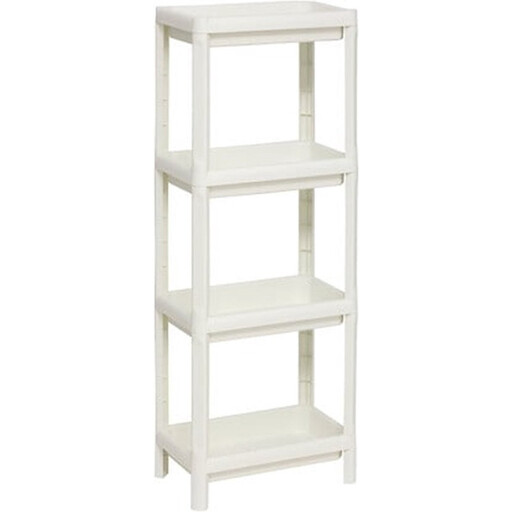
Why it suits this profile: This lightweight storage rack offers four open levels for bathroom products, supplies or items in a utility room. It can be assembled without tools.
The product information states both the dimensions of 37 × 22 × 100 cm and a maximum load capacity of 20 kg per shelf. This allows you to assess the available space and load requirements in advance.
Polypropylene frame and shelves; four levels; tool-free assembly; open design for quick access.
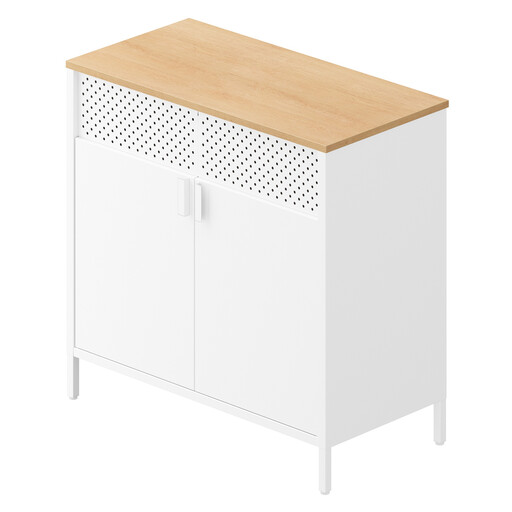
Why it suits this profile: This double-door cabinet is suitable for an office, living room or dining area where you want to keep items out of sight. The adjustable shelf makes the layout more flexible.
The specifications state the external dimensions of 80 × 40 × 76 cm, an adjustable shelf and an anti-tip kit. Check the available depth and secure the cabinet according to the instructions.
Steel cabinet; adjustable shelf; maximum 50 kg on the top panel according to the product information; moisture-resistant, wipe-clean surface.
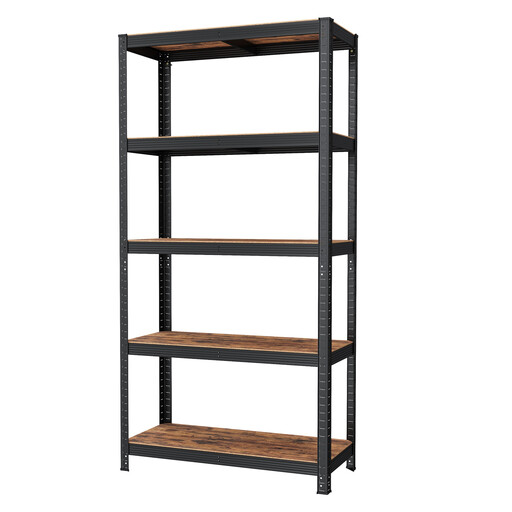
Why it suits this profile: For a garage, cellar, workshop or storage area, this shelving unit offers five adjustable levels and a high stated load capacity per shelf.
The product details distinguish between 130 kg per level and 650 kg in total. The adjustable shelves and option to split the unit make it suitable for boxes and tools of different sizes.
Steel frame; five adjustable levels; stated load capacity of 130 kg per shelf; can be converted into two units or a workbench.
We have compiled a complete, up-to-date list of products that fully meet these strict selection criteria and the applicable European safety regulations.
When choosing a mobile cabinet, pay attention to the quality of the castors and brakes. A cabinet that is moved frequently has different requirements from a fixed pantry cabinet. For small items, transparent storage boxes or drawer organisers may provide a clearer overview than one large compartment.
First measure the available space, then decide what you want to store. Leave extra room for doors, drawers and ventilation. A narrow, tall cabinet makes use of the room’s height; a low cabinet can also serve as a work or drop-off surface.
Its lifespan depends on the material, load, moisture and frequency of use. Do not place heavier items inside than specified, do not treat MDF as waterproof and check moving parts regularly. With a cabinet with drawers, sturdy runners are important; with a storage rack, stable connections and correct positioning matter most.
An open rack has no doors or drawers that can wear out and is often quick to access. On the other hand, items are visible and collect dust more quickly. A closed storage cabinet protects its contents better from dust, but requires more room for doors or additional components. Choose based on maintenance, accessibility and the items you want to store.
