
Vandaag of morgen in huis

Kwaliteit gegarandeerd

Welkomstaanbiedingen ontgrendelen: GRATIS bezorging | Tot 80% korting | Gratis 30 dagen JoyPlus-proefperiode
Download de app
A storage cabinet might seem like a straightforward purchase, but you’ll soon notice if you choose the wrong one. It may not quite fit under the washbasin, the doors might open into the toilet, or the drawers could turn out to be too small for everyday essentials. Terms such as “large capacity” and “easy assembly” don’t tell you much without specific measurements and details.
Whether you’re looking for extra space in a student studio, flat, bathroom, bedroom, kitchen or home office, compare the practical features first. That way, you can avoid ending up with a cabinet that takes up space instead of keeping your belongings tidy.
A cabinet that’s 40 cm deep might fit in a narrow space, but pipes, skirting boards or the door swing could still make it awkward to use. With an under-sink cabinet, you’ll also need to allow for the U-bend and the cut-out for the waste pipe.
So, measure:
For a bathroom cabinet, the cut-out beneath the washbasin is particularly important. One of the models in this selection, for example, has a 20 x 15 cm cut-out for a U-shaped pipe. Always check that these measurements match your own washbasin.
A tall cabinet with one large compartment isn’t always practical. Small toiletries can disappear behind towels, while a shelf at the wrong height can leave space unused. An adjustable shelf is useful if you want to store bottles, boxes or supplies in different sizes.
Also consider the difference between:
Even a cabinet that’s “quick to assemble” still needs to be put together correctly. Check whether the parts are labelled, whether instructions are included and whether the cabinet needs to be fixed to the wall. Several models come with an anti-tip kit. Use it if the product information says you should, and place the cabinet on a level surface.
Don’t just compare the external dimensions; check the size of the compartments and drawers too. A narrow storage cabinet is handy for a hallway or small bathroom, while a wider living room storage cabinet offers more space for books, crockery or electronics.
The stated load capacity matters too. One chest of drawers in this selection has a maximum load capacity of 80 kg. Another model lists a maximum static load of 36.2 kg. These figures aren’t directly comparable unless you check whether they apply to the whole cabinet, a shelf or just the top.
An MDF storage cabinet usually has a smooth surface that’s easy to wipe clean. However, MDF and chipboard aren’t the same as solid wood, and both need careful handling in damp rooms. Wipe up spills promptly and avoid prolonged exposure to water.
A metal storage cabinet can be a practical choice for an office, utility room or living room. According to the product description for one of the selected models, its steel construction is moisture-resistant and easy to clean. This is a product specification; the actual lifespan also depends on assembly, load and conditions of use.
Magnetic catches are handy when you want quick access to what’s inside. Wheels make a cabinet on wheels easy to move, for example between a bedroom and home office. Just check that the wheels are suitable for your floor and that the cabinet stays stable when you open the drawers.
For clothes, a wardrobe with storage space and closed doors may be more practical than an open shelving unit. Open designs often make it easier to see books, baskets and decorative items at a glance.
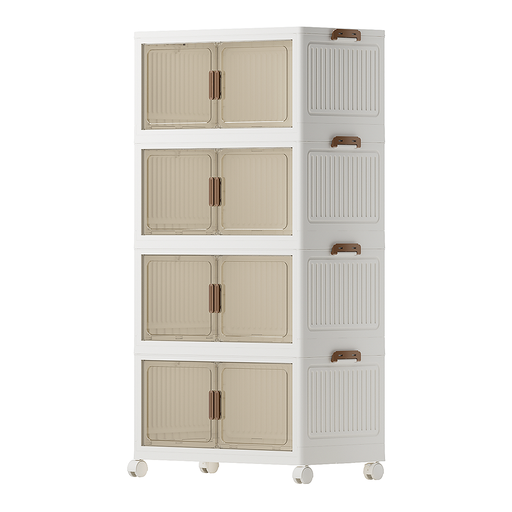
Why it suits this type of buyer: The cabinet is 55 cm wide, has four compartments and, according to the product information, requires no tools to assemble. That makes it a good fit for students and people living in smaller homes who want flexibility.
The width, number of compartments and assembly method are clearly stated. So you don’t have to rely on a vague claim such as “large capacity”.
PP plastic, four compartments, foldable design and nylon wheels.
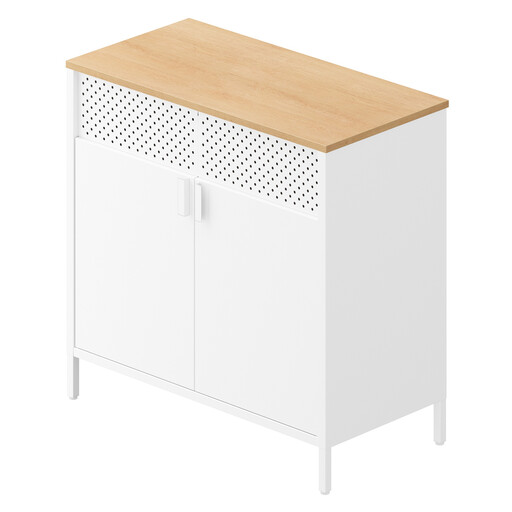
Why it suits this type of buyer: This model measures 80 x 40 x 76 cm and combines a steel cabinet with an adjustable shelf. It can be used as a sideboard, TV stand or office storage unit.
The adjustable shelf means you’re not stuck with an impractical fixed layout. The stated dimensions also help you check the available wall space in advance.
Steel body, double doors, adjustable shelf and a stated load capacity of 50 kg for the top.
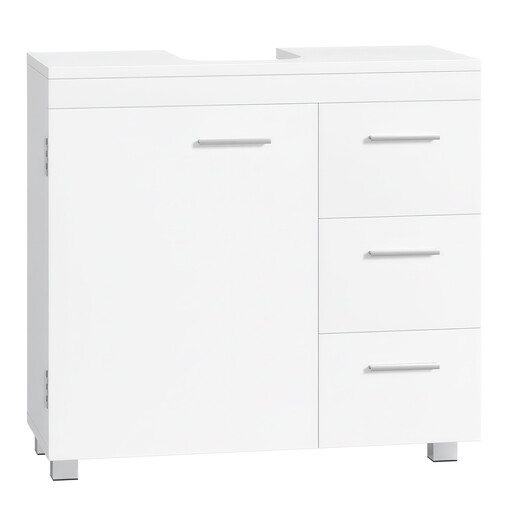
Why it suits this type of buyer: This under-sink cabinet measures 30 x 70 x 64 cm and combines three drawers with two compartments behind a door. Its layout is designed to hold towels, toiletries and larger bottles.
The product information gives the dimensions, mentions the adjustable shelf and states a maximum static load of 36.2 kg. Check that it will fit around your washbasin and pipes.
Three drawers, two compartments, adjustable shelf and included anti-tip kit.
For a bedroom or study, a chest of drawers may be more practical than a cabinet with doors. The 5five Dolo 3-Drawer Chest of Drawers measures 73 x 48 x 78 cm, has three drawers and is intended for indoor use. According to the product information, assembly is required and takes around 30 minutes. The product also comes with a statutory guarantee of at least two years under EU consumer rules.
For a narrow corner, the 5five Bookcase 2-Drawer Compartment Cabinet, measuring 34.5 x 32 x 67.6 cm, is a compact option. It has open shelves and two drawers, but no doors. Its stated maximum load capacity is 25 kg. This type is therefore best suited to lighter items, books or small storage boxes.
We’ve put together a complete, up-to-date list of products that meet these strict selection criteria and the applicable European safety regulations.
A narrow bathroom cabinet or a shallow under-sink cabinet is often a good choice. First, measure the available space and check the position of the U-bend, pipes and skirting boards. An adjustable shelf can help you make better use of the interior.
MDF can be used for a bathroom cabinet if you look after the surface and don’t leave it wet for long periods. Product descriptions for MDF models mention a smooth, wipe-clean surface. That doesn’t mean the material is waterproof. Wipe away moisture straight away and follow the care instructions.
Its lifespan depends on the material, load, assembly and exposure to moisture. A cabinet will generally last longer if you don’t exceed its stated load capacity, check the fixings and avoid forcing the doors, drawers and wheels. Also check the guarantee and statutory rights listed for the product.
