
Vandaag of morgen in huis

Kwaliteit gegarandeerd

Welkomstaanbiedingen ontgrendelen: GRATIS bezorging | Tot 80% korting | Gratis 30 dagen JoyPlus-proefperiode
Download de app
A storage cabinet for your home should do more than keep your belongings out of sight. In a hallway, bedroom, student room or compact flat, every centimetre counts. Yet many people buy a cabinet that proves impractical after a few months: too deep for the walkway, too delicate for everyday use or difficult to clean.
So don’t focus only on colour and price. Pay particular attention to the layout, material, load capacity and how the cabinet will fit into your space.
A cabinet with lots of shelves may look spacious, but low compartments won’t fit larger boxes or shoes. Check the height and depth of each compartment, not just the total number of shelves. A cube storage unit works well for baskets and accessories, while a wardrobe with compartments is better suited to clothes, bed linen and larger storage boxes.
A mobile storage cabinet is handy if you regularly want to clean or change your layout. Castors can be practical on a smooth floor, but the cabinet may be less stable on a thick rug or uneven surface. Also check whether the wheels lock and whether the cabinet needs to be placed on a level surface.
A plastic storage cabinet is generally easy to wipe clean, but plastic isn’t designed for heavy industrial loads. Wooden cabinets may look sturdier, but they often take longer to assemble and need plenty of space during installation. A storage cabinet with doors helps keep dust at bay, but make sure there’s enough room for the hinges and doors to move freely.
First, measure the available space in three places:
For flat-pack products, also check how much clearance you’ll need to open the doors. A shoe cabinet in the hallway, for example, may have enough capacity but still be impractical if the front door hits it.
Check whether the product information specifies a maximum load per shelf. For a modular PP plastic cabinet, the panels and connectors are important for stability. Place this type of cabinet on a level surface, spread heavy items across several shelves, and secure or anchor it if the instructions require this.
Use a lightweight plastic cabinet for books, toiletries, snacks or office supplies, provided the stated load capacity allows for it. Another type of cabinet may be more suitable for heavy tools or large stacks of paper.
Open compartments make it easy to see your belongings at a glance. Doors hide loose items and can help protect them from dust. Closed compartments are handy for storing shoes, while a wardrobe with compartments works better if you want to organise your clothes by type.
If you mainly need to keep food and drinks cool, you need a compact fridge, not a storage cabinet. Check its capacity, temperature zones, noise level, energy rating and external dimensions. A mini fridge for a bedroom or office can be practical, but check the ventilation clearance and the position of the plug socket first.
Other home products also call for a realistic space check. An indoor basketball hoop needs clear wall or door space. A dog crate furniture unit must suit your dog’s size and behaviour; don’t use a crate solely as a decorative piece of furniture.
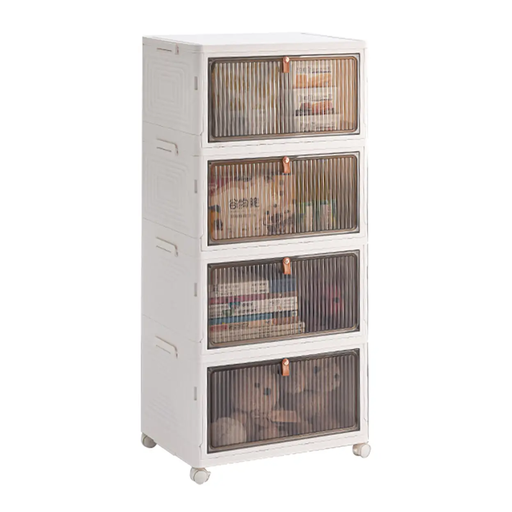
Why it suits this profile: Its compact four-tier layout is designed for smaller spaces such as a student room, bathroom, kitchen or bedroom. The cabinet is assembled without tools using panels and connectors.
The product information describes a smooth PP surface that can be cleaned with a soft, damp cloth. Be sure to check the maximum load per shelf first.
PP plastic, four tiers, a mobile design and tool-free assembly, according to the product description.

Why it suits this profile: This shoe cabinet is designed for a hallway, bedroom or dressing room where you’d prefer to keep shoes out of sight. The product description says it holds 22 to 25 pairs of shoes and features an open bottom shelf and a top surface.
The doors keep loose shoes out of sight and, according to the product description, help protect them from dust. Measure the door clearance and available depth before assembly.
Five tiers, metal legs and hinges, closed doors and a stated capacity of 22 to 25 pairs, according to the product information.
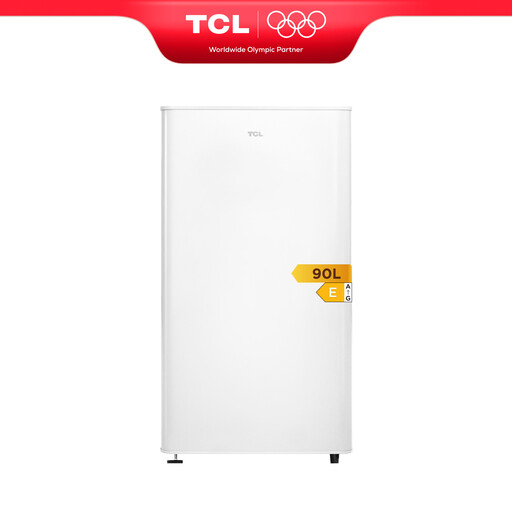
Why it suits this profile: If you need extra fridge space in an office, student room or bedroom, this model offers a capacity of 90 litres. Its external dimensions are 449 × 485 × 842 mm.
The product specifications list the dimensions, a noise level of 40 dB and an E energy rating, helping you assess the space needed and what to expect from day-to-day use.
A 90-litre capacity, three glass shelves, a chiller box and adjustable feet, according to the product information.
We’ve put together a complete, up-to-date list of products that meet these strict selection criteria and the applicable European safety regulations.
Keep the items you use every day at eye level. Use baskets or boxes for small loose items, and save the bottom shelf for heavier belongings, as long as they’re within the maximum load. Label the compartments if you share the cabinet with other people in your household.
Its lifespan depends on the material, load, assembly and maintenance. A plastic cabinet can stay in good condition for longer if you avoid abrasive cleaners, bleach and overloading it. With a wooden cabinet, proper assembly and careful use of the doors and hinges are important.
That depends on its energy rating, energy consumption, ambient temperature and electricity price. So don’t look only at the purchase price. Check the energy rating and, where available, look up the annual energy consumption on the energy label or in the product specifications.
