
Vandaag of morgen in huis

Kwaliteit gegarandeerd

Welkomstaanbiedingen ontgrendelen: GRATIS bezorging | Tot 80% korting | Gratis 30 dagen JoyPlus-proefperiode
Download de app
A storage cabinet may seem straightforward to choose, until you discover that the doors hit a wall, the shelves are too low or the cabinet starts wobbling as soon as you fill it. For a hallway, bathroom, living room, office or garage, the dimensions, construction and intended use are the key considerations. An attractive design alone says little about how practical it will be day to day.
Keep an eye out for these three common pitfalls:
Not paying enough attention to the available space
A cabinet that is 35 cm deep may fit in a narrow hallway, while a model measuring 40 cm or more can quickly take up valuable walking space. Measure not only the width, but also skirting boards, door swing, sockets and the height up to the ceiling.
Shelves that do not suit your belongings
A fixed shelf layout works well for small boxes, but less so for boots, tall bottles, ring binders or tools. A cabinet with adjustable shelves offers greater flexibility, but always check how many shelves can actually be adjusted or removed.
Underestimating stability and moisture
Tall furniture can tip over when heavy items are stored at the top. An anti-tip feature and wall fixing are therefore important. In a bathroom, garage or storage room, you should also check whether the materials used are suitable for damp conditions. “Moisture-resistant” does not automatically mean that a cabinet can be exposed to standing water for long periods.
Make a note of the minimum and maximum space available beforehand. For a narrow hallway, a slim shoe cabinet with limited depth may be more practical than a wide cabinet with deep compartments. Also look at the internal dimensions: a cabinet may appear spacious from the outside, but doors, drawers and thick side panels can reduce the usable space.
Examples of practical dimensions:
With sliding doors, drawers and flap doors, check that there is enough clearance around the cabinet for them to open and move freely.
Chipboard and MDF are common materials for cabinets in the living room, hallway or bedroom. They are relatively lightweight and easy to clean. For a garage cabinet, workshop or heavily used space, a metal storage cabinet is often the more sensible choice. Steel is less prone to dents than thin sheet material, but it can start to rust if the coating is damaged.
Pay attention to the difference between:
A stated capacity generally applies under the conditions set out in the product description. Whenever possible, place heavy items at the bottom and do not exceed the stated load limit.
A cabinet that is taller than it is deep should generally be secured to the wall. Use wall plugs and screws suitable for your wall type. Some items of furniture include fixing materials, while others do not. Check this before you start assembling the cabinet.
For a bathroom cabinet, a raised base, moisture-resistant panels and metal components with a rust-resistant finish are practical features to look for. For a kitchen cabinet, wipe-clean surfaces and sufficient ventilation around sources of moisture or heat are important. A bookcase or room divider with open compartments must also be positioned securely, particularly if it is not fixed to a wall.
The choices below are based on verifiable information from the product descriptions, such as dimensions, materials, layout and stated load capacity.
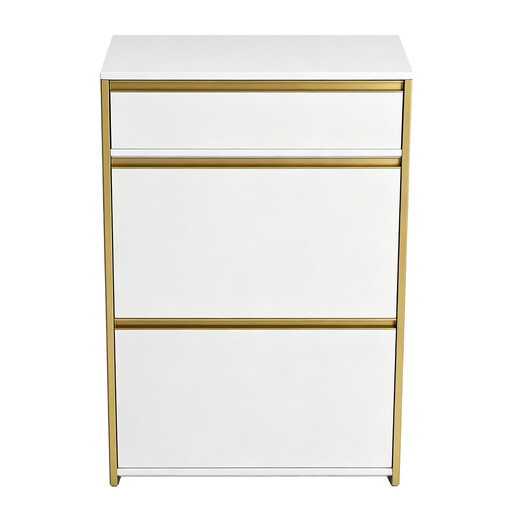
Why it suits this profile: With a width of 60 cm and a depth of 24 cm, this cabinet is suitable for a hallway where every centimetre counts. According to the product description, it holds up to 12 pairs of shoes, with an additional drawer and adjustable, removable shelves.
Its slim dimensions reduce the risk of the cabinet blocking the passageway. The adjustable layout means that every compartment is not limited to just one type of shoe.
24 cm deep; adjustable and removable shelves; anti-tip feature according to the product information.
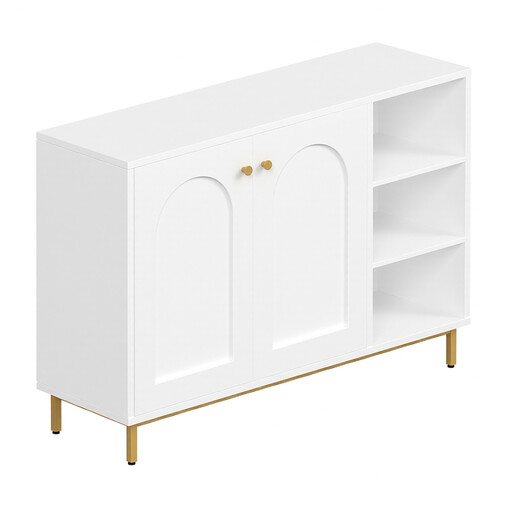
Why it suits this profile: This model combines a closed cabinet section with open shelves and a wide top. The product description specifies MDF with moisture-resistant properties, a metal frame and three adjustable shelf heights.
According to the product specifications, the raised base of 12.5 cm keeps the cabinet clear of some splashes and dirt on the floor. However, you should still wipe up any spilled water.
35.5 × 100.5 × 75.5 cm; three adjustable shelves; closed and open storage space.
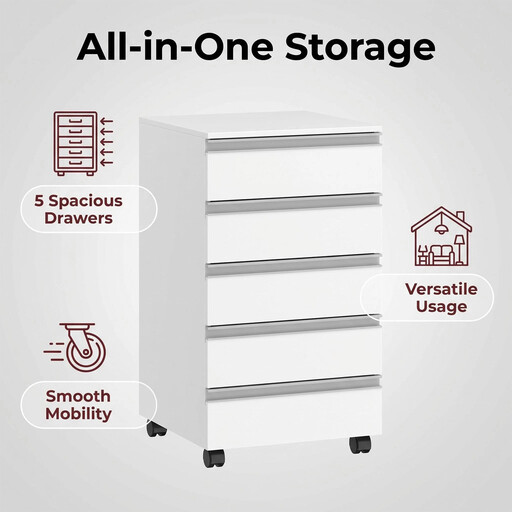
Why it suits this profile: For homeworkers, small business owners and studio users, a mobile cabinet is useful for storing documents, drawings, tools and office supplies. The cabinet measures approximately 40.5 × 40.5 × 65.5 cm.
The five drawers prevent a messy pile of loose folders. According to the product information, the castors swivel through 360 degrees and the two front castors can be locked.
Five deep drawers; lockable front castors; according to the product specifications, a maximum total load capacity of 50 kg.
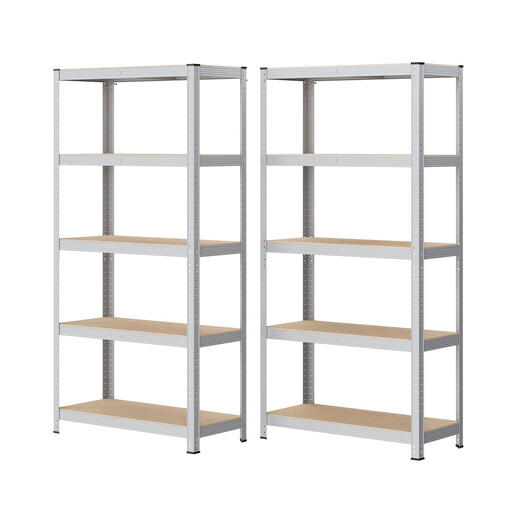
Why it suits this profile: This set is designed for tools, supplies and larger items in a garage, shed or workspace. According to the product information, the two units can be used separately and the shelf height is adjustable.
The adjustable shelves make room for both low storage bins and tall equipment. Use the supplied anti-tip kit and wear work gloves during assembly, as stated in the product information.
Steel frame; five levels per unit; according to the stated specifications, up to 175 kg per level and 875 kg in total.
We have put together a complete, up-to-date list of products that fully meet these strict selection criteria and the applicable European safety regulations.
A slim shoe cabinet with limited depth is usually a practical choice. First measure the available passageway and check that the doors can open fully. A model with drawers or flap doors may save space compared with wide hinged doors.
Its lifespan depends on the material, assembly, load and maintenance. A cabinet that is securely fixed to the wall, not overloaded and kept dry will generally remain usable for longer. Check the screws, shelf supports and castors regularly.
It can be, particularly if you want to organise tools, paint tins or spare parts. Check the maximum load per shelf, whether there is ventilation and whether the finish provides protection against rust. Do not place the cabinet directly on a wet garage floor, and use the anti-tip feature if one is supplied.
