
Vandaag of morgen in huis

Kwaliteit gegarandeerd

Welkomstaanbiedingen ontgrendelen: GRATIS bezorging | Tot 80% korting | Gratis 30 dagen JoyPlus-proefperiode
Download de app
Choosing a storage cabinet might seem straightforward, but getting the wrong dimensions, flimsy materials or an awkward layout can quickly lead to frustration. A cabinet can look spacious in a product photo yet offer too little room for towels, files or tools in reality. What’s more, terms like “water-resistant”, “sturdy” and “large capacity” aren’t always used consistently.
So, pay particular attention to these common pitfalls:
Measure the available space at several points. A bathroom cabinet under the sink, for example, needs to accommodate the trap and the cut-out for the waste pipe. For an office cabinet, depth is particularly important: ring binders and files need more room than loose stationery.
A cabinet with adjustable shelves is practical when you want to store items of different heights. An open compartment is handy for everyday essentials, while a cabinet with doors keeps dust and visual clutter out of sight. Also check that the doors can open fully without hitting a wall or piece of furniture.
For a bathroom vanity or sink cabinet, moisture-resistant MDF or particleboard panels with a well-finished top layer are worth considering. That doesn’t mean the furniture should be placed directly under a running tap. Wipe up any spilled liquid promptly and ensure there’s adequate ventilation around the unit.
A metal storage cabinet or one with steel components can be suitable for a garage, workshop or office. Pay attention to the combination of steel and board material, the edge finish and the stated load capacity. In a damp environment, a corrosion-resistant finish is important.
Only place heavy printers, tools or archive boxes on a surface where the load capacity is clearly stated. With a rolling cabinet, castors are handy for a flexible layout. Check whether the wheels can be locked when you need a stable workstation.
With a filing cabinet or mobile storage unit, it’s wise to assess stability when the drawers are fully open. For tall or wide cabinets, wall fixing deserves extra attention. Only use the fixing materials supplied according to the instructions and check that they are suitable for your wall type.
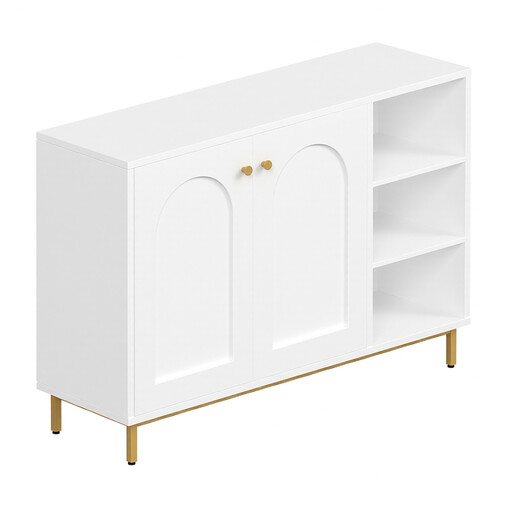
Why this fits the profile: This bathroom cabinet combines a spacious top surface, two doors and three open compartments. That suits households that want to keep toiletries partly visible and partly out of sight.
The product description mentions three adjustable shelf heights and a 12.5 cm plinth. Nevertheless, check the position of pipework and the distance from splashes.
Approximate dimensions 35.5 × 100.5 × 75.5 cm; combination of closed storage and open shelves; anti-tip device according to the product information.
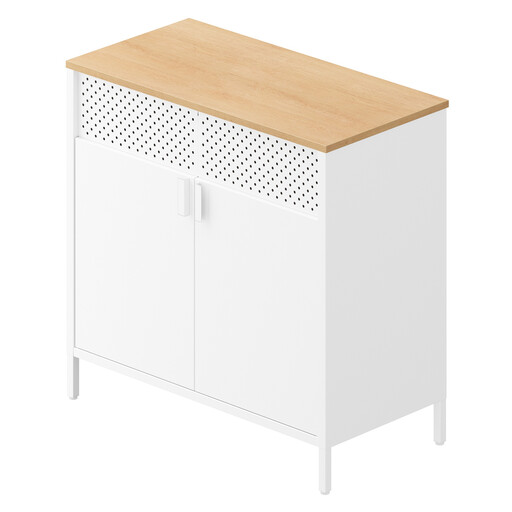
Why this fits the profile: The combination of steel, double doors and an adjustable shelf is ideal for anyone wanting to use one cabinet in multiple rooms, such as the hallway, dining room or home office.
The layout isn’t completely fixed: the shelf can be adjusted according to the product description. The cabinet must be fixed to the wall for safe use.
Steel cabinet body; size 40 × 80 × 76 cm; stated maximum static load capacity of 50 kg on the top surface.
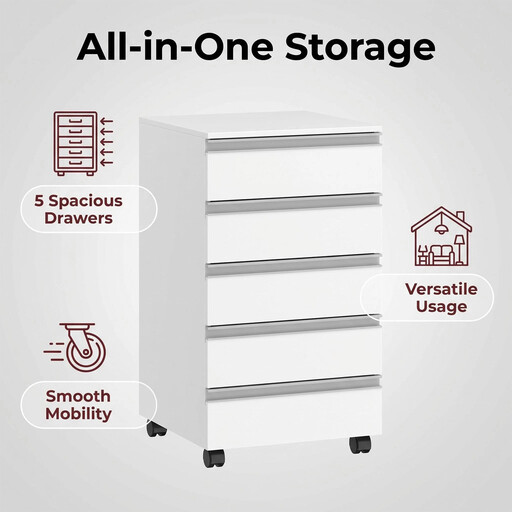
Why this fits the profile: This mobile storage cabinet is designed for offices, workshops and workspaces where documents, drawings, tools or materials are frequently moved around.
Five drawers prevent everything from being stacked on one shelf. According to the product description, the two front castors are lockable; use the brake when the cabinet is stationary.
Approximate size 40.5 × 40.5 × 65.5 cm; five drawers; stated total load capacity up to 50 kg; 360° swivel castors.
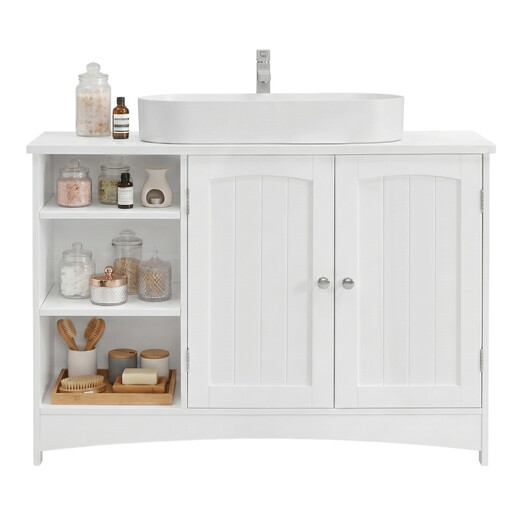
Why this fits the profile: This vanity unit offers an open section with two adjustable shelves and a closed section with two doors. That’s practical for everyday toiletries and towels.
The product information mentions a 20 × 15 cm cut-out for the U-shaped pipe. Measure your sink and waste pipe beforehand; wall fixing is recommended.
Approximate dimensions 30 × 88.5 × 60 cm; MDF construction; two adjustable shelves in the open section; two doors with extra storage space.
We’ve put together a full, up-to-date list of products that fully meet these strict selection criteria and comply with current European safety regulations.
Level your storage cabinet before adjusting the doors, drawers or shelves. With a bathroom cabinet, a small gap from the floor makes cleaning easier, but always follow the construction and assembly instructions. Don’t place a cabinet directly next to a heat source if the manufacturer advises against it.
Clean surfaces with a slightly damp cloth and dry them afterwards. Don’t use harsh cleaning agents on melamine, MDF or lacquered metal parts without checking the care instructions. Distribute heavy items across several shelves and avoid filling drawers beyond their stated capacity.
First measure the available width, height and depth, including pipework and skirting boards. A narrow bathroom cabinet or vanity unit with open compartments can be suitable for everyday use. Choose adjustable shelves when bottles, boxes and towels come in different heights.
That depends on the finish and the usage instructions. Steel is low-maintenance, but seams, screws and damaged paintwork can be vulnerable to moisture. Don’t place the cabinet in direct splash zones, ensure ventilation and wipe up any spilled liquid promptly.
Look at the stated load capacity for the whole cabinet, the top surface, the drawers and individual shelves. These values can differ. Only place heavy equipment on a surface where the maximum static weight is clearly stated, and fix the cabinet to the wall if the instructions require it.
