
Vandaag of morgen in huis

Kwaliteit gegarandeerd

Welkomstaanbiedingen ontgrendelen: GRATIS bezorging | Tot 80% korting | Gratis 30 dagen JoyPlus-proefperiode
Download de app
A storage cabinet may seem like a simple purchase, but the wrong size, insufficient load capacity or an impractical layout can quickly make it unusable. The same applies to a storage rack, shelving unit or kitchen rack. A model that looks spacious in the product photo may still be too deep for a narrow Dutch kitchen or bathroom.
So don’t just consider colour and price. Above all, check the dimensions, material, maximum load and assembly method. That way, you can choose a cabinet that suits both the space and what you want to store in it.
A tall cabinet does not automatically provide useful storage space. Measure the length and depth of the available area too. In a bathroom, for example, check that doors, skirting boards and pipes will not be obstructed. In a hallway, a cabinet that is just a few centimetres too deep can already get in the way.
A slim storage cabinet or corner rack is often more practical when floor space is limited. Also leave some room around the cabinet for assembly and cleaning.
Bamboo, MDF, acacia wood and engineered wood all have different properties. A wooden storage cabinet may be sturdy, but that does not mean every shelf is suitable for heavy provisions or crockery. The maximum load is only useful if it has been clearly specified by the manufacturer.
Consider the surroundings too. A cabinet intended for a dry living room is not automatically suitable for prolonged exposure to water vapour. Do not place wooden or MDF components directly next to a leaking tap, and follow the care instructions.
Many models are supplied for self-assembly. So check whether fixings are included and how much space you need to put the cabinet together. With a tall or deep cabinet, anti-tip fixing is important. A product may be sturdy, but an uneven floor or an incorrectly fitted shelf can affect its stability.
Some pieces of furniture do not include screws and wall plugs for wall mounting. In that case, choose fixings that are suitable for your type of wall, such as concrete, brick or plasterboard.
First, make a note of what you want to store:
A shelving cabinet provides an organised layout, while a cabinet with a door keeps items out of sight. For a small alcove, a corner rack can make use of space that would otherwise remain empty.
Compare the stated load capacity with the expected weight. A shelf holding four jars is very different from one filled with glass jars or tins of provisions. Ideally, distribute heavy items across several levels and place them low down in the cabinet.
The product specifications do not always state a maximum load. Do not interpret “not specified” as permission to store heavy items. It is better to use such a rack for lightweight items, spices, small plants or decorations.
Bamboo is popular for a bamboo rack in the kitchen or bathroom because of its light appearance. MDF and engineered wood often have a smooth surface that is easy to clean with a slightly damp cloth. Acacia offers a different look and is often combined with a metal frame.
Always check:
Do not interpret a product claim about sustainability or performance more broadly than the available specifications allow. The first 5five model, for example, lists FSC certification; this does not automatically say anything about its maximum load or suitability for a humid space.
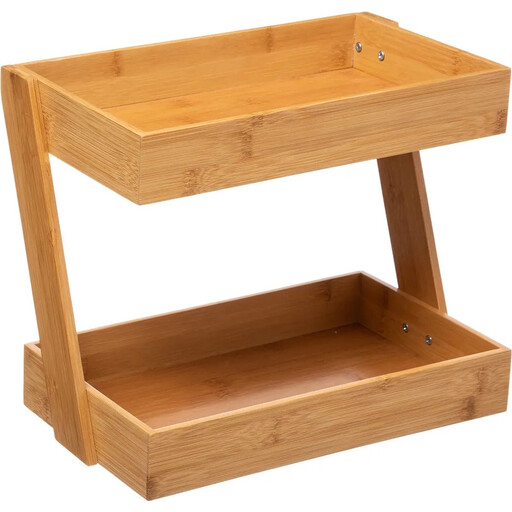
Why it suits this profile: This compact model has two levels and fits on a worktop, in a cabinet or on a shelf. It is intended for lightweight items such as spice jars, storage containers, small plants and decorations.
The exact dimensions are clearly stated. The maximum load is not specified, so you should deliberately use this model for lightweight items only.
Two levels, bamboo and MDF listed as the materials, a weight of 840 grams and suitable for indoor use.
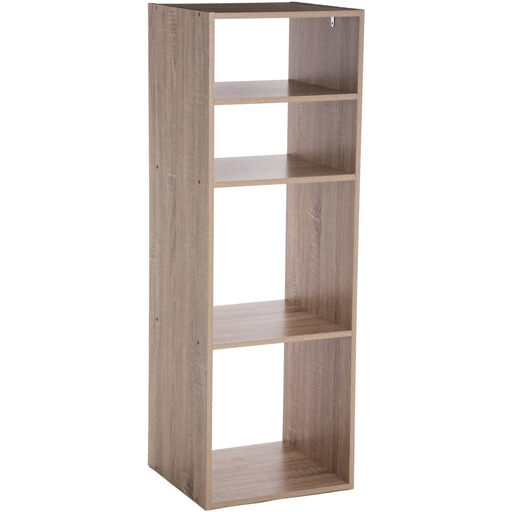
Why it suits this profile: This taller cabinet offers four shelves and a stated total load capacity of 40 kg. It is therefore suitable for a living room, hallway or storage area where a fixed layout is preferred.
The stated load capacity prevents you from judging the cabinet solely by its appearance. Bear self-assembly in mind: according to the product information, assembly takes approximately 30 minutes.
Four shelves, dimensions of 34,5 x 32 x 100,5 cm, a load capacity of 40 kg and suitable for indoor use.
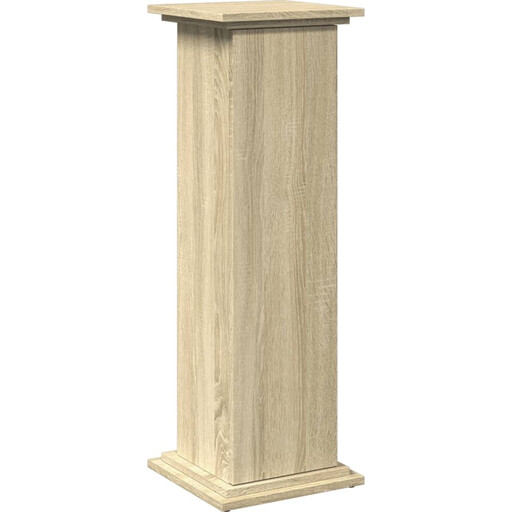
Why it suits this profile: This cabinet combines three storage levels with three concealed compartments behind a door. This makes it suitable for provisions, household items or anything you want to keep out of sight.
The total load capacity of 60 kg is stated. Wall mounting to prevent tipping is required; screws and plugs for your wall are not included.
Three concealed compartments, reversible door installation, smooth surface and a total load capacity of 60 kg.
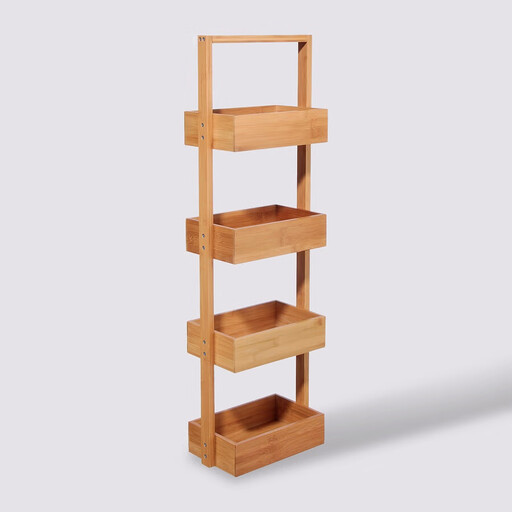
Why it suits this profile: With a width of 16 cm, this bathroom rack takes up very little floor space. The four levels are intended for shampoo, soap, towels and other toiletries.
The slim dimensions can be checked in advance. The maximum load is 4 kg, so you will not mistake this rack for heavy-duty shelving.
Four levels, dimensions of 25 x 16 x 88 cm, bamboo frame and a stated maximum load of 4 kg.
We have put together a complete, up-to-date list of products that fully meet these strict selection criteria and the applicable European safety regulations.
Use a kitchen rack for items you need every day. Spices, oil and small storage containers stay organised when each level has a specific purpose. Place heavy jars on the bottom and keep them away from heat sources.
In the bathroom, a bathroom rack with several levels works well for towels and toiletries. Do not leave wet items on an untreated wooden surface for long periods, and clean up any spilled soap or water straight away.
A corner rack is useful for unused corners, but measure both sides of the corner. For a pantry, a closed cabinet is often more practical than an open storage rack, as packaging is less visible and dust is less noticeable.
Measure the available length, width and height at three points, as floors and walls are not always completely straight. Then allow for skirting boards, doors, ventilation and assembly. Also check the dimensions of the items you want to store.
Its lifespan depends on the material, load, assembly and maintenance. Place the cabinet on a level surface, do not exceed the stated load capacity and protect MDF or wood from prolonged moisture. A tall cabinet should be fixed to the wall according to the instructions.
A standard storage cabinet does not require an electrical connection, so it uses no electricity during use. Ongoing costs mainly consist of maintenance and any additional fixings. Before buying, check whether screws and wall plugs are included and whether they are suitable for your wall.
