
Vandaag of morgen in huis

Kwaliteit gegarandeerd

Welkomstaanbiedingen ontgrendelen: GRATIS bezorging | Tot 80% korting | Gratis 30 dagen JoyPlus-proefperiode
Download de app
A storage cabinet might seem easy to choose: pick a colour, check the price and place your order. Yet most disappointing purchases come down to details you only notice after assembly. A cabinet may look more spacious in a product photo than it is in real life, for example, while its drawers may not be suitable for heavy items or its material may not be right for a damp bathroom.
Before you buy, look out for these three common pitfalls:
An attractive design is a bonus, but it’s only truly useful if the cabinet suits your space, your needs and the storage room you have at home.
Measure the space in three directions: width, height and depth. Also allow for skirting boards, sockets and the clearance needed for doors or drawers. A slim storage cabinet is handy in a hallway, student room or small home office, but check that the interior will hold the things you want to store.
Consider the layout too:
Chipboard and MDF are often used for affordable cabinets. Check that the edges are well finished and that the construction is suitable for the weight you plan to store. Metal can provide extra support in frames, drawer runners or legs. Fabric and plastic units are generally designed for lighter, smaller items.
Take extra care when choosing a bathroom cabinet. According to HaluPeit’s product description, this model is made from moisture-resistant MDF and metal and is designed for a damp environment. This is a product specification from the seller, not a guarantee that the cabinet can withstand unlimited exposure to water. So don’t place a bathroom cabinet directly in a puddle, and wipe up splashes promptly.
Check whether the product includes an anti-tip device and whether it can be fixed to the wall. This is particularly important for tall cabinets, full drawers and households with children. A ready-to-assemble cabinet can save time, but that doesn’t automatically mean it’s safe to use without being secured.
Also check:
Treat the stated load capacity as a product specification. Spread heavy items across several drawers, and don’t put more weight in any one drawer than the stated limit.
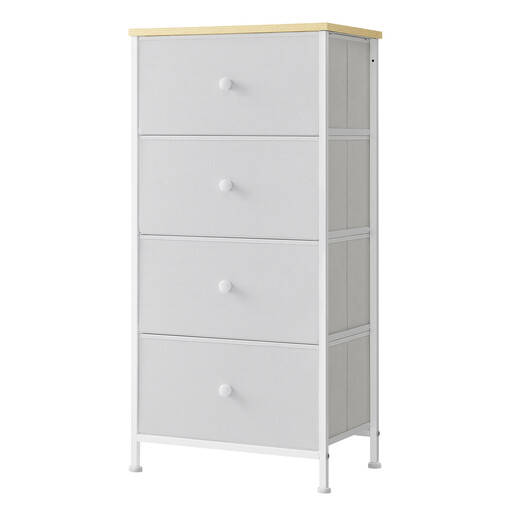
Why it suits this buyer: This lightweight chest of drawers is a good fit for a bedroom, student room or home office where you need compact storage for accessories, cables and smaller items.
Its dimensions of 30,1 x 45,1 x 92,4 cm and weight of 7,1 kg make it clear that this is a lightweight storage solution, not a cabinet for heavy books or tableware.
Four drawers, a metal frame, a compact footprint and an anti-tip kit included. The stated static load capacity is 27 kg.
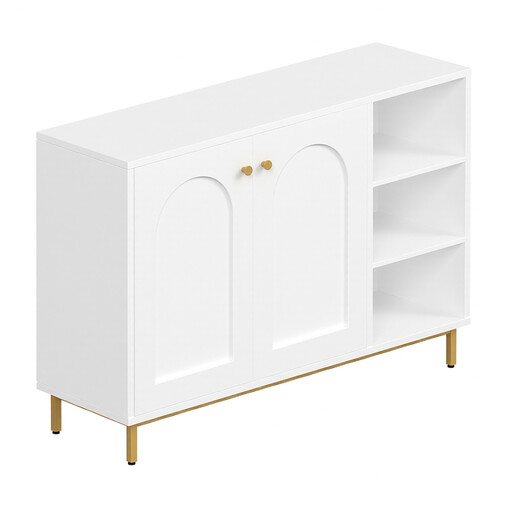
Why it suits this buyer: A practical choice if you’re looking for a bathroom cabinet with enclosed compartments, open shelves and a smart design for a damp space.
The cabinet stands 12,5 cm off the floor and, according to the product description, has three adjustable shelf heights. This makes cleaning easier and helps you organise bottles of different sizes.
Stated dimensions: 35,5 x 100,5 x 75,5 cm. The layout includes two doors, three open shelves and adjustable shelves; an anti-tip device is included.

Why it suits this buyer: This chest of drawers is a good choice if you need several wide drawers for clothes, bed linen, office supplies or other everyday items.
The stated dimensions are 73 x 48 x 78 cm and the manufacturer gives a maximum load of 80 kg. Make sure you distribute the weight evenly; the drawers don’t have a soft-close function.
Three drawers, steel drawer runners, a stated two-year guarantee and assembly by one person in around 30 minutes, according to the product information.
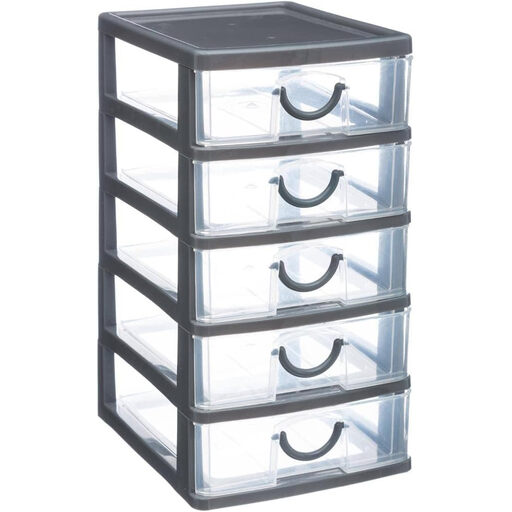
Why it suits this buyer: This compact storage unit is designed for a home office, bedroom or hobby room where you want to keep loose accessories neatly organised.
At 12 x 15 x 25 cm, this drawer tower takes up very little floor space. Its limited capacity makes it clear that it’s not a full-sized cabinet for larger items.
Five plastic drawers, each with a capacity of 740 ml, and a total capacity of 3,7 litres. Labels can help you find smaller items.
We’ve put together a full, up-to-date list of products that meet these strict selection criteria and the applicable European safety requirements.
First, measure the available wall space, then choose between a slim storage cabinet, a chest of drawers or a tall freestanding cabinet. A model with several drawers makes good use of vertical space, while a low cabinet can also provide an extra surface. Always check how much room the drawers need to open, and allow enough space to move around.
Yes, if the product information specifies a material suitable for a damp space. Also check whether the cabinet is raised off the floor, how to prevent water contact and whether the room has enough ventilation. ‘Moisture-resistant’ doesn’t mean the furniture can be left in direct contact with water for long periods.
Its lifespan depends on the material, assembly, load and upkeep. Keep within the stated load capacity, tighten the fixings after assembly if needed, and avoid pulling the drawers out unevenly. A cabinet with metal runners and a sturdy frame can be practical for everyday use, but always follow the product specifications and guarantee terms.
